


Corruption has no place in the green transition: it not only enables harmful projects, but also erodes public trust in the transition itself. Portugal’s “Operation Influencer” scandal shows what is at stake when transparency and accountability are sidelined.
One of the most high-profile environmental corruption cases in Europe in recent years is Operation Influencer, an investigation led by Portugal’s Public Prosecutor’s Office that began with raids on 7 November 2023. The probe focuses on alleged corruption linked to lithium mining, hydrogen energy projects, and data centres.
Its name refers to the core suspicion at the heart of the case: influence peddling – a form of corruption in which individuals leverage connections with public authorities to secure favours or preferential treatment for third parties, typically in exchange for payment or other undue advantages.
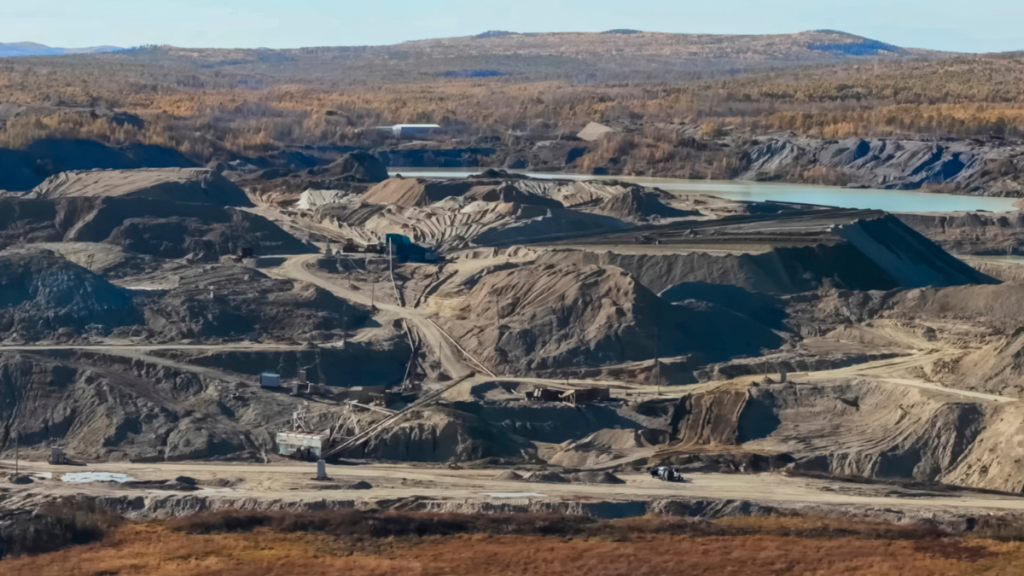
One of the cases under investigation is the destructive lithium mine project in Covas do Barroso, which the EEB has watched closely for years. The legality of the approval of concessions for this mine is now highly questioned.
Those implicated include a mix of public authorities counting the Office of the former Prime Minister (now President of the Council of the EU), the ex-Minister of the Environment and Climate Action and the ex-Minister of Infrastructure, and corporations, such as Savannah Resources (who we understand are refusing to share their internal investigation report with the Public Prosecutor as of time of publication) and Lusorecursos Portugal Lithium. João Galamba, ex-Minister of Infrastructure, and Nuno Lacasta, then president of the Portuguese Environment Agency (APA) are formal suspects.
The crimes being investigated include active and passive corruption and malfeasance (ie, misconduct by a public official) regarding four specific deals: two concessions for lithium mines in northern Portugal (Montalegre, Covas do Barroso), a project for a green hydrogen production plant in Sines, and a project for a data centre, also located in Sines. What these four projects have in common is the involvement of the actors under investigation and the suspected undue influence exerted over decision-makers at different stages of the approval process. Furthermore, across all four cases, local communities and NGOs raised early and sustained opposition to the projects, while significant financial interests were at stake.
The investigations are still ongoing, but the investigation and detention of five Government officials and the surrounding scandal led to the resignation of former Prime Minister António Costa and the fall of Portugal’s 23rd Constitutional Government.
The ‘Green’ Hydrogen Project
H2Sines is an industrial cluster project (a regional concentrations related industries) in the port city of Sines dedicated to the production of the so-called green hydrogen, produced using renewable electricity. Often presented as a pillar of the energy transition, green hydrogen is in reality highly energy-intensive, expensive, and far less efficient than direct electrification, with a viable role limited to a few hard-to-abate sectors such as heavy industry and maritime transport.
Generous EU funding has helped turn hydrogen into a magnet for large-scale, often oversized industrial projects. This project in particular, which was supported by several major energy companies, including EDP, Galp, REN, Martifer and Vestas was selected by the Portuguese government in 2020 to apply for Important Project of Common European Interest (IPCEI) in the European Union.1 This status allows derogations from EU state-aid and competition law in favor of strategic economic interests of the EU.
Already in November 2020, however, there were reports that the Public Prosecutor’s Office was closely scrutinising the relationships between government officials and members of the private companies that were part of the consortium responsible for the project. Pedro Siza Vieira, the then Minister of State for the Economy and Digital Transition, and then Minister of Infrastructure, João Galamba, were reportedly under investigation for influence peddling, corruption, and other economic and financial crimes.
The Lithium Mines
In Portugal’s picturesque hills around Montalegre (Vila Real) and Covas do Barroso (Boticas), residents have reacted with concern to plans for lithium mines – Mina do Romano and Mina do Barroso – from the outset. The community of Montalegre expressed worry about the environmental, health, and agricultural impacts of such a project EEB member Quercus even reported the Barroso project to UNESCO, citing a “serious threat to the agricultural system of the Barroso region”. In both cases, however, despite overwhelming local opposition to the project and substantiated concerns about the impacts expressed in the official public consultation process, the APA (Portuguese Environmental Agency) still gave these mining projects the green light. The APA simultaneously denied e and the public concerned access to relevant documents relating to the Environmental Impact Study (EIS) and the Mine Exploitation Plan, in breach of the rights set out in the Aarhus Convention.
“The corruption scandal linked with licensing of four projects including Mina do Barroso and Mina do Romano and the subsequent response of the Portuguese Government make it clear that environmental procedures and protections are seen as a hindrance and the environmental regulators, instead of protecting the environment and fulfilling the mission for which they are paid, easily bow to pressures and reveal an unacceptable lack of independence. The Portuguese government was – and still is – willing to do all it takes to have the mines in Barroso,” – anonymous representative from the Association United in Defense of Covas do Barroso (UDCB).
According to the mining operator behind these plans, Savannah Resources, the mine would only provide 5-6% of Europe’s projected lithium requirement in 2030. A study conducted by the University of Minho for Savannah Resources found that the lithium output of this mine would be “insufficient to meet the demand for lithium derivatives for the production of batteries in Europe”. This puts into question the mine’s status as a strategic project under the EU’s Critical Raw Materials Act which allows economic interest to override local and environmental ones for the sake of EU strategic autonomy.
Despite ongoing investigations and litigation, the Portuguese government has approved financial support of up to 110 million euros for Savannah Resources for the lithium mine in Covas do Barroso.
In Montealegre, the Romano lithium mine and refinery are threatening to drive to extinction the already vulnerable (and legally protected) local population of Iberian wolves, as well as the health of water systems. Just like in Boticas (Covas do Barroso), the local government in Montealegre is openly opposed to the mining project, and conservation groups have decried this project as destructive from the start. Nevertheless, the APA green-lighted this project too. The mining company Lusorrecursos is involved in both mining projects.
The Data Centre
Data centres consume large amounts of water and energy, and major technology companies often site these facilities in more vulnerable regions, where there may be less capacity for organised local opposition.
Start Campus, a joint venture between Davidson Kempner Capital Management and Pioneer Point Partners, announced in 2021, plans to build the Sines 4.0 hyperscale data center, which would be powered by renewable energy in Sines. However, environmental NGO ZERO has sounded the alarm about the negative impacts this project would have on protected natural areas and denounced the project’s initial exemption from conducting an environmental impact assessment. Despite the ongoing corruption investigations, this project, like the others, is going ahead “whatever it takes“.
The Communities
Years before the Portuguese Public Prosecutors office opened the corruption investigation, the local communities in Sines, Montalegre and Covas de Barroso had already begun to sound the alarm about the lack of transparency surrounding these projects. The Mina do Barroso case, in particular, exemplifies this opacity and sets the tone for other cases involving potential corruption:
“The Portuguese government has actively been trying to sell mineral deposits to the highest bidder, promoting the ecological benefits of lithium mining. Projects were given the status of ‘national interest’ but all description of these projects were in English… the environmental impact assessments were hyped up in the media but left communities in the dark”, explains Catarina Scarrott, Associação Unidos em Defesa de Covas do Barroso.
Corruption and environmental harm – a match made in Portugal
Operation Influencer has all the markers of a typical environmental corruption case: the availability of large amounts of money; the involvement of trans-regional actors; a lack of transparency and satisfactory public participation processes; inadequate environmental assessments; and involvement of public officials.
These projects continue to be driven forward despite the ongoing investigation. The companies are still profiting, and the communities and taxpayers are still paying the price.
While the Operation Influencer case is not closed yet, with investigations and inquiries with suspects ongoing, there are already lessons to be drawn when it comes to future green corruption prevention.
Firstly, CSOs are essential for the detection, evidence-gathering and denouncing of environmental crime and corruption on the ground, and they must be protected from retaliation (such as SLAPPs) and have independent public authorities they can trust.
Secondly, refusals to disclose environmental information, or inadequate participation procedures need to be seen an early warning sign that something is wrong, and addressed according to principles of democracy and good governance.
Thirdly, there is a need for frameworks that provide for greater accountability for ecological destruction connected to corruption: it is not ‘just’ the misuse of public funds and the abuse of public office that are at stake in these cases, but also the great environmental damage and destruction that impact the health and livelihoods of frontline communities, as well as our shared inheritance of natural resources and right to a healthy environment. This needs to be taken into account when investigating, prosecuting and sentencing offenders.
Portugal’s corruption scandal is a symptom of a transition without transparency or accountability. A sustainable and just transition will not be possible if it is allowed to be governed by corruption and exploitation. We stand in solidarity with the communities of Boticas, Montalegre, and Sines.