


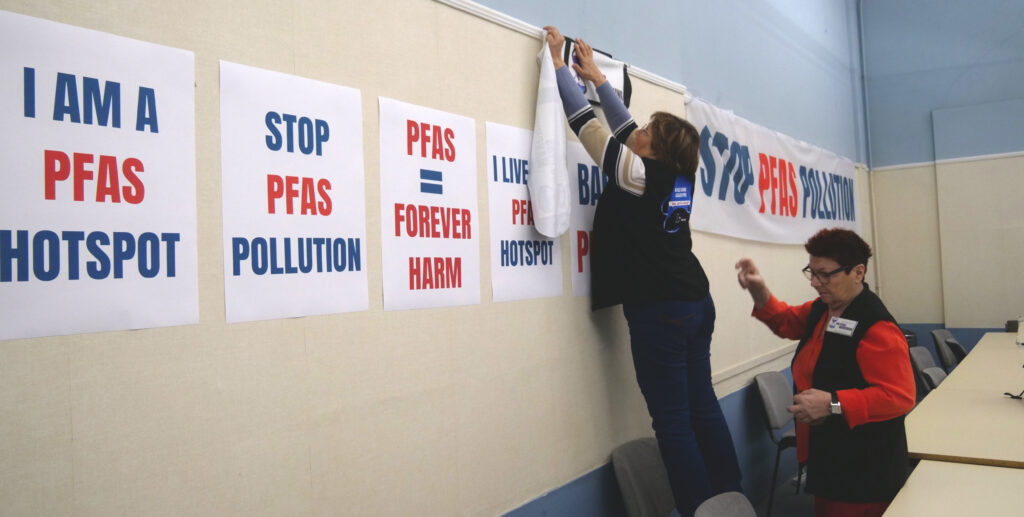
It’s a complex term that is increasingly heard in Brussels: per- and polyfluoroalkyl substances – better known as PFAS. These “forever chemicals” are a group of more than 10,000 highly persistent substances, found in a wide range of products, in the environment, and even in our bodies. They are linked to a number of serious health problems, including cancer, infertility, birth defects and immune system disorders. In Brussels, debates over PFAS are intensifying as the EU moves forward with plans to restrict them. While industry voices claim that a ban could undermine competitiveness, the European Commission estimates that inaction could cost society at least €440 billion between 2025 and 2050. But the human dimension of PFAS pollution is too often absent from the conversation.
PFAS are not just abstract figures. They represent a tangible and deeply human crisis. Behind every statistic is a person – a parent, a child, a neighbour – whose life has been disrupted, damaged, or cut short. More than 23,000 sites across Europe are already contaminated by PFAS, with an additional 21,500 suspected sites. An estimated 12,5 million Europeans are drinking contaminated water. In some areas, residents are advised not only to avoid drinking tap water, but also to refrain from eating homegrown vegetables or eggs, from breastfeeding, or even from letting their children play outside. Across Europe, parents now live with the unbearable feeling that they may have unknowingly exposed their children to harm. Many communities are facing serious health issues far earlier, and far more frequently, than they ever should.
Yet this human impact is largely left out of the debate. The European Chemicals Agency (ECHA) is currently consulting on a draft opinion from its Socio-Economic Analysis Committee (SEAC), which focuses mainly on costs for companies and on availability and performance of alternatives; the far greater human aspects are overlooked in these economic and technical discussions. Meanwhile, industry efforts to shape the narrative are intensifying, with a surge in events, publications, and statements warning of the economic impact of regulation. As the coming months prove decisive for PFAS policy, this pressure is unlikely to ease.

This raises a fundamental question: in a city that has just been designated European Capital of Democracy, who speaks for the millions of Europeans affected by PFAS pollution? Who ensures that their voices are heard alongside those who profit from these chemicals?
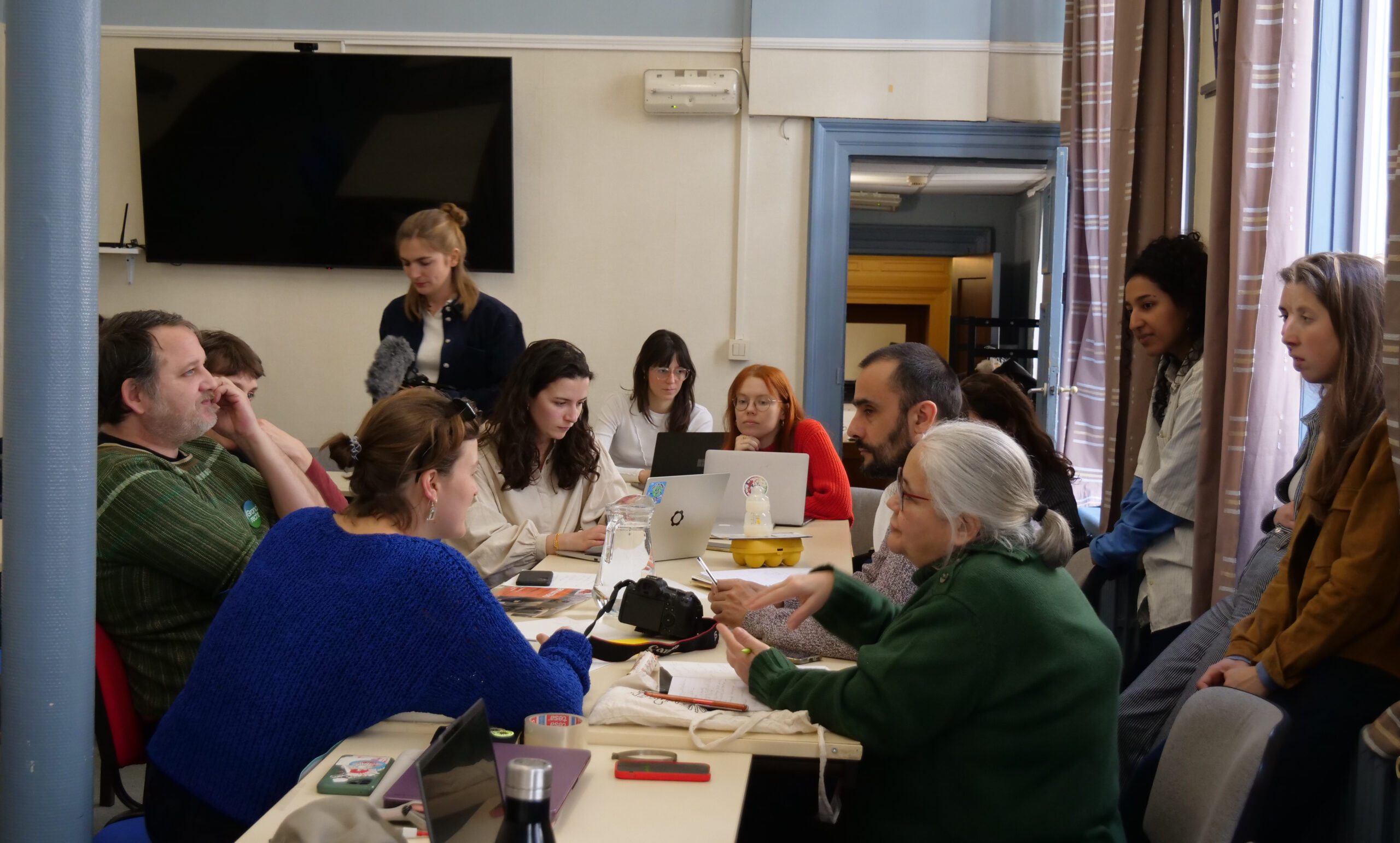
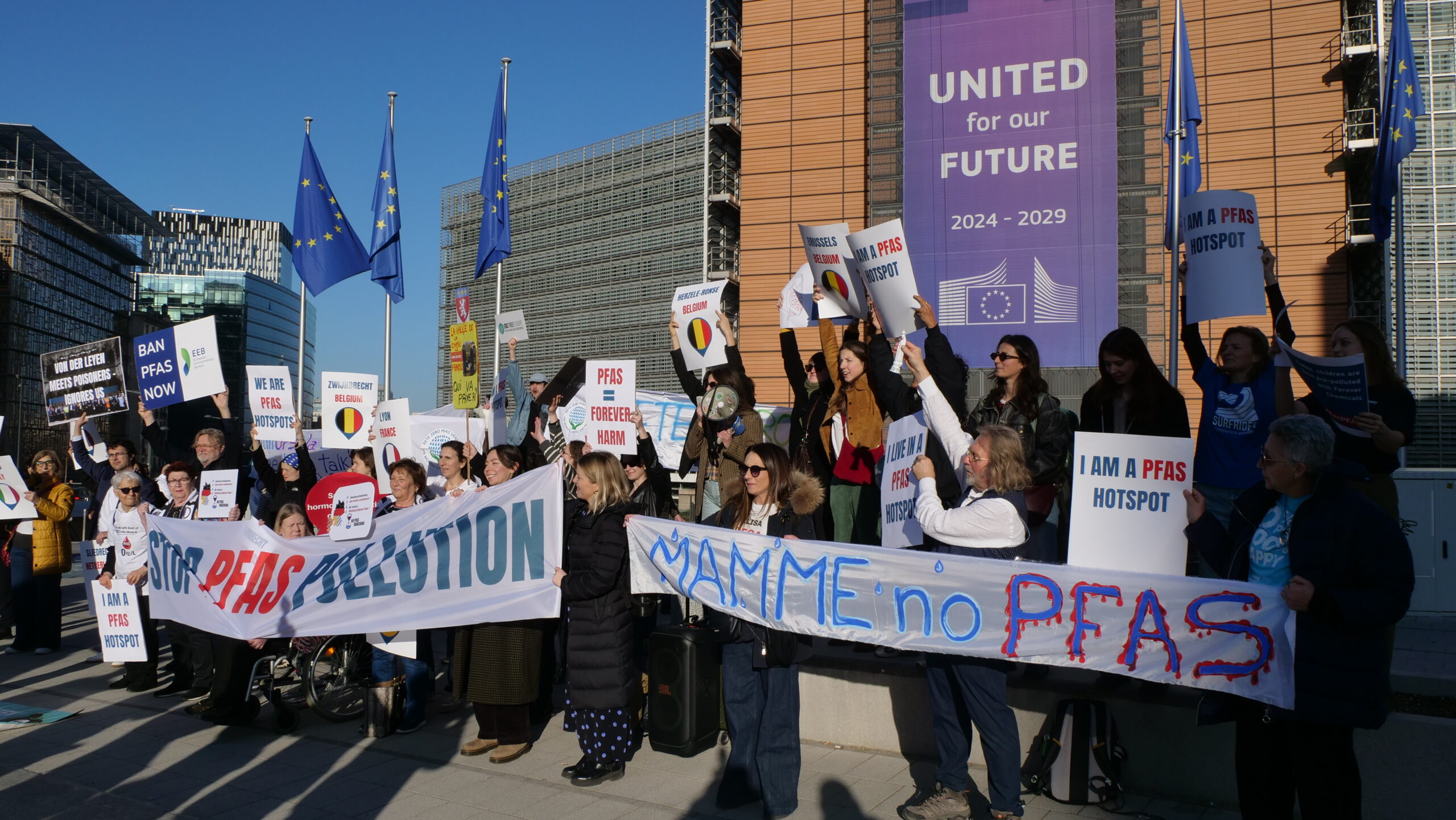
In early March, a powerful answer began to emerge. 27 citizens from Germany, France, Belgium, Denmark, Italy, and the Netherlands came together in Brussels for a three-day gathering supported by the European Environmental Bureau. As reported by Stéphane Horel in Le Monde, the moment marked a turning point in the fight for an EU-wide PFAS ban. These were not professional activists, but parents, farmers, and residents whose lives have been upended by contamination.

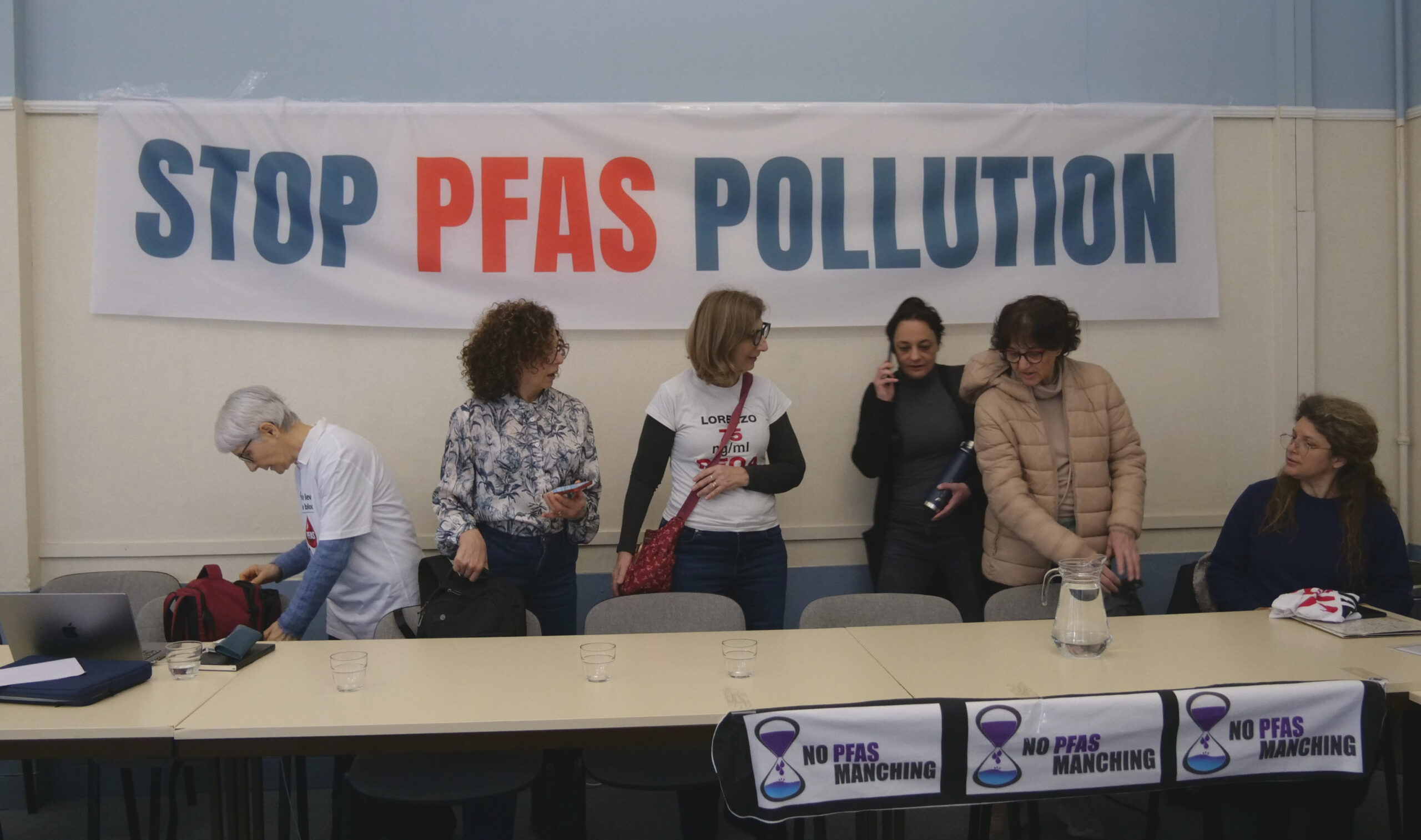
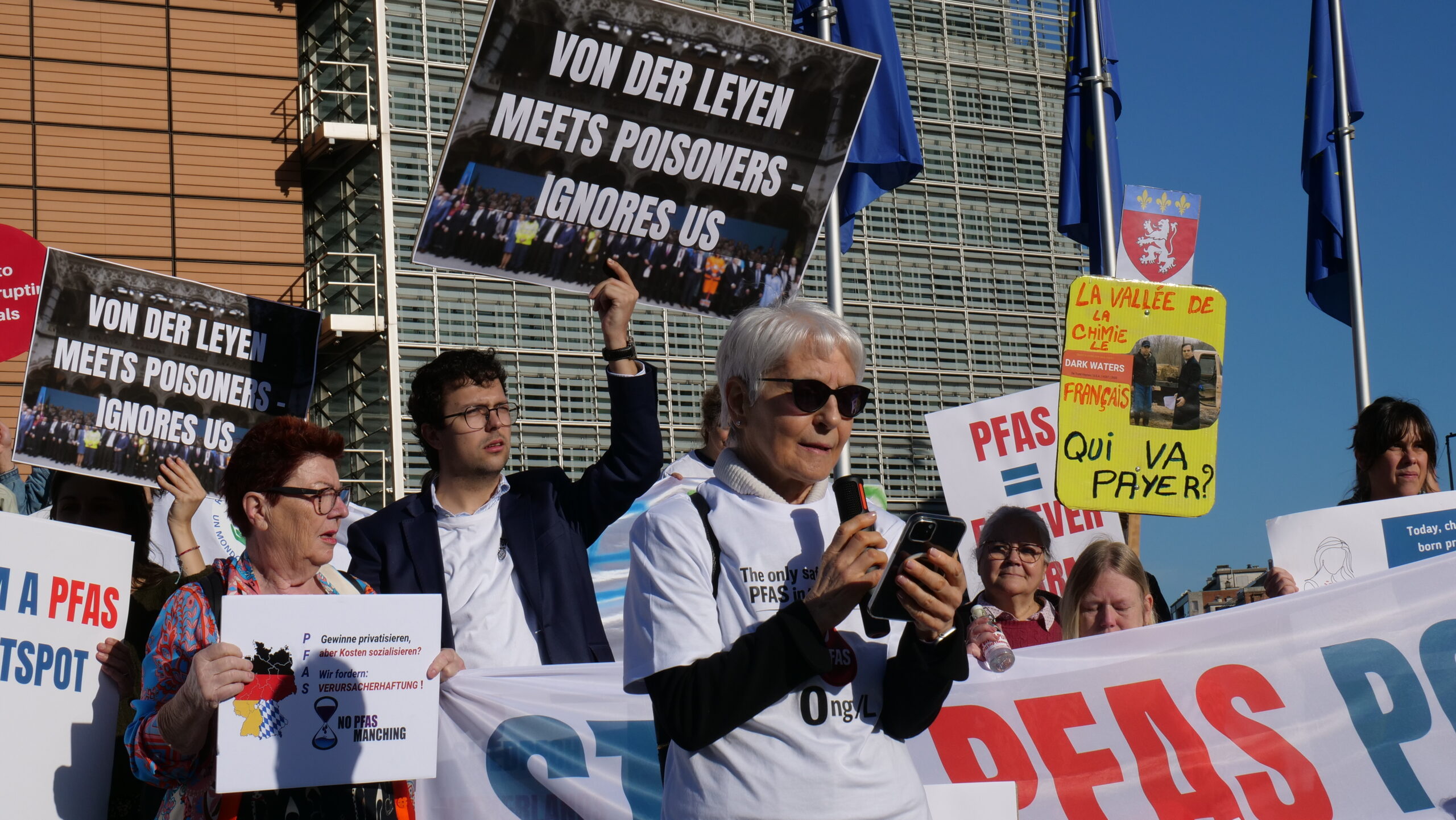
For years, communities like these have been fighting in isolation. This time, they came together, receiving training on EU policymaking and learning how to make their voices heard. On 5 March, after their third unanswered request for a meeting with European Commission President Ursula von der Leyen, they gathered outside the Berlaymont building with a stark message: “She meets poisoners, ignores us.”
Their mobilisation continued with a “PFAS lobby tour” organised by Corporate Europe Observatory, handing out symbolic “PFAS beers” to lobbyists. The group also met Members of the European Parliament, including some representing heavily polluted regions. Their visit culminated in two public events – one at a cinema and another at the European Parliament – showcasing two documentaries: How to Poison a Planet and PFAS, Our Forever Poisons, both highlighting the ongoing struggle for justice.
Their message is simple and urgent: Europe must urgently turn off the tap and stop adding to the chemical burden already accumulating in our bodies. But for many communities, the damage is already done. PFAS contamination will linger in their environments – and their bodies – for generations to come.
One key question remains: who will bear the cost of cleaning it up?

Related articles in Le Monde
– Residents of PFAS-polluted areas turn anger into political action in Brussels
– Bad blood