



🫡 It’s Roi on deck this week.
As we plunge into another record-breaking weekend in many parts of Europe, we’re all desperately seeking shade or looking for any body of water that looks safe to jump into. Small problem… Brussels doesn’t actually have one (and the rest of Belgium’s options are… questionable).
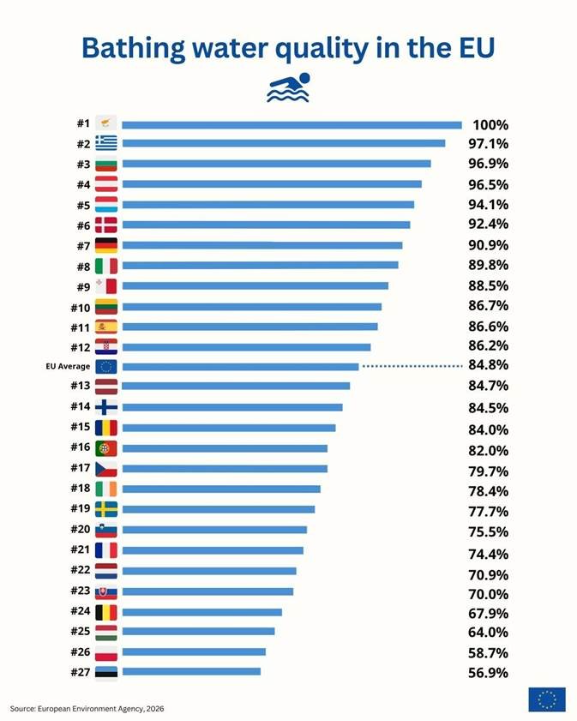
The European Environmental Agency just published a report showing how decades of environmental legislation, pollution control, and rules that have forced cities and industries to clean up their act have resulted in the highest, cleanest, and safest bathing waters to enjoy in the World. A quiet but powerful environmental success story.
Now, if only the people living in the EU capital, including yours truly, where these exact laws are made, could actually get a safe spot to swim and escape the meltdown, that would be fantastic.
🍃 In this edition:
- Mission not impossible: the future EU budget
- Victims of PFAS pollution meet with the EU Commissioner
- Votes Are In: Straight from Strasbourg’s Plenary
- On Our Radar: tech bro takeover
If you appreciate our work, consider buying us a coffee ☕

💸 MISSION NOT IMPOSSIBLE
EUCO this week. As EU leaders gather in Brussels, another battle over Europe’s future is quietly getting underway: negotiations on the next long-term EU budget. And the next EU budget will be a crucial one for the future. The decisions made over the coming months will shape how Europe spends hundreds of billions of euros between 2028 and 2034 – on energy, industry, transport, agriculture, nature and much more.
Budgets are often treated as technical exercises. In reality, they are political choices about the future we want to build and who benefits from it. For decades, Europe has spent hundreds of billions of euros every year importing fossil fuels, enriching petrostates while leaving households exposed to energy price shocks and pollution.
A budget for people not polluters. Ahead of the summit, the leaders of five major environmental organisations, including the EEB, joined forces to argue that Europe can no longer afford this dependency. The next EU budget should help households, regions and businesses invest in the solutions that strengthen resilience: renewable energy, energy efficiency, electrification and nature restoration.
The message is simple. Every euro spent reducing fossil fuel dependency is a euro invested in Europe’s own security, prosperity and democratic resilience. That means a fossil-free budget, stronger investment in climate and nature, and dedicated funding for programmes such as LIFE. Read the article here.
Miss Independent, or? As negotiations accelerate, European leaders face a choice: continue paying for dependence and the next energy crisis – or invest in a future that Europeans control themselves.
☣️ VICTIMS OF PFAS FINALLY MEET THE EU COMMISSION
A seat at the table. For the first time, people severely affected by PFAS pollution have been recognised as stakeholders in a high-level dialogue with EU Commissioner Jessika Roswall. It is a long-standing demand by the EEB and beyond, as these discussions have traditionally been dominated by industry voices.
Erin Brockovich, but today. PFAS-affected communities laid bare what this pollution means in practice: “huge uncertainty about potential long-term health effects” and “worry about our children and future generations.”
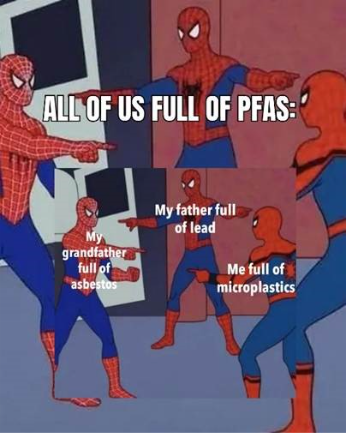
A reminder of what’s at stake. PFAS, also known as “forever chemicals”, are a group of non-degradable man-made substances linked to cancers, reproductive disorders and particularly high risks for children and unborn babies. There are around 100,000 contaminated sites across Europe, with the cost of inaction estimated at €1.7 trillion by 2050.
May the science be with you. Experts and affected communities called for urgent action: a strong universal PFAS restriction, accelerated clean-up financed by polluters, and investment in safer alternatives. Scientific evidence shows that industrial uses account for more than 60% of PFAS emissions in Europe’s major pollution hotspots and are a key driver of human exposure through contaminated food.
Polluters gonna pollute. The discussion also echoes a wider battle unfolding across Europe. This week, Commissioner Roswall met with the EEB’s Secretary General, Patrick ten Brink, to discuss the future of Europe’s Water Resilience Strategy. Just one year after its launch, major polluters are already pushing for greater “competitiveness” – which translates to higher profits with less accountability. The result could be weaker protections, higher clean-up costs and more of the burden shifted onto taxpayers and communities.

🗳️ VOTES ARE IN
Environmental updates from the plenary week of the European Parliament in Strasbourg.
🚗 Cars go circular. EU lawmakers have finally approved new rules to make cars more circular, meaning more recycling, more reused parts and less waste. That’s the good news. The elephant in the showroom remains untouched: vehicles keep getting bigger, heavier and more resource-hungry. After intense industry lobbying, Brussels hit the brakes on some of the most ambitious measures. Read our press release.
🦩 The flamingos have allies. The European Parliament has raised the pressure on Albania by calling for an immediate moratorium on all new developments in the Vjosa-Narta Protected Area. In its latest resolution, MEPs said compliance with the rule of law and EU environmental standards is a non-negotiable condition for accession, while demanding the repeal of legislation that has opened protected areas to large-scale development. Not bad for a movement that started only a few weeks ago.
🫠 Down the drain. In a controversial vote, the conservative European People’s Party (EPP) and far-right allies passed amendments seeking to suspend wastewater rules and parts of the “polluter pays” scheme requiring pharmaceutical and cosmetics giants to fund the removal of toxic micropollutants. Citing fears of medicine shortages, they have sought to weaken environmental safeguards designed to hold industries responsible for their waste, shifting the bill for water clean-up from polluters to citizens and taxpayers instead. While the resolution is non-binding, it sends a troubling political signal and increases pressure on the EU Commission to slow progress.
📉 Still addicted to imports? This week, EU lawmakers endorsed the controversial EU-US trade deal, clearing the way for ratification before the end of the month. While the agreement promises smoother trade relations across the Atlantic, its headline-grabbing €700 billion commitment to purchase US fossil fuels and nuclear energy continues to raise eyebrows. At the EEB, we warned that the pledge appears both unrealistic and difficult to reconcile with the EU’s climate goals. The ratified text does, however, include safeguards allowing the agreement to be suspended if Washington fails to uphold its commitments.
📡 ON OUR RADAR
Just one more fossil fuel, bro. Brussels hosted the latest attempt to revive the tired “climate versus economy” narrative this week, with US tech interests arguing that Europe should power its future data centres with fossil fuels in order to stay competitive. The ink on the EU-US trade deal has barely dried, yet the pressure to lock Europe into decades of continued fossil fuel dependence is already back in full force. As the EEB’s Maya Perera put it, data centres “must meet the highest efficiency and environmental standards and actively support the energy transition, not undermine it.” Full Politico article here.
Oink oink. In a country with more pigs per capita than anywhere else in the world, Denmark is pursuing an ambitious agenda to tackle pollution from factory farming and protect drinking water. The government is aiming for pollution levels even lower than those required under EU law – a reminder that environmental ambition and economic success are not mutually exclusive. Read the full article from DeSmog here.
EU businesses say: “Basta!” Not everyone is asking Brussels to weaken environmental rules. As deregulation fever continues to spread through the EU institutions, a growing number of businesses are warning that constant rollbacks are creating uncertainty and undermining investment. Having already invested heavily in decarbonisation, these first movers are urging policymakers not to reward industrial laggards that ignored the transition and are now lobbying for weaker climate commitments.
🔍 SPOTTED IN BRUX
Pay up. As EU leaders meet in Brussels for this week’s summit, the EEB joined CAN Europe, Eurodad, Transport & Environment and others in calling for a permanent tax on oil and gas profits, with the revenues channelled to households and the clean energy transition. Six European oil majors booked a combined $22 billion in profit during the first quarter of 2026, while households continue to struggle with energy bills and the costs of climate breakdown keep mounting. If polluters are making record profits from the crisis, they should contribute more to solving it. Take action too: sign the petition and help make polluters pay.
🧠✨ DOPAMINE HIT
As ever, here are a few happy updates to get your weekend off to a perky start:
- EU warns Albania over Kushner-linked project. Read more here
- Mangrove forests are healing after decades of human destruction. Read more here
- French Polynesia Protects Biodiverse Ocean Area Twice the Size of Arizona, Teeming with Life. Read more here.
- Countries pledge €3.4bn for climate adaptation, biodiversity protection and water security. Read more here
🧚 THE JOB FAIRY
- The European Environmental Bureau is hiring a Communications Officer.
- Doctors Without Borders is looking for an Event and Mobilisation Officer
- Environmental Justice Foundation is looking for a Coalition Coordinator
- European Food Banks Federation is looking for a Food Circularity and Strategic Partnerships Manager
- The European Environmental Bureau has an open tender for web developers to build its new website
☕ BUY US A COFFEE
From dirty lobbies to smear campaigns, billionaire bullies to climate collapse, we face a lot. Support our work, one coffee at a time.
📢 ORGANISE
If you are not involved, get involved.Find a member organisation near you.
🚀 FOLLOW US
Don’t stay delulu, deal with the pollulu 🍃✨ Stay connected with us on LinkedIn, Bluesky, TikTok, Instagram, and YouTube. Don’t miss out!
Are you a journalist?Subscribe here to stay up to date on our latest European environmental policy updates made specifically for you!
We have opened a new mailbox for your tips and tales from the ground. Got something you think we should feature? Reach out to us at newleaf@eeb.org.
✨ SIGN UP
Stay informed. Subscribe to our Newsletter by email for the latestEU green insider updates every Friday morning and to support our work. By subscribing, you also get early access to our in-depth analysis of key EU environmental policy.
By: Roi Gomez. Special thanks to the EEB’s editorial team: Alberto Vela and Ben Snelson. Editor: Christian Skrivervik