


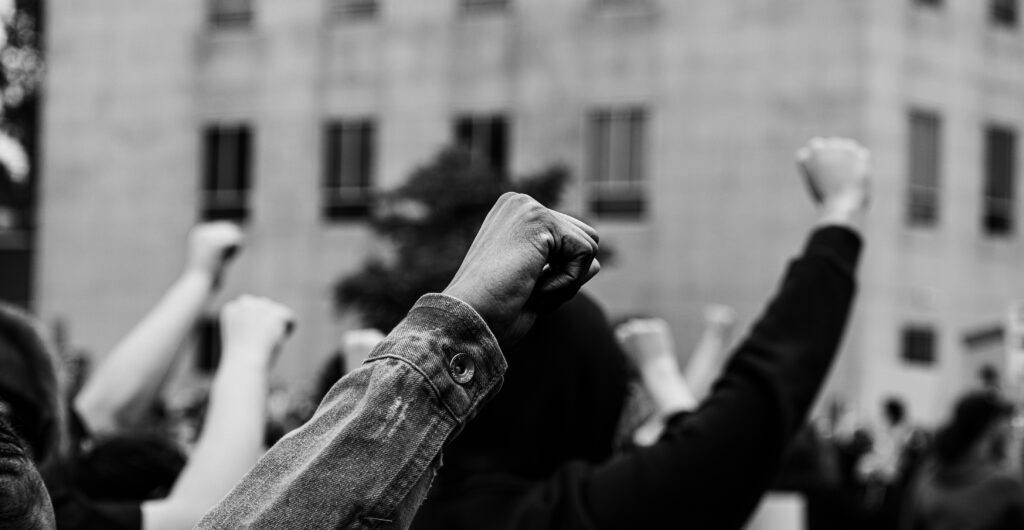
Since 2020, Belarus’s environmental defenders have faced systematic repression, criminalisation and exile. Despite mass NGO liquidations, arbitrary detentions and the dismantling of international protections, activists continue to document violations, support communities and defend environmental rights from abroad. Their courage shows that even under authoritarian pressure, the fight for a healthy environment and democratic participation endures.
The EEB spoke with Marina Dubina, a Belarusian environmentalist and human rights lawyer and expert at the NGO Ecohome, which now operates in exile after being shut down in Belarus.
Article by Lore-Randja Azib and Patrizia Heidegger.
Seeds of independent civil society
Under Soviet rule, activism was heavily restricted, yet environmental citizen movements offered one of the few semi-permissible spaces for public mobilisation. Severe pollution and industrial disasters allowed environmentalists to frame their work as protecting nature rather than opposing the regime. These anti-pollution networks quickly became early laboratories of dissent. They exposed state secrecy around nuclear accidents and toxic industries, mobilised thousands of people, and built cross-border networks demanding transparency and rights. By the late 1980s, they had evolved into proto-civil-society organisations that helped catalyse the fall of Soviet-backed regimes.
A brief period of democratic participation
Many environmental NGOs in Central and Eastern Europe trace their roots to these movements, which went on to seed democratic participation after 1989. Across the region, environmental organisations were founded throughout the 1990s. In Belarus, groups such as APB BirdLife Belarus and Ecohome played a vital role in protecting nature, advising institutions and supporting communities.
The democratic opening was short-lived; Belarus’s authoritarian turn began in the mid-1990s, when Alexander Lukashenko used a widely condemned constitutional referendum to expand presidential powers and bring courts, media and security services under his direct control. Even so, until 2020, Belarus remained home to a strong civil society ecosystem. Environmental organisations and individual defenders could operate as long as their work was not perceived as political.
The Crackdown on critical civil society
Over time, Belarus built a system of repression: criminalising NGOs, branding organisations as extremist and using the security services to intimidate or imprison dissenters. Environmental activists, journalists and human-rights defenders were among the first targeted, because they exposed nuclear safety violations, industrial pollution, human rights violations and electoral fraud.
The falsified 2020 presidential election and Lukashenko’s violent crackdown on mass protests marked a turning point. Opposition campaigns were banned, activists were hunted down and civil society became a direct target of state repression.
Environmental human rights defenders were swept up in this wave. Arbitrary detention, criminal charges, defamation campaigns, SLAPPs, home searches, confiscation of equipment, threats and intimidation became routine tools of control. Since then, more than 140 environmental NGOs have been liquidated, including Ecohome, APB BirdLife Belarus and the Minsk Cycling Community. Today, independent civil society survives only in fragments or in exile, drawing strength from the late-Soviet environmental movements that once opened political space.
Emblematic environmental defenders
Several landmark cases illustrate how environmental activism has been targeted. The Astravets Nuclear Power Plant, built in violation of international safety and environmental standards, triggered strong anti-nuclear protests. In response, activists faced home searches, defamation campaigns, arbitrary detention and entry bans, including a ten-year ban for one campaigner. The Brest Lead-Battery Factory, meanwhile, was imposed on local communities without genuine public consultation. Between 2017 and 2020, Ecohome faced SLAPPs from project developers, while activists endured disinformation campaigns, administrative detentions and threats.
Vitold Ashurak became the first political prisoner to die in a Belarusian penal colony after the 2020 protests. A civic activist from Biarozauka, he campaigned against a harmful glass-wool factory and raised the alarm about untreated wastewater discharged into the Dzitva River. Detained in the wake of the protests, he was sentenced to five years in a closed trial and died in May 2021, officially of “cardiac arrest”.
21 May is now marked as the Day of Solidarity with Political Prisoners in Belarus. Environmental organisations, including Ecohome, share the stories of imprisoned activists and encourage people to support them and their families through letters and donations.
Institutionalised repression
Belarus has built a legal system designed to fully eradicate civic participation altogether. Anti-extremism laws are weaponised to criminalise public engagement, while mass NGO dissolutions are paired with criminal liability for unregistered organisations. Activists in exile continue their work, but new rules allow Belarusian nationals to be tried and sentenced in absentia, without any possibility of defending themselves in court, and citizenship can be revoked for so-called extremist activities, creating a risk of statelessness. Labels such as “terrorist” and “extremist” organisations are assigned without court rulings, solely by the KGB or the Ministry of Foreign Affairs, and websites and social media channels are classified as extremist material. Any contact with a listed organisation exposes individuals to prosecution.
Marina Dubina describes the psychological and practical impacts of this repression. Being abroad, she notes, does not shield activists from persecution. The authorities increasingly deploy tools of transnational repression against them — in absentia trials, hacking of private correspondence, fraudulent chatbots designed to gather compromising information, and the inclusion of activists in joint wanted-persons databases with Russia. Pressure also extends to relatives who remain in Belarus, who face searches, interrogations and dismissals from their jobs because of the activism of family members abroad. Property can be seized, accounts hacked and discrediting campaigns launched.
This climate of fear narrows public debate, discourages people from reporting environmental violations and erodes expertise. “It becomes impossible to identify environmental problems in a timely way, obtain reliable information about them, and work toward solutions,” Marina explains.
Dismantling international frameworks
Alongside the crackdown at home, Belarus has withdrawn from international agreements that once gave rights to citizens and protection to environmental defenders. The Aarhus Convention guarantees access to environmental information, public participation, access to justice and protection for those who defend the environment. When the Convention’s Compliance Committee’s condemned Ecohome’s liquidation in 2021, Belarus responded by accelerating its withdrawal from the framework.
Marina emphasises that leaving Aarhus was not symbolic but had concrete consequences. Citizens lost the ability to bring complaints to the Compliance Committee, and Belarus fell outside the mandate of the UN Special Rapporteur on Environmental Defenders. International oversight weakened, reducing transparency and enabling further restrictions on environmental information and public participation. Belarus has since withdrawn from other accountability mechanisms too, including the Optional Protocol to the ICCPR and the Bern Convention.
Resilience…
Despite it all, Belarus’s environmental community continues to adapt. Many organisations have shifted their work into exile, among them Marina and her colleagues from Ecohome, where they now collaborate more closely with human-rights and pro-democracy groups. Environmental protection, Marina explains, is now understood as inseparable from human rights, access to information and democratic participation.
Inside Belarus, open cooperation is impossible, and activists often act alone and with extreme caution. Yet new initiatives keep emerging: developing strategies for future environmental reforms, monitoring the environmental impact of the war in Ukraine and continuing environmental education. Interest in environmental issues remains strong, even if people now report problems anonymously and through trusted channels. From abroad, activists monitor open sources, analyse official documents and track both state and independent media to piece together the environmental situation on the ground.
… and revival
Even under the weight of repression, Belarusian environmental defenders continue to show courage, persistence and a deep commitment to protecting their country’s natural heritage. People still care about their rivers, forests and communities, and they carry on the fight through quieter, safer and more creative means. Their resilience keeps the flame of civic participation alive. One day, when Belarus opens up again, these defenders and the networks they have sustained in exile will be ready to rebuild a vibrant, democratic civil society rooted in environmental justice and public participation.