



The EU has rewritten the rulebook on how vehicles are designed, recycled and taken apart. Some good news for circularity, but the automotive industry got exactly what it wanted on the issues that matter most.
After three years of negotiation, the EU has adopted a new law on vehicle design and end-of-life management, which enters into force on 13 August. In plain terms: it’s the law that decides how cars are built, what happens to them when they are disposed of, and who is responsible for what happens in between.
The verdict from environmental groups tracking the file is mixed. The European Environmental Bureau (EEB), Europe’s largest network of environmental organisations, and German NGO Deutsche Umwelthilfe (DUH) applauded the new law for strengthening the single market, pushing the automotive sector toward more circularity, and trying to reduce the environmental footprint of vehicles from the factory floor to the scrapyard. However, campaigners also warned that critical gaps remain, and a lot now rides on how well – or how loosely – EU countries will choose to implement the regulation.
What the law actually does
The Regulation merges two ageing pieces of legislation, the End-of-Life Vehicles Directive and the 3R Type-Approval Directive, into one coherent law covering how vehicles are designed and how they are dismantled and recycled once they are finished on the road.
It mostly targets cars and vans, with certain requirements stretching to cover buses, motorcycles and trucks too, while vehicles of historical or cultural interest – think classic cars and old-timers – are exempted.
The wins
Campaigners point to a handful of genuinely useful tools baked into the new rules.
More circular design. While cars already had to be 85% reusable or recyclable under the previous legislation – although this requirement was poorly defined– the new Regulation requires vehicles to be designed so that a wide range of components can be removed once they reach the end of their life. Electric-drive motors and batteries must remain removable throughout the vehicle’s lifetime, reflecting their environmental impact and the rise of e-mobility.
A Circularity Passport. From 1 September 2032, every vehicle placed on the European market will come with a digital record detailing the components it is built from and the substances it contains – a kind of ingredients label for cars, designed to make recycling, repair and reuse easier down the line. This means that vehicles will join the growing list of products that will be equipped with digital product passports in the future.
An EU-wide Extended Producer Responsibility (EPR) system. Manufacturers will now have to pay a financial contribution to support the cost of collecting and recycling the vehicles they sell, with the bill scaled by “eco-modulation” criteria. This means that heavier cars and vehicles loaded with hazardous substances will cost their makers more, while lighter, cleaner vehicles will cost less. This is a financial nudge in the right direction, although loopholes remain for the 800,000 used vehicles exported yearly beyond the EU, especially to African countries.
Minimum recycled content requirements for plastics from 2032, although the target was watered down significantly during the negotiations compared to the initial proposal, despite the call from waste management and recycling industries, automotive suppliers and NGOs. This means that a share of every new car will have to be built from plastics that have already been through the loop once. The Commission is also obliged to assess the feasibility of such targets for steel and aluminium, and will study whether similar targets should apply to other critical and strategic metals, such as magnesium, nickel and cobalt.
Better rules on reuse, collection and treatment. Before a scrapped vehicle is shredded and sorted, “authorised treatment facilities” will now be required to strip out specific parts and components first, recovering materials for reuse or recycling, rather than letting them get lost in the shredder. Besides, the law introduces stricter quality requirements for materials such as steel recycled from end-of-life vehicles, supporting greater circularity and the decarbonisation of the steel and automotive industries.
Limiting the export of old, polluting vehicles. Last but not least, the Regulation makes the export of used vehicles to countries outside the EU conditional on roadworthiness. This will limit the flow of the oldest and most polluting cars towards other countries, while retaining more valuable materials for recycling in the EU.
Taken together, and if enforced with real ambition, these measures could meaningfully cut emissions, close material loops, and hold manufacturers more accountable for the impact of their products.
The gaps
Environmental groups are less impressed with what did not make the final cut.
The new law sidesteps what campaigners call the sector’s most glaring problem: cars are getting bigger, heavier and more numerous, and that trend is driving up resource consumption and environmental damage.

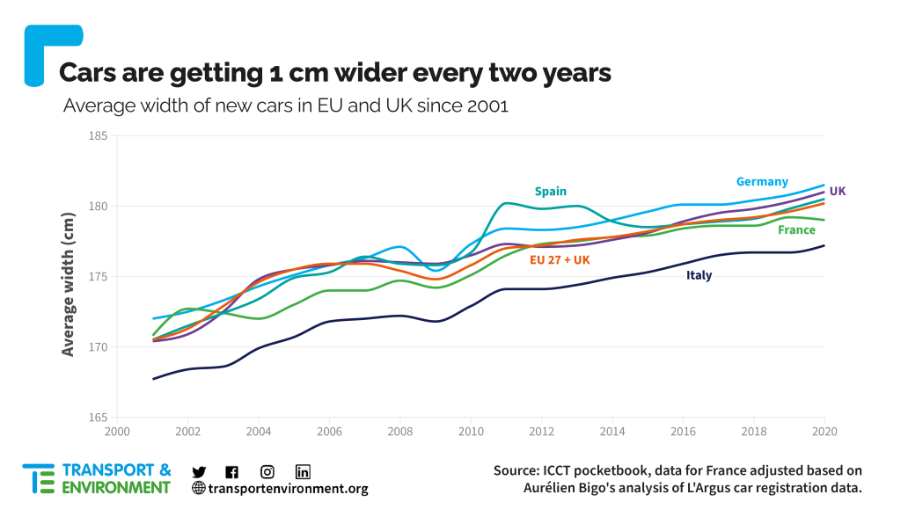
It also leans heavily on recycling as the fix, rather than the strategies that actually reduce demand for new materials in the first place: designing vehicles to last longer, making parts and components easier to reuse, and making repair the default rather than the exception.
Perhaps even most strikingly, the regulation leaves producers off the hook for used vehicles exported outside the EU. This despite long-standing concerns about transparency and accountability once vehicles leave EU borders – an issue environmental groups also raise for exports of used textiles and electronics.
“Lawmakers introduced important circular economy measures, but ultimately bowed to industry pressure,” said Fynn Hauscke, Senior Policy Officer for Circular Economy and Waste at the EEB, reacting to the final text. “They backed away from making manufacturers truly responsible for the vehicles they put on the road, and turned a blind eye to the industry’s continued trend towards ever-larger, heavier SUVs and more resource-hungry cars. They also watered down some of the most transformative provisions, particularly on recycled plastics. This is a missed opportunity to put the automotive sector on a genuinely circular path.”
Transparency is key – and so is implementation
Transparency and accountability remain key aspects in the management of vehicle waste. Barbara Metz, Executive Director at Deutsche Umwelthilfe (DUH), points to a scandal that is still fresh in regulators’ minds: the anti-recycling cartel uncovered by the European Commission in spring 2025, when car manufacturers and an industry association were fined €458 million for withholding crucial information on vehicle materials and dismantling, undermining informed consumer choices and hindering sustainable dismantling.
“The anti-recycling cartel uncovered by the Commission last year shows that producers are not taking resource protection and circular economy seriously enough,” Metz said. “We welcome that the new Vehicle Regulation sets out clearer rules. However, it provides Member States with considerable leeway. They must ensure that producers provide sufficient funding for treatment infrastructure. Other important challenges will be the prevention of illegal vehicle dismantling, and the promotion of reused spare parts.”
If you enjoyed this article, please consider buying the author a coffee.

