



Greta Thunberg was sitting two rows ahead of me on a train this week.
As I debated whether to say hello (and shamelessly ask for a post supporting our #HandOffNature campaign), I had a flashback to 2019. Millions of students walking out of classrooms, filling streets across Europe and the world, forcing climate action to the top of the EU agenda. It was a cool Pink Floyd-ish moment.
Without that wave of people power, it’s hard to imagine the European Green Deal taking shape a few months after. Imperfect as it is, that agenda remains Europe’s closest attempt at building a new social and ecological contract for the many.
I felt a similar buzz again in recent days while following the massive Flamingo protests in Albania. For nearly two weeks, thousands of young people have taken to the streets under the slogan “Albania is not for sale”, opposing plans to turn a protected island into a €1.4 billion luxury development linked to Donald Trump’s family.
As with the school strikes seven years ago, a new generation is standing up – and pushing back. As Lea Ypi writes, this is a generation willing to mobilise for an alternative model of development, “one that rejects oligarchic capture and connects environmental protection to democratic legitimacy”. A lesson in democratic self-respect: the future is not something that happens to us, it’s something we can and must shape.
And as you read these lines, Elon Musk is on track to become the world’s first trillionaire. This week, his platform and his own account were amplifying messages linked to the extreme violence directed at migrants in Belfast.
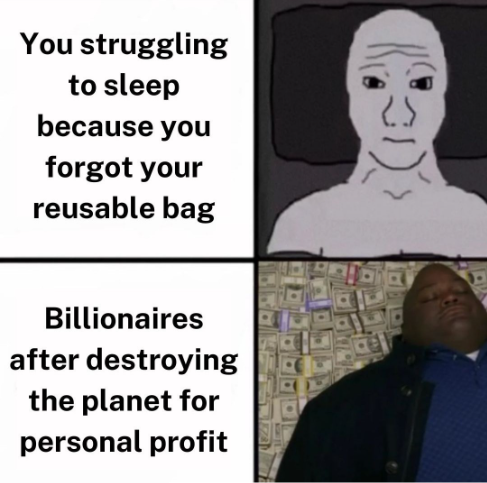
From our coastlines to our social media feeds, the reality is that more and more power, ownership and wealth are being concentrated in fewer and fewer hands. Make no mistake, this is one of the defining battles of our time. Our future should not be pre-written by fossil fuels, billionaires or supremacists.
And that brings us into this week’s New Leaf:
- ETS: the battle over EU climate flagship policy
- Conservatives love climate action
- Tracking clean air in Europe
- On our radar: PFAS, food and alternatives to planetary breakdown
- Dopamine hits and jobs
A final note of solidarity to our members in Albania and to all those defending our rivers, forests, and future. They are not for sale! 🦩✊
Since I’ve mentioned Lea Ypi, I should add that (together with my mate Roi) I recommend her book Free, a philosophical memoir of Albania’s recent history.
Enjoy the read and consider buying us a coffee if you like what we do ☕
– Alberto Vela, New Leaf

💸 POLLUTION PRICING WARS
The acronym on everyone’s lips: ETS. Brussels bureaucrats, industry lobbyists, and climate campaigners are once again preparing for what could be the carbon pricing battle of the decade. What is, on paper, a technical review of the EU Emissions Trading System (ETS) is rapidly turning into a full-blown political dogfight in July.
Industry vs industry. Forget the headline narrative of industry vs climate. The real fight is inside industry itself. On one side are the first movers, companies that have already invested in decarbonisation and now want a strong ETS to protect those bets. On the other are the laggards, still profiting from cheap pollution and lobbying for weaker rules, more free allowances, and even an ETS “time-out”.
Before you join the shouting match. Over the last few months, you’ve probably heard all sorts of things about ETS. Before adding your voice to the noise, it might be worth asking why the EU puts a price on carbon in the first place. This advocacy toolkit will help you cut through the fog of war.
Not an ETS fan… but actually an ETS fan. At its core, carbon pricing does something very simple: it puts a price tag on pollution. It makes the cost of polluting visible. It forces polluters to pay. And it rebalances the playing field to make the clean option the cheaper, smarter choice.
Money talks. Is it enough on its own? No. A carbon price only works if it is backed by strong social policies and real investment to cut emissions. But without a price signal, pollution remains free, and fossil fuels keep their unfair advantage. We must keep the ETS course!
🏡 CLIMATE ACTION & PRACTICAL BENEFITS
It’s about living better. As you can see, climate policy often gets lost in abstract language: carbon prices, figures, targets, acronyms. But underneath it all, it comes down to improving people’s lives by heating their homes, keeping their cities cool (missed our heatwave edition?), moving around affordably, and paying their energy bills. Tools such as ETS2 will mobilise billions to help people get there.
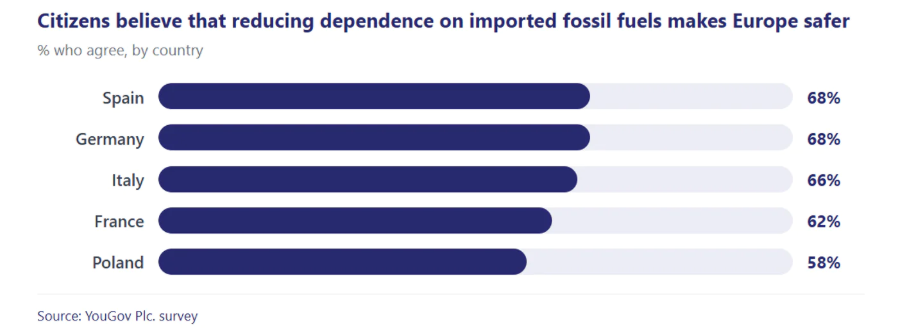
Popular across the aisle. A new YouGov poll shows strong support across political lines for the energy transition when framed around security and cost of living. Right-wing voters are among the most supportive groups: 70% of CDU/CSU voters (Chancellor Merz’s parliamentary bloc, EPP) back EU EV funding; 76% of Fratelli d’Italia voters (Prime Minister Meloni’s political group, ECR) support government funding for heat pumps; and 66% of French President Macron’s voters (Renew) support government spending on EVs.
Lithuania shows what this looks like. Its newly approved Social Climate Plan (only the second adopted by the EU Commission after Sweden) will mobilise €884 million for households in the transition: home renovations, bikes, EVs, revamped public transport, and targeted support for vulnerable households.
In short: when carbon money comes back to people, climate policy stops being abstract, and starts looking like cheaper bills, happier communities and better lives. Yet most EU countries are still late to the social climate party.

👀 CLEAN AIR, UNDER WATCH
A breath of fresh legislation. In 2024, the EU adopted stronger air quality rules to better protect people’s health.
From law to lungs. Before anyone actually breathes easier, governments need to do their job: turning EU policy into national law. Consultations, draft bills, monitoring systems, enforcement plans, political trade-offs… the kind of process that rarely trends on social media, but decides whether people actually live longer.
Your air quality check-up. Developed with our national partners, our new transposition tracker follows how countries are actually implementing the revised Ambient Air Quality Directive – who is moving forward, who is stalling, and who is quietly hoping no one is watching.
Air pollution is still Europe’s biggest environmental health risk. It’s linked to more than 57,000 premature deaths a year in Germany, over 20,000 in Spain with 60,000 hospital admissions, and more than 40,000 deaths annually in Italy due to fine particulate dust pollution alone.
📡 ON OUR RADAR
Time to turn off the PFAS tap. TFA (one of the most widespread ‘forever chemicals’ in Europe) has just been officially classified by the EU’s scientific risk committee as mobile, very persistent, and toxic for reproduction. In plain English: it doesn’t break down, it spreads through water, and it ends up in our bodies. This systemic pollution problem is already showing up in rainwater, groundwater and drinking water across Europe. It’s been found in penguins in the Antarctic and polar bears in the Arctic. The science is catching up with reality. The question now is when policy will do the same. Read more.
What you eat is political. A coalition of 21 health and citizen organisations is calling on the EU Commission to finally act on Europe’s food environment. Because the problem isn’t just individual choices, but a system where unhealthy food is cheaper, more visible, and more aggressively marketed. The solution is simple: stop making the unhealthy option the default. Read more.
The rat-race exposed. For decades, we were told that economic growth would lift all boats. Yet inequality has soared, public services have weakened, and the climate crisis has deepened. A new UN-backed roadmap argues that a good life for all is possible, with decent work, strong public services, fairer taxation and economies designed around wellbeing rather than endless extraction.
Another report that will make you smile. It is truly possible to raise living standards, reduce inequality and keep global heating below 2°C, but only with deep structural improvements and shaking the system into fairness. Think wealth taxes on billionaires who profit from labour, to shorter working hours, major shifts in diets, and massive investment in education and health instead of carbon-intensive industries. Read more.
🧠✨ DOPAMINE HIT
As ever, here are a few happy updates to get your weekend off to a perky start:
- Despite Trump’s latest push for coal, solar generates more electricity than coal in the US for the first time.
- Forests now cover over a third of Italy, overtaking farmland for the first time since the Middle Ages.
- Domestic manufacturing can meet more than 100% of EU demand for wind turbines, EVs and heat pumps, new report finds.
- Italy’s nature-rich Po Delta saved from offshore drilling by ‘crucial’ court case win.
🧚 THE JOB FAIRY
- Climate Trends is hiring a Digital Associate and a Programme Manager (Strategic communications)
- Oceana is looking for a Senior Communications Director
- Zero Waste Europe is looking for a Network Development Officer
- REScoop.eu is looking for a Senior Communications Officer
*Are you our next member of the New Leaf’s editorial team? Well, keep your eyes peeled as we’ll be recruiting for a Communications Officer to join our team shortly.
☕ BUY US A COFFEE
From dirty lobbies to smear campaigns, billionaire bullies to climate collapse, we face a lot. Support our work, one coffee at a time.
📢 ORGANISE
If you are not involved, get involved.Find a member organisation near you.
🚀 FOLLOW US
Don’t stay delulu, deal with the pollulu 🍃✨ Stay connected with us on LinkedIn, Bluesky, TikTok, Instagram, and YouTube. Don’t miss out!
Are you a journalist?Subscribe here to stay up to date on our latest European environmental policy updates made specifically for you!
We have opened a new mailbox for your tips and tales from the ground. Got something you think we should feature? Reach out to us at newleaf@eeb.org.
✨ SIGN UP
Stay informed. Subscribe to our Newsletter by email for the latestEU green insider updates every Friday morning and to support our work. By subscribing, you also get early access to our in-depth analysis of key EU environmental policy.
By: Alberto Vela. Special thanks to the EEB’s editorial team: Ben Snelson and Roi Gomez. Editor: Christian Skrivervik