


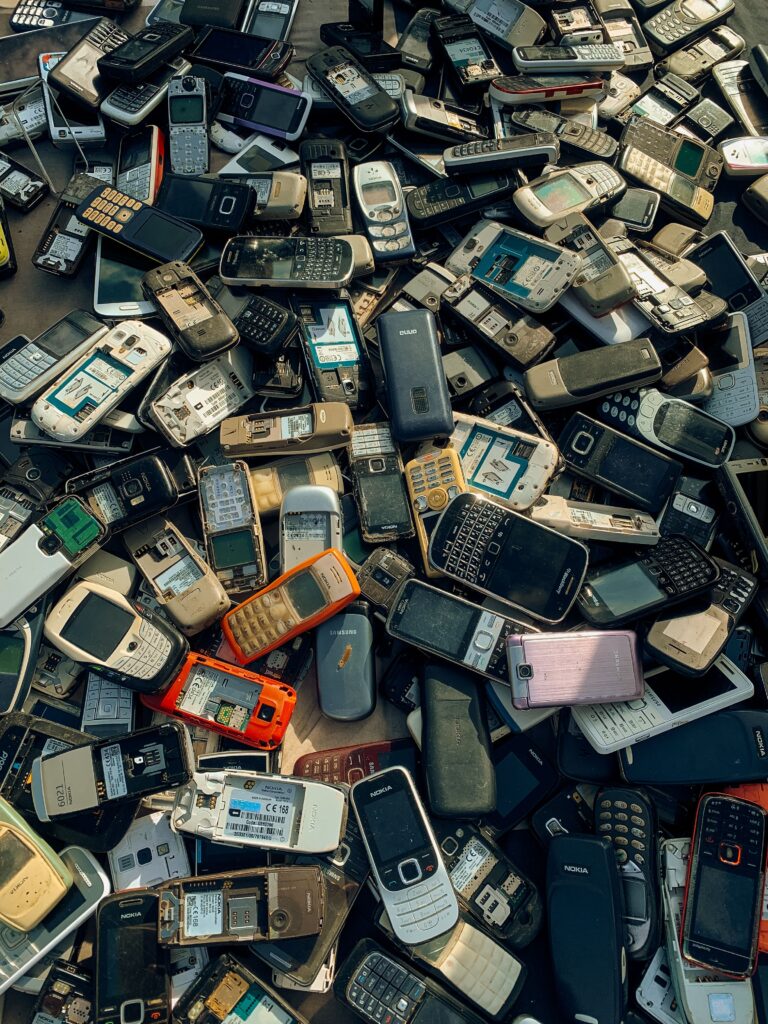
Europe is buying and discarding more electronics than ever. As the EU prepares to revise its electronic waste rules, environmental and social organisations are calling for a fundamental shift: from managing ever-growing quantities of waste to preventing it in the first place.
What happens to our phones, laptops and washing machines when we dispose of them? Too often, products that could be repaired or reused are damaged during collection, recycled prematurely or disappear into undocumented waste streams.
Meanwhile, Europe is consuming more electronics than ever. In 2023, more than 14.4 million tonnes of electrical and electronic equipment were placed on the EU market – an increase of more than 89% since 2012. As sales grow and products are replaced, electronic waste is piling up.
This is not only a waste problem. Electronics are packed with metals, plastics and critical raw materials whose extraction can cause severe environmental damage and social harm. When devices have short lives or valuable components are lost, Europe ends up importing or mining tonnes more resources than necessary.
The EU’s Waste from Electrical and Electronic Equipment (WEEE) Directive was meant to tackle these impacts. However, more than a decade after its last major revision, too many products remain difficult or expensive to repair, too little equipment is reused, collection is inadequate, and valuable materials continue to be lost – as assessed by the European Commission in 2025.
So, how can Europe change course?
The European Environmental Bureau (EEB) and a broad coalition of civil society organisations and businesses in the repair and reuse industry have set out a blueprint for turning the revision of EU e-waste rules into a genuine circular-economy reform.
Prevention is better than cure
Europe cannot recycle its way out of the e-waste crisis. While better collection and high-quality recycling are vital for recovering critical raw materials, they only intervene after a product has become waste – and even the best processes cannot recover all the materials, energy and labour invested in making it.
The biggest way to stop leaking resources is to avoid unnecessary products and keep existing ones in use for longer. Waste prevention must therefore become the guiding principle of the revised rules.
This means tackling the root causes of the growing mountain of e-waste: growing sales, short product lifetimes, premature replacement, poor repairability and the destruction of unsold goods. The new framework should therefore set binding waste prevention targets, restrict disposable electronics, and ensure that longer-lasting design and affordable repair become the norm – either under Ecodesign laws or directly in the revised WEEE Directive.
Europe needs prevention, reuse and recycling – but in the right order. Products should be kept in use for as long as possible and only recycled once repair or reuse is no longer feasible.
On target?
Only what gets measured gets political attention, funding and investment. Yet the current e-waste law focuses primarily on collection and recycling, while offering few effective incentives to prevent waste or reuse products.
The revision needs a coherent set of separate but complementary targets to save precious resources before products hit the bin.
Binding waste-prevention targets are needed to curb the amount of e-waste generated over time. Their design should reflect differences between product groups and factors such as average lifetimes. Better data on product lifetimes, repair and reuse would also make progress more visible and policies more accountable. Learnings can be derived from prevention targets recently introduced through the new Packaging Regulation and the revised Waste Framework Directive on food waste.
Reuse needs its own binding target, separate from recycling. Today, both recycling and preparation for reuse count towards the same objective. Because recycling is often cheaper and easier to finance, reusable products are often shredded even when they can be repaired. A dedicated target would give reuse a fighting chance, provide certainty for investment and support local jobs, including in the social economy. Member States like France and Belgium are already leading the way, having implemented such targets nationally or regionally.
Collection targets must become more effective too. Return locations should be convenient, retailers should accept discarded products without unnecessary conditions, and financial incentives such as deposit-return systems should be considered for products with high environmental impacts or valuable raw materials.
Finally, recycling targets must look beyond total weight. The current mass-based approach favours bulky materials while overlooking critical raw materials used in small quantities. Material-specific targets and mandatory treatment standards are key to keep rare earths and other strategically important resources in the European economy, making the bloc more independent and resilient.
Responsibility that does not end at the bin
Manufacturers should be responsible for the products they sell, but in reality, existing Extended Producer Responsibility (EPR) schemes are fragmented across Europe, and focus largely on financing collection and treatment after products become waste.
Properly designed, EPR could be a powerful prevention tool. It could fund repair and reuse, reward longer-lasting products, and make producers accountable for reducing waste. However, this requires a fundamental overhaul and harmonisation of the system.
How?
All producers should participate in organisations to jointly take responsibility for the products they put on the market over their entire lifecycle. These bodies should be directly responsible for meeting binding prevention, collection, preparation-for-reuse and recycling targets. Their governance cannot be left to producers alone: municipalities, social enterprises, repair and reuse operators, and civil society must have a meaningful role in decision-making.
Producer fees must also finance activities including repair funds and bonuses, reuse and refurbishment, professional training, spare-parts recovery, reuse-friendly collection sites and consumer information. A dedicated share should support social enterprises, which combine environmental benefits and local employment.
Fees should be part of a bonus-malus system that makes durable, repairable, upgradeable and reusable products cheaper and wasteful designs more expensive. The financial difference needs to be big enough to actually change how products are designed and made. Simply rewarding compliance with minimum legal standards will not shift the market.
Responsibility must not stop at Europe’s borders either. Used electronics exported from the EU eventually become waste elsewhere, but the fees collected when those products were first sold remain in Europe. Part of that funding should follow exported products and support safe collection and treatment in receiving countries, protecting workers and communities from environmental and health impacts. A recent study on used clothing exports commissioned by the EEB provides detailed recommendations on how this could be made possible.
The reform must also ensure that online marketplaces verify sellers’ compliance before products are offered for sale, and assume legal and financial responsibility where no other liable operator is established or reachable in the EU.
Handle with care
Targets and funding will achieve little if potentially reusable products do not survive collection or cannot reach the right operators.
Too often, electrical equipment is dropped into containers, exposed to rain, mixed with other waste or damaged during transport. By the time reuse organisations gain access, products that could have been repaired are beyond saving. The revised rules should require reuse-first sorting before recycling, and set mandatory standards for transport and logistics that preserve repairability and reusability. Consumers should also be able to separate functional or repairable products at collection points.
Besides, recognised preparation-for-reuse operators – particularly social enterprises – need priority access to collected equipment. Waste operators and producer responsibility organisations should be required to cooperate with them, rather than treating access as a voluntary concession.
Time to reboot
The revision of the EU law on e-waste is a chance to do more than manage a growing mountain of discarded electronics: it can reduce resource use, make repair and reuse mainstream, support social enterprises, and strengthen Europe’s resilience.
To get there, EU policymakers must put prevention at the heart of the Directive, adopt targets that follow the waste hierarchy, transform producer responsibility rules into a driver of circularity, and give reusable products a genuine second chance.
The direction is clear: fewer products becoming waste, more staying in use and valuable materials recovered only when reuse is no longer possible. It is time for Europe’s e-waste rules to catch up.
If you enjoyed this article, please consider buying the author a coffee.

