Good morning New Leafer (or do you prefer New Leafie à la Taylor’s Swifties?),
As geopolitical storms continue to rage overhead, let’s all congratulate ourselves for getting out of bed today (or if you still haven’t made it that far, what’s your secret?).
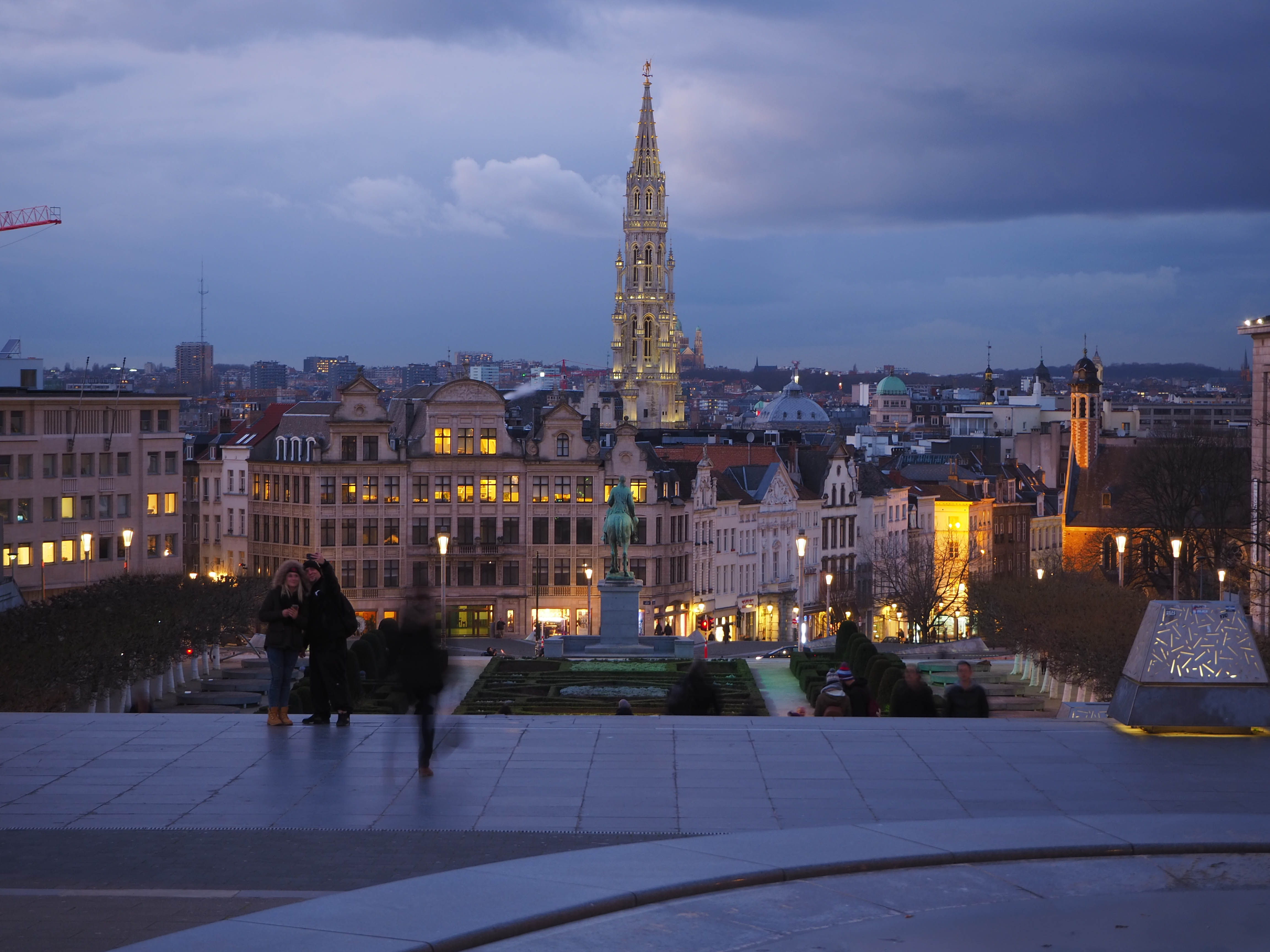
With things feeling a bit heavy, I have been trying to notice the small things: The bright full moon. The fact the sun sets after 5pm now in Brussels. Last night, I attended the première of the EEB-sponsored film Le Chant des Forêts (Whispers in the Woods in English) and was deeply moved by it.
Three generations of the same family uncover the gifts of the wintery Vosges-region forests with patience and silence. The birdsong of the “Grand Tétras” (“Capercaillie” or “Wood grouse”) was still turning in my head when I woke up, and now my colleague Roi tells me it is very literally reducing my stress. If you can get out to see the film, do! #RubyRecommends.

That sense of pause feels timely. This week, the EU Commission gears up to make big calls on the future of EU competitiveness, even as voices across Europe grow louder and clearer: profit cannot come at the expense of people and the planet.
Before diving in, we want to express our solidarity with our Ukrainian colleagues, their families, and communities, and with all those in Ukraine enduring blackouts and brutal −20°C temperatures as Russian strikes continue to target energy infrastructure.
Our member organisation, Ecoclub, has shared how Ukrainians are increasingly relying on decentralised solar panels, batteries and heat pumps as a vital survival strategy. You can read their article here.
Having met with our Ukrainian membership just last week, I know they are deeply appreciative of every person and every country providing support and solidarity during this time. Get to know them.
This week, we cover:
- what to expect from upcoming EU Council competitiveness retreat
- the #HandsOffNature call sweeping Europe
- why ‘Better Regulation’ needs to live up to its name
- what’s really worrying Europeans right now
- & more
☕ If you like it, consider buying us a coffee – my current go-to is an oat flat white (just saying).
🏎️ COMPETITIVENESS, AT WHAT COST?
Business first, questions later? On 12 February, EU leaders will meet for an informal EU leaders’ competitiveness retreat, where they will try to figure out how to get ahead in a tense geopolitical climate. Proposals include cutting “burdensome” laws, fast-tracking permits via Omnibus packages, and pushing the controversial “28th Regime”. Some are warning that this informal EUCO could trigger the starting gun of the biggest rollback of protections in decades.
Rollback or eyeroll – Leaders are also expected to discuss a joint statement by Merz and Meloni, which openly calls for deeper regulatory cuts for European businesses. Taken together, these discussions risk paving the way for further dismantling of EU rules – including on nature protection, Europe’s Emissions Trading System, and methane.
Attention! Industry driving – The political choreography ahead of the Council leaves little doubt about whose voices are being prioritised. On 11 February, industry representatives will gather in Antwerp at an event organised by Cefic (the chemicals industry lobby) to mark the anniversary of the Antwerp Declaration – a business-led call for a “European Industrial Deal” that helped shape the Commission’s Clean Industrial Deal. According to Contexte, a new industry declaration may now be in preparation, potentially pushing to weaken elements of the Green Deal, including the carbon market.
Inside the Commission, the picture looks much the same. Preparations for the 12 February Council concluded on Thursday night with a dinner with BusinessEurope, the EU’s largest business lobby, a fitting end to a week of “competitiveness” discussions shaped around industry demands.
You’re not paranoid. The data backs this up. A new Table Media analysis shows that in 2025, 40% of meetings with Commissioners’ cabinets were held with companies and 29% with business associations, compared with just 16% with NGOs. Civil society access has fallen sharply (from 22%) since von der Leyen’s first term.
Dear leaders, – As heads of state prepare for these meetings, we wrote to them urging restraint against an at-all-costs approach to competitiveness. Evidence consistently shows that EU environmental laws support good local jobs, resilience, and long-term growth. High standards and healthy ecosystems are the foundation for a competitive, autonomous and sovereign future-proof European economy.
👊 A GROWING PUSHBACK
Health and nature? Priceless – Against the backdrop of these talks, the call from citizens across Europe is becoming impossible to ignore. In less than 72 hours, the Hands Off Nature petition gathered well over 126,000 signatures from people like you concerned about the powerful polluting industries and their political allies that are dismantling Europe’s environmental protections. The message is clear: “My health and nature are not for sale.”
EU take note – Signatories demand that European leaders defend the laws that protect people and nature, not bow to polluters and vested interests. And the list is growing by the minute!
Join our ever-growing call. See for yourself how many more have signed since Thursday evening. 👉 Add your name here 👈

🎲 COMMISSION, PLAY FAIR
Better Regulation for whom? Our concerns are not limited to political outcomes – they extend to how decisions are being made. This week, more than 50 social, environmental, and democracy organisations – representing millions of Europeans – sent an open letter to the Commissioners revising the Better Regulation agenda. We’re urging them to defend transparent, participatory, and evidence-based law making.
Episode recap – Under the banner of “simplification,” the Commission is advancing changes via Omnibus packages that weaken protections for health and the environment, often behind closed doors and without due process. In November, the European Ombudswoman concluded that this approach amounted to maladministration and called on the Commission to follow its own Better Regulation guidelines. Rather than correcting course, the Commission is now proposing to simply rewrite the rules instead.
Play fair – When the game isn’t going in our favour, it might be tempting to change the rules – but doing so risks losing the trust of the other players. Adapting the Better Regulation rules to suit a deregulatory agenda is no different, and it risks losing the trust of the very Europeans the Commission is supposed to represent and serve.
Not gonna work – Rather than making Europe more competitive, getting rid of impact assessments and robust public consultations will make processes less efficient, less targeted, less effective and harder to implement on the ground – all while eroding public trust.
Hear us! We call on the Commission to heed the concerns of the 50 CSOs and millions of citizens they represent and make better regulation better, not weaker!
The bottom line – Europe does not need to choose between competitiveness and protecting people and nature. What it does need is a competitiveness agenda that serves the public interest – not one written over lavish dinners with big business lobbyists.
🌍 IT’S A MOOD
Concerned but clear-eyed – The EU Parliament’s latest Eurobarometer survey shows Europeans are deeply aware of the risks we face – and increasingly united around the need to act. Safety and security remain top of mind, with two-thirds of respondents saying they are highly worried about natural disasters worsened by climate change, and another 20% moderately worried.
At the same time, Europeans continue to feel the squeeze of the cost of living and its impact on daily life. Many recognise that today’s economic model too often works for a powerful few, while too many struggle to make ends meet. These pressures are real – and they are shaping expectations of political leadership.
Taken together, these findings (echoing what we reported last week) point to something important: Europeans are ready for leaders who can protect people and the planet, and who understand that social wellbeing and climate action go hand in hand.

⛏️ RAW MATERIALS WATCH
Reality check on the EU’s mining push – This week, the European Court of Auditors published an assessment that raises serious doubts about the EU Commission’s Critical Raw Materials strategy and the Critical Raw Materials Act. The auditors warn that many “Strategic Projects” are still far from ready and may not deliver meaningful results by 2030. Long timelines, uncertain financing, legal disputes, and growing local resistance are not side issues, they are the reality on the ground.
Targets without a plan – The report also questions the logic behind the EU’s headline goals and how progress will be tracked. Circular solutions like recycling and substitution are mentioned, but they are treated as supporting measures rather than the backbone of the strategy. That leaves the EU stuck in an extraction-first mindset, even as the risks and conflicts pile up.
Use less, waste less – The biggest missing piece is still not being confronted: Europe’s rising material consumption. If demand keeps growing, no list of projects will deliver “security”. Real resilience means making products last longer, repairing and reusing, cutting waste, and designing without the need for new extraction. And it means putting communities, participation, and rights at the centre, not treating them as obstacles to manage.
📰 IN OTHER NEWS
🐷 IS EUROPE’S TOP COURT READY TO FIGHT FOR ANIMALS?
It’s a date – On 5 March, the European Court of Justice will hear the landmark End the Cage Age case against the European Commission. Nearly two years after legal action was launched, the case challenges the Commission’s failure to deliver on its 2021 pledge to phase out cages across the EU. Backed by 1.4 million citizens, the hearing goes beyond animal welfare, testing whether EU institutions will honour their promises and respect democratic will. Millions will be watching.
Want to learn more? Check out our ‘Factory Farming’ exhibition last year – here’s the video!
☣️ FISH, CHIPS AND PFAS?
“Forever chemicals” are contaminating Europe’s waters and the fish we eat. This week, the EEB’s water expert, Sara Johansson, presented key findings from our recent report, Forever Chemicals Poisoning Europe’s Waters and Fish: The Tip of the PFAS Iceberg, to the Market Advisory Council in Oostende.
Data from seven EU countries show up to 40% of wild fish exceed current PFAS safety standards, sometimes by hundreds or thousands of times. With monitoring required for only one of thousands of PFAS chemicals, this is likely just the tip of the iceberg.
❄️THE ALPS AND THE OPLYMPICS
Across the Alps, many communities are questioning the costs of hosting the Winter Olympics. The Games often mean heavy public spending, environmental damage and long-term burdens for mountain regions, while the benefits flow elsewhere. Ahead of the Winter Games, our newest member, CIPRA, is calling on the International Olympic Committee and host countries to put sustainability and long-term regional well-being ahead of short-term prestige.
🧠✨ DOPAMINE HIT
As ever, here are a few happy updates to get your weekend off to a perky start:
- Our member Deutsche Umwelthilfe (DUH) secured a landmark court ruling forcing Germany to strengthen its 2030 climate plans. Read more.
- Fossil fuel firms may have to pay for climate damage under proposed UN tax. Read more.
- Czechia’s last hard coal mine closes as 250 years of mining come to an end. Read more.
☕ BUY US A COFFEE
From dirty lobbies to smear campaigns, billionaire bullies to climate collapse, we face a lot. Support our work, one coffee at a time.
📢 ORGANISE
If you are not involved, get involved.Find a member organisation near you.
🚀 FOLLOW US
Don’t stay delulu, deal with the pollulu 🍃✨ Stay connected with us on LinkedIn, Bluesky, TikTok, Instagram, and YouTube. Don’t miss out!
Do you want access to exclusive in-depth analysis? Subscribe to our Substack. It’s a good idea, we promise.
Are you a journalist?Subscribe here to stay up to date on our latest European environmental policy updates made specifically for you!
We have opened a new mailbox for your tips and tales from the ground. Got something you think we should feature? Reach out to us at newleaf@eeb.org.
✨ SIGN UP
Stay informed. Subscribe to our Newsletter by email for the latestEU green insider updates every Friday morning and to support our work. By subscribing, you also get early access to our in-depth analysis of key EU environmental policy.
By: Ruby Silk. Special thanks to the EEB’s editorial team: Ben Snelson, Alberto Vela and Roi Gomez. Editor: Christian Skrivervik.