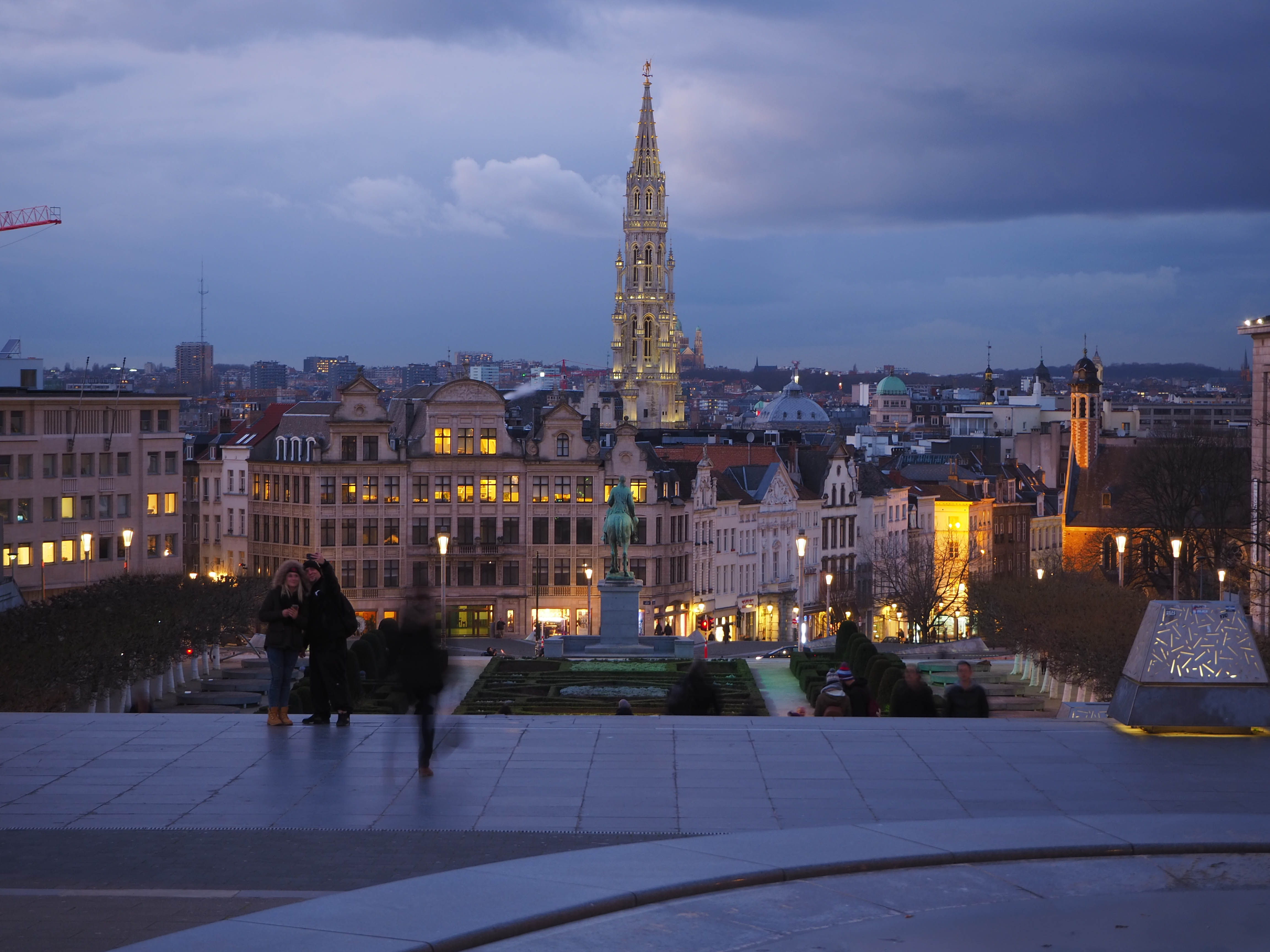
This article is a guest piece from Irene Midttun (European Community Land Trust Network) and Dali Malnoury (Community Land Trust Brussels).
Three out of four buildings across the EU are energy inefficient. That’s not just a technical problem – it’s a social one.
Across Europe, millions of people are living in cold, inefficient homes while energy bills climb and rents rise. Buildings are among the biggest sources of emissions, yet they are also where the worsening housing crisis and the intensifying climate crisis collide. Poor insulation and outdated heating systems don’t only drive up emissions and undermine climate targets; they deepen housing inequalities and lock many households into energy poverty.
This burden falls most heavily on low-income and marginalised households, who are more likely to live in older, poorly insulated housing. Renovation should be part of the solution. Yet too often, it becomes part of the problem.
In Brussels, for example, nearly 40% of homeowners lack the financial capacity to carry out renovation works, while existing support schemes remain inadequate and are often too difficult to access. Without the right social considerations in place, residents face higher energy bills and increased vulnerability to displacement or eviction, leading to “renoviction” and “green gentrification”.

If Europe is serious about a just energy transition, we need models that combine climate ambition with permanent affordability. Community Land Trusts (CLTs) offer exactly that.
A model built for long-term affordability
The Upcycling Trust project directly addresses these shortcomings by focusing on deep, circular renovation models that simultaneously respond to the housing needs of vulnerable households.
This pilot project builds on a model that has already gained recognition across Europe, Community Land Trusts (CLTs). With recent data (2025) showing that they are delivering over 30 000 homes across Europe, CLTs keep housing affordable by owning the land separately from the buildings on it, placing the land into permanent community control, but allowing the buildings to be rented or sold to residents. 78% (2025) of members of the European CLT Network set rents in line with national social housing rules, or peg rents or home prices to local incomes. For example, Brussels CLT homes are sold, on average, at 40 % below market value. The model’s built-in social safeguards make CLTs uniquely positioned to align environmental goals with social outcomes, particularly relevant in the context of renovation.
CLT-based renovation in practice
Breaking the “renoviction” and “green gentrification” pattern, the Upcycling Trust project embodies the potential of CLTs by upgrading homes to high energy standards without indebting homeowners or exposing households to real-estate speculation. Funded by the EU’s Interreg North-West Europe programme, it supports five pilot projects across Brussels, Ghent, Lille, Rennes, and Cork that apply CLT anti-speculative mechanisms to the renovation and retrofitting of existing public and private, including vacant, housing stock.

The approach is simple but powerful: vulnerable and low-income households, who are often overlooked by municipal programmes, receive social, legal, organisational, technical, and financial support throughout the entire renovation process. In return, land and homes are integrated into a CLT model. This means that while homeowners benefit from improved homes that meet the energy sustainability requirements, they accept capped pricing mechanisms and social criteria for sale and rental.
Where public investment should go
The first-ever European Affordable Housing Plan marks an important step by recognising non-profit and community-led housing providers, including CLTs. However, as the EU mobilises significant funding for renovation through climate and housing programmes, the key question is where that investment should go to ensure lasting public value. In this context, CLTs offer a clear answer.
Directing renovation funding through CLTs ensures that public money generates lasting social and environmental impact. Instead of fuelling property speculation, public funds help create permanently affordable, energy-efficient homes.
To support a truly just energy transition, policies and funding frameworks should:
- Safeguard long-term affordability for low-income households through anti-speculative mechanisms.
- Empower communities to co-govern energy transition in their homes and overcome split incentives between owners and tenants.
- Use renovation to expand the stock of affordable homes within the existing built environment, rather than relying solely on new construction.
Renovation without eviction
The Upcycling Trust project shows that renovation does not have to come at the expense of affordability or secure housing. Without affordability safeguards, the energy transition risks reinforcing the housing crisis rather than contributing to meet housing needs for low-income and vulnerable households. CLT-led renovation avoids this by upgrading existing homes rather than consuming undeveloped land, expanding the supply of permanently affordable housing while ensuring lasting social and environmental benefits.
For more information on how Community Land Trusts can help enable a Just Transition in your country, region, city, or town, please contact the European Community Land Trust Network info@clteurope.org, or any partners of the Upcycling Trust project: geert.depauw@cltb.be (Brussels CLT), cclt.upcyclingtrust@soa.ie (Cork CLT), jbdebrandt@mairie-lille.fr (Lille), l.tabourin@rennesmetropole.fr (Rennes).