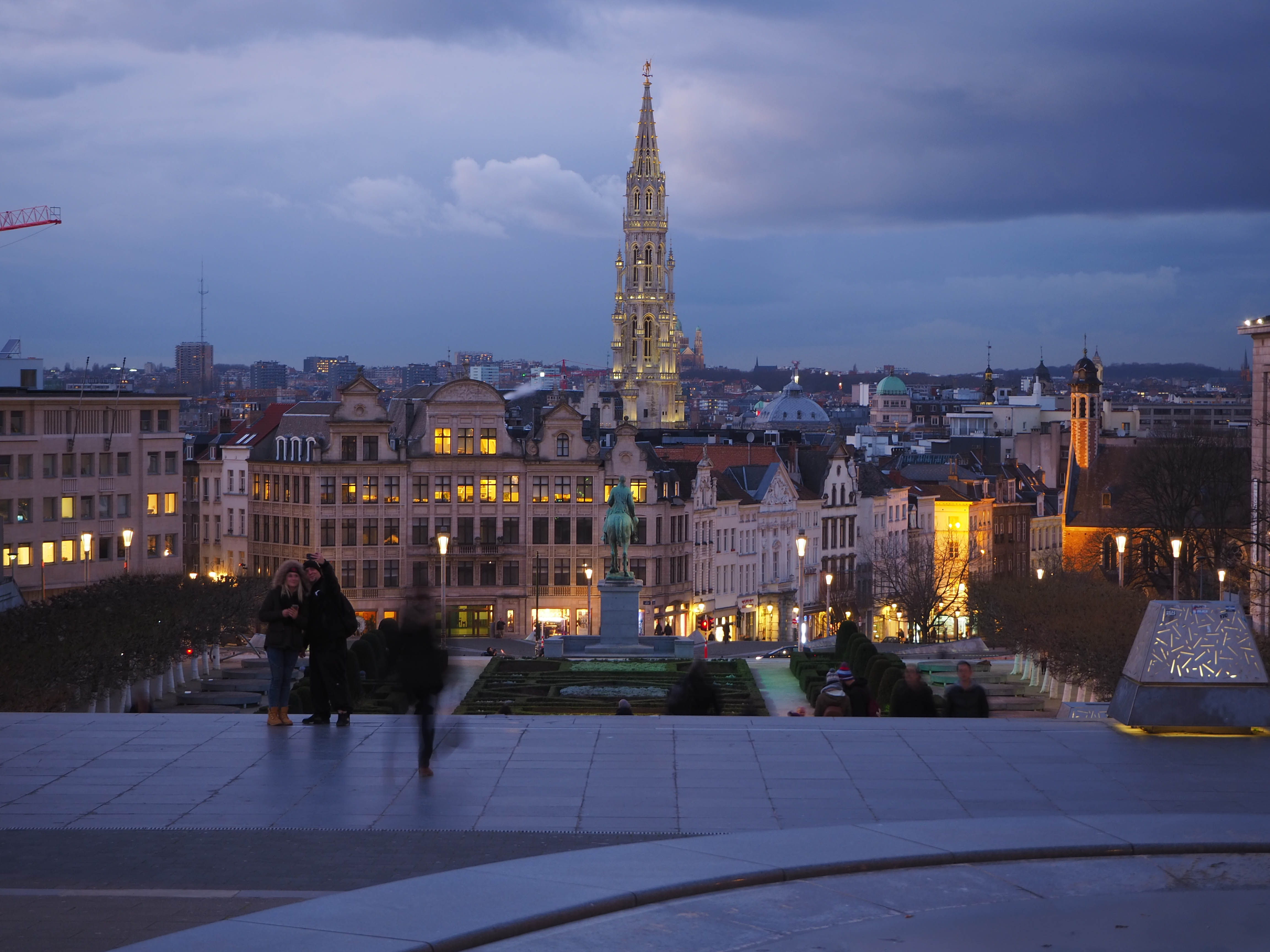
Across Europe, what once appeared as localised conflicts is converging into a recognisable continental pattern. Extraction is accelerating. Regulatory safeguards are being tested. And increasingly, water is emerging as the fault line that connects them all. At a moment when EU policy is increasingly framed through competitiveness, security, and industrial acceleration, environmental protections are quietly being reopened for reconsideration. These are signals from Europe’s environmental frontlines in 2026.
From the mountainous landscapes of Montenegro to the destabilised terrain of southern Spain, and into the corridors of Brussels itself, the continent is entering a decisive phase in how it governs its natural foundations. Beneath policy announcements lies a deeper story about water, land, memory and power.
A New Shockwave from Brussels
In December 2025, a major development sent ripples through Europe’s environmental community. The European Commission announced its intention to review the Water Framework Directive by the second quarter of 2026 under the RESourceEU Action Plan, explicitly linking the revision to the objective of promoting access to critical raw materials within the Union.
The Directive, adopted in 2000, has long functioned as Europe’s primary legal framework protecting rivers, lakes, groundwater, and coastal ecosystems. In 2019, after an extensive fitness check, the Commission concluded it was “fit for purpose” and required stronger implementation rather than revision.
Reopening it now, without a comparable evidence base, suggests a political rather than technical shift. The Commission has previously concluded, after an extensive fitness check in 2019, that the Directive was fit for purpose and required stronger implementation rather than revision. To reopen it now, without a comparable evidence base, risks undermining confidence in the stability of European environmental law. For governments, courts and communities alike, regulatory stability is not a technical detail. It is the foundation of trust.
Living Rivers Europe, a coalition of organisations working on river and water systems in Europe, did not mince words, calling the move reckless and warning that it could “open the floodgates to further contamination” while accelerating the destruction of rivers, wetlands, and wildlife. Weakening the Directive would not merely adjust regulatory language. It would reshape the continent’s environmental baseline.
The timing raised further concern, because just one week earlier, EuroMines had urged the Commission to expand derogations and delay compliance deadlines. Whether coincidence or convergence, the sequence reinforced a growing perception that industrial access is beginning to outweigh ecological precaution. At stake is not only water quality. It is the credibility of European environmental law itself.
Mining rarely leaves water untouched. Heavy metals discharged through mine effluent can infiltrate aquatic systems, degrade drinking supplies, and disrupt fragile ecosystems. Once contamination occurs, recovery often takes decades. Some damage becomes effectively irreversible within a human lifetime. Water systems do not operate on political timelines; once destabilised, they respond on ecological and geological ones.
Revisiting the Directive appears less like technical housekeeping and more like a structural shift in Europe’s environmental priorities.
Montenegro: Accession Meets Reality
Hundreds of kilometres southeast of Brussels, Montenegro offers a revealing lens into what happens when EU accession and legal ambition run ahead of institutional capacity.
The country is widely regarded as one of the EU’s most advanced accession candidates, and enthusiasm for membership is visible across society. Yet conversations with environmental activist Aleksandar Dragićević in Podgorica reveal a more complicated terrain beneath the optimism. As one of the most advanced EU accession candidates, Montenegro is required to align with the entire body of EU environmental law under Chapter 27 of the accession negotiations, covering water, waste, industrial emissions, chemicals and biodiversity.
In theory, alignment exports EU environmental standards. In practice, it tests whether those standards can withstand extractive pressure when enforcement capacity is thin.
Dragićević has worked closely with communities resisting harmful industrial projects, often compensating for gaps in administrative oversight. His experience illustrates a familiar paradox that legislative alignment can be accelerated, but enforcement cannot be improvised.
In Mojkovac, a northern town shaped by a former lead and zinc mine, history continues to exert pressure on the present. When proposals surfaced to reopen the site, residents mobilised swiftly. Legal challenges ultimately halted the project, demonstrating the power of civic engagement. Can reopening legacy extraction sites truly be reconciled with long-term ecological resilience when environmental scars remain visible decades later?
If Mojkovac reflects the persistence of historical damage, the situation at the Šuplja Stijena mine points to ongoing vulnerability. A sinkhole formed within a mining waste pond, allowing contaminated water to seep into the surrounding ecosystem and affect the broader water table, on which the surrounding villages in the area live. Local accounts describe an institutional response that struggled to match the scale of the risk.
Water contamination is rarely dramatic in its early stages. It spreads quietly, often becoming fully visible only after ecosystems and livelihoods have already been compromised. Heavy metals accumulate silently over decades, embedding long-term costs into landscapes and communities. The governance gap becomes even clearer when examining the pace of Montenegro’s legal reforms. Roughly 25 laws were reportedly adopted within two hours of parliamentary procedure, a striking demonstration of political momentum toward EU alignment.
But environmental governance does not function at legislative speed. It depends on inspectors, courts, scientific monitoring, and administrative continuity. Without these, legal texts risk becoming symbolic architecture rather than operational protection.
The Cost of Speaking Out
Environmental governance is not only about institutions. It is also about the safety of those who challenge them. Dragićević recounted how he had been placed under surveillance about a decade ago as part of an illegal monitoring operation allegedly directed by a former intelligence chief. Activists, opposition figures, and religious representatives were among those targeted. His phone was tapped, and a camera was installed inside his home.
Authorities have since acknowledged the scheme and opened investigations. Yet the episode underscores a deeper point that regulatory convergence must be matched by the protection of democratic space. Without civic freedom, environmental law remains fragile. Defending rivers and landscapes should never require personal risk.
Spain: When the Earth Moves
If Montenegro illustrates latent risk, southern Spain demonstrates what prolonged extraction can produce.
At Corta Atalaya, one of Europe’s largest open-pit mines, the ground itself tells a story of upheaval. The crater stretches roughly 1,200 metres and descends 350 metres, resembling less a landscape than an incision into the earth.
Walking the site with Andrés, a mining engineer turned environmental advocate, reveals a terrain marked by instability. Beneath the surface lies a network of nineteenth-century tunnels known as the English Voids, hollow cavities that undermine the ground above. Combined with a geological fault line and water tables already stressed by recent floods, the area forms a precarious system.
Residents have reported hearing subterranean cracking beneath their homes. Some have already left. History offers a stark precedent. In 1971, the village of La Atalaya was erased entirely to make way for mine expansion. Earlier settlements met similar fates. Extraction here has repeatedly redrawn the map.
Perhaps most troubling is the regulatory response. A stability study reportedly identified the zone as unstable. Permits were granted nonetheless, with authorities acknowledging that action would be taken if problems arose.
It is governance built around reacting to crises rather than preventing it. Meanwhile, the site holds protected heritage status. On paper, it is recognised as culturally significant. In practice, excavation continues.
A Defining European Choice
The EU will have to make some defining decisions. For accession and neighbourhood policy countries, the lesson is clear. Alignment with EU law must be accompanied by institutional strength, transparency, and independent oversight. Enlargement cannot succeed as a procedural exercise alone.
For the European Union, the challenge is even more profound. A credible resource strategy cannot rely on regulatory flexibility while expecting ecological resilience to hold. If Europe begins to dilute its own environmental foundations in pursuit of supply security, it risks undermining the very model it seeks to project globally.
What emerges from these frontlines is not an argument against development, but a call for coherence. Laws must translate into lived protection. Heritage must be treated as more than symbolic designation. Water must remain non-negotiable.
Beneath Europe’s soil lies not only the minerals that power industrial transformation, but also the aquifers, ecosystems, and historical landscapes that sustain collective life. The direction chosen now will determine whether the continent’s resource future rests on durable foundations or on slowly shifting ground.