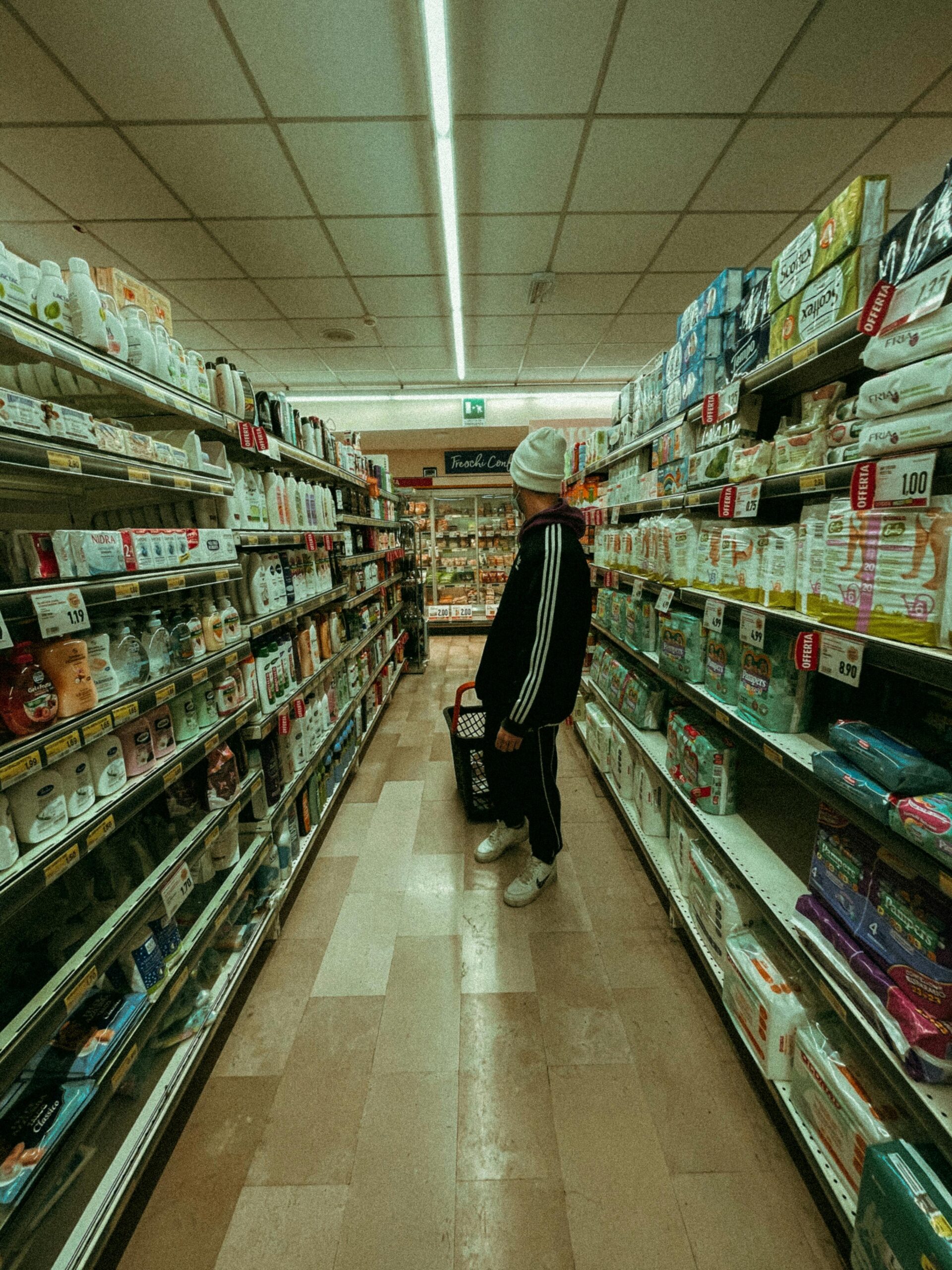
Everyone wants greener products, especially if they are also cheaper, but how easy are they to find across Europe? We ran a supermarket check in 13 countries to find out, write Miriam Thiemann and Roberta Arbinolo.
The cost of living and the health of the environment are the top concerns of young Europeans today. These are not competing priorities but deeply connected ones. A generation that has grown up with climate anxiety also knows what it means to watch every euro at the checkout. Yet the assumption that shopping sustainably means spending more has long stood in the way. Our research suggests that assumption is wrong – but there is a catch.
Looking for Ecolabels
To investigate the price and availability of sustainable products, we teamed up with the European Consumer Organisation (BEUC) for a big supermarket check across Europe. We ran a Mystery Shopping test in 13 countries, scanning supermarket shelves in 13 countries for products carrying the EU Ecolabel or equivalent labels like the Nordic Swan, the Blue Angel or the Austrian Ecolabel.
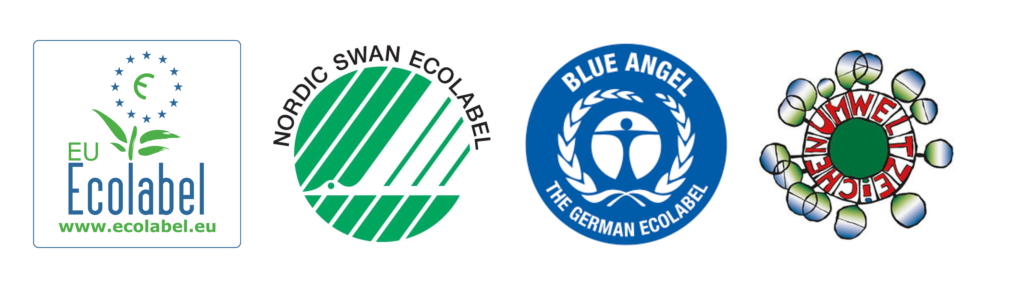
The EU Ecolabel is one of the most credible and ambitious sustainability labels. It is independent, science‑based, and looks at a product’s entire life cycle, from production to disposal. If you want a quick, reliable signal that a product is genuinely better for your health and the environment, that’s it. You can scan for it whether you are looking for detergents, cosmetics, paints, furniture, paper products, textiles, electronics, and even hotels and campsites.
With 3,541 licences and 116,692 certified products, the EU’s official sustainability label has just reached an all-time high. Paints, varnishes and tissue paper are the most awarded product types, while the tourist accommodations sector records the highest number of companies holding a license. Across product groups, over 60% of EU Ecolabel licence holders are small and medium enterprises.
The steady increase since last year reflects a growing interest among businesses, retailers and consumers in eco-friendly products.
But how easy is it for consumers to find these products in the first place?
What you see is what you get
Ecolabels only work if people can see them. If supermarkets hardly stock them, or if they are hidden among vague green claims like “eco”, “green” and “planet friendly”, the labels lose their power.
With three out of four products in the EU carrying some kind of environmental claim, over half of which are misleading, it is no wonder consumers feel lost. Robust labels like the EU Ecolabel help restore trust and clarity, but only if they are part of the everyday shopping experience.
Cheaper than you think
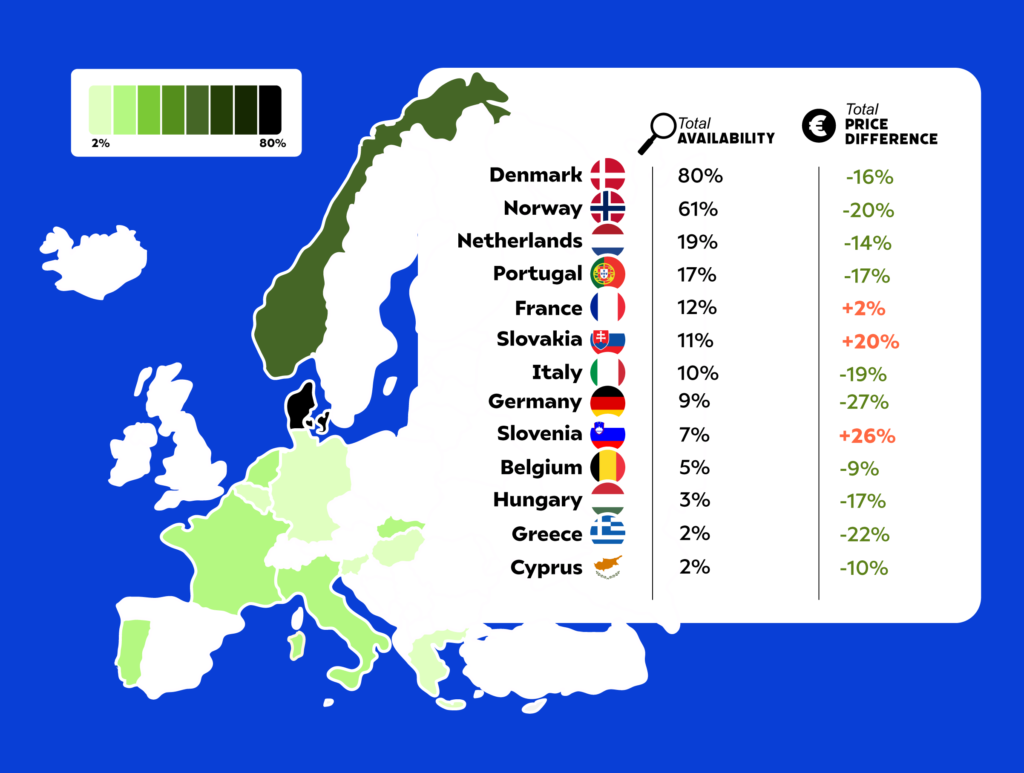
Here is the finding that should matter the most to anyone worried about their household budget: in most of the countries we tested, products with an EU Ecolabel or an equivalent label cost between 9% and 27% less than their conventional alternatives.
This directly challenges one of the most persistent myths in sustainable consumption that going green is necessarily more expensive. In fact, our experiment showed that in most cases, the real barrier is not price. It is availability.
Wildly unequal access
Depending on where you live, getting your hands on ecolabelled products can be either very easy, or nearly impossible.
In Denmark, around 80% of the products we checked had an ecolabel. In Cyprus and Greece, that number dropped to just 2%.
This means millions of European consumers – many of them young people who actively want to make greener choices – simply do not have access to products that meet the highest environmental standards.
Overall, buying sustainably is far easier in Scandinavia than in the rest of Europe. This largely depends on what retailers choose to stock.
Supermarkets are the gatekeepers
Our supermarket check comes with one clear takeaway: retailers have enormous influence over what consumers can choose. If supermarkets prioritise ecolabelled products – stocking them widely, displaying them at eye level, offering them alongside other options – consumers are far more likely to buy them.
Shopping sustainably and choosing what’s best for our health and environment should not require extra effort or a bigger budget. Retailers can help make the sustainable choice the easy choice, and some already do, while others have a long way to go.
Empowering consumers
This year, the EU will take a significant step forward to protect consumers and curb greenwashing. By next autumn, all EU countries will have to enforce a law on Empowering Consumers for the Green Transition, which will help cut through the smoke and mirror of green marketing. The law cracks down on unfair practices that hinder consumers from making greener choices.
Under this law, companies can only label a product as “eco” or “green” when they can prove that the entire product is truly more sustainable than conventional alternatives. Besides, it will no longer be possible to advertise a product or a company as green if only a minor aspect has been made more sustainable. More rigorous oversight will also extend to the credibility and reliability of all sustainability labels.
This is exactly where the EU Ecolabel shines: it already provides the kind of rigorous, science‑based proof companies will need. For businesses, using such labels is not just about reputation, but also a smart way to future‑proof environmental claims and stay ahead of regulation.
Ecolabels can make sustainable shopping clearer, more trustworthy and more affordable, but only when Ecolabelled products are actually on the shelves.
Supermarkets play a key role in making them available, visible, and affordable to consumers. It’s time for retailers to step up and make the sustainable choice the easiest choice – for everyone, everywhere in the EU.
If you enjoyed this article, please consider buying the author a coffee.