By Patrizia Heidegger
From classrooms and climate marches to movements challenging entrenched political power, people across the world are fighting for a different future. Their struggles may look different, but they have more in common than we might think. And together, they show that change is possible.
Something is happening on the streets of Europe and beyond.
From classrooms in France to the streets of Belgrade, Tirana, Brussels, Rio de Janeiro, San Francisco and New Delhi, people are refusing to accept politics that fail them. Young people are often at the forefront, from school and university students to a new generation of climate and democracy activists. But they are not alone. Trade unions and social movements, environmental organisations, teachers, firefighters and health workers, families struggling with the cost of living, parents worried about their children’s futures, and communities defending their local environments are mobilising, too.
Their immediate demands might differ, but similar questions are surfacing: Which interests do our politicians serve? What are they investing in? And what kind of future are we building?
Across different countries and political contexts, people are challenging decisions made over their heads, demanding a greater say in their futures and refusing to accept that things cannot change.
And increasingly, their struggles are connected.
It started in the classroom, but did not stay there
France makes these connections particularly visible. The movement began with very concrete frustrations about education: too few teachers, overcrowded classrooms, deteriorating buildings, concerns about equal university opportunities and schools increasingly struggling with extreme heat.
But it quickly grew into something wider. Teachers, parents, trade unions and people from different walks of life joined young people on the streets, connecting the crisis in education to pressures over affordability, wages, inequality and declining public services.
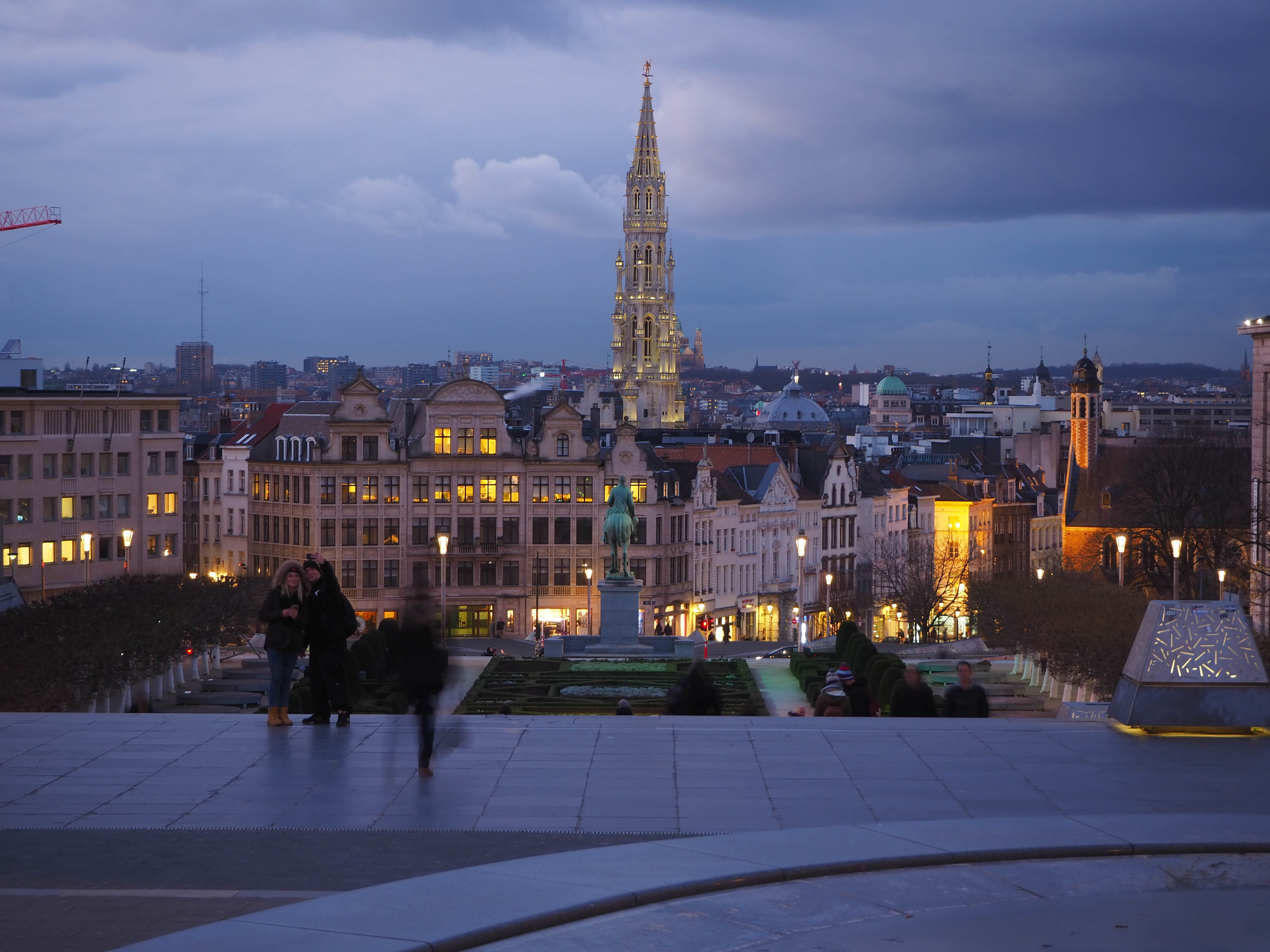
Belgium, too, has seen tens of thousands of people take to the streets again and again: workers and trade unions opposing austerity and pressure on the affordability of life, students defending education and their future, and civil society mobilising for public services and social justice. And in October, Brussels filled again for the Climate March, with 60,000 participants in a peaceful call for stronger climate ambition and a just transition.
These are not separate worlds. They reflect a society asking increasingly urgent questions about how we invest in our collective future and insisting that social justice and climate action must go hand in hand.
After all, a school struggling with extreme heat is not just an education problem. Unaffordable energy bills are not just an economic problem. And a community losing its natural environment is not just an environmental problem.
They are all questions about the kind of society we are building, who benefits from political decisions and who is left to carry the costs.
Where is the money?
There are powerful material reasons behind these protests.
Youth unemployment in France is still above 20%, and for many young people the promise that hard work will deliver security is colliding with precarious employment and an increasingly difficult path to independent housing. And so it is in many places.
The playing field is far from level. One in four young descendants of immigrants report discrimination based on origin or skin colour, while more than 40% of young people perceived as Black, Arab or Maghrebi say they have faced discrimination when looking for work.
Meanwhile, wealth at the very top has exploded. Since Macron entered the Élysée in 2017, the fortunes of French billionaires have doubled, gaining more than €220 billion among just 32 people. Today, France’s 53 billionaires own as much as more than 32 million people combined.
So when governments say there is no money for schools, housing or public transport, it is only natural that we ask: is there really no money, or have we made political choices about who gets to have it?
Because the truth is that money is not scarce. There is extraordinary wealth in our economies, and vast sums flow into private fortunes, fossil fuels, military spending and new technologies which still need to prove that they are serving the wellbeing of people.
The real question is where our governments allow that money to go, what they choose to tax and what they choose to invest in.
Budgets are political choices. Starving the investments on which the next generation depends while enormous wealth accumulates elsewhere is not fiscal responsibility. It is borrowing from the future.
And those choices extend to our environment. Whether we invest in healthy ecosystems, affordable clean energy, climate-resilient schools and decent jobs, or continue to prioritise short-term profits and environmentally destructive activities, is ultimately a question of political priorities.
That is why struggles over inequality, public services and environmental protection so often meet.
Flamingos vs billionaires
In Albania, the struggle has acquired an unlikely pink symbol.
The “Flamingo Revolution” began over plans for a vast luxury tourism development backed by Jared Kushner, President Trump’s billionaire son-in-law, around Zvërnec on the Vjosa-Narta coast.
The proposed development touches a highly sensitive natural ecosystem that is home to flamingos and more than 200 migratory bird species, Mediterranean monk seals and nesting sea turtles.
It became a potent symbol of a particular model of development: pristine nature and public goods put at risk to attract international capital and luxury tourism, while the benefits appear destined overwhelmingly for wealthy investors and visitors.
The protesters’ slogan captured the deeper sentiment: “Albania is not for sale.”
But the flamingos opened the door to something much bigger. What began as opposition to development on a fragile coastline grew into a broader movement against perceived corruption, opaque decision-making and a political system seen by protesters as serving the wealthy and powerful rather than ordinary citizens.
Students brought their own grievances over education, living conditions, costs and future opportunities into the streets, alongside demands for greater democratic accountability and political change.
That trajectory echoes what we are seeing elsewhere: an environmental dispute becomes a question about who owns the country’s future, and from there connects to anger about inequality, corruption, public services and democracy itself.
The demand underneath is universal: people want a meaningful say in decisions that shape their lives.
Different countries, familiar frustrations
India tells another version of this story of struggles for democracy, accountability and politicians who serve people’s needs.
Young people’s anger has focused on access to education, examination scandals and the much larger question of whether India’s economic development is actually creating the opportunities they were promised.
While India’s economy is growing rapidly, good jobs for young people remain a serious weakness, even while wealth at the very top has become extraordinarily concentrated.
The result is a political contradiction increasingly familiar elsewhere: aggregate economic progress on the one hand, profound individual insecurity on the other.
That frustration even acquired an unlikely symbol. After India’s Chief Justice reportedly compared unemployed young people to “cockroaches”, students reclaimed the insult, turning it into a badge of resistance – and started the “Cockroach Janta Party”. What began partly online grew into demonstrations over exam scandals, unemployment and young people’s economic prospects.
The circumstances in India, Albania and France are very different. Their movements do not all have the same demands or political objectives. But they expose a similar tension between promises of progress and people’s lived experiences.
And they remind us that economic growth is not an indicator or a guarantee for a better life, a healthier environment or a meaningful say in the decisions that affect us.
Democracy also lives on the streets
When people challenge those in power, the response is not always to listen.
In France, Albania and India, protests have also been met with violence and repression. The first responsibility lies with those who hold power. A democracy cannot demand that people express their anger peacefully and then meet dissent with batons, mass arrests or weapons capable of inflicting devastating injuries.
France has provided deeply troubling examples. Human Rights Watch has raised concerns about police responses to school protests, including serious injuries to children. In India, UN experts and human rights organisations have also raised alarm about excessive force, arbitrary detention and restrictions on peaceful assembly.
At the same time, we should not allow acts of violence to become the defining story of movements that have mobilised overwhelmingly peacefully.
In France, images of burning cars, smashed shops and the historic town hall of Limoges in flames have shifted attention towards law and order, threatening to drown out the demands that brought so many people onto the streets in the first place.
But defending a movement from caricature does not mean we can pretend that everything done in its name is defensible. Looting a shop does not make society more equal. Burning a town hall does not restore democracy, but undermines it. Violence endangers others, pushes peaceful demonstrators away and hands hard-line politicians precisely the pictures they need to portray an entire movement as a threat.
Violence is unacceptable and not the solution to achieving a better future. But neither should the actions of a minority define the overwhelming majority who protest peacefully.
What we should not lose sight of is the anger underneath it. Anger does not justify violence. But neither does violence make the reasons for that anger disappear.
Governments do not have to agree with protesters. They do have to protect their right to protest, and listen to what lies beneath the anger. A government cannot protect democracy by silencing the people trying to participate in it.
From protest to political change
And if anyone still believes that protests cannot challenge entrenched political power, look at Serbia.
For years, citizens had been mobilising against corruption, democratic backsliding and decisions taken over their heads. Environmental struggles became part of that resistance.
Opposition to Rio Tinto’s proposed Jadar lithium mine brought thousands onto the streets from 2021 onwards, amid fears about environmental damage and growing unease that Serbia’s land and natural resources were being opened to powerful international interests.
Here too was the question running through so many of today’s protests: who gets to decide what development looks like, who benefits from it, and who is expected to carry the costs?
Then came Novi Sad. When the canopy of the recently renovated railway station collapsed on 1 November 2024, killing 16 people, students turned grief into a demand for transparency and accountability.
The tragedy became a symbol of something much larger: a political system protesters believed had allowed corruption, cronyism and political control of public institutions to become normal.
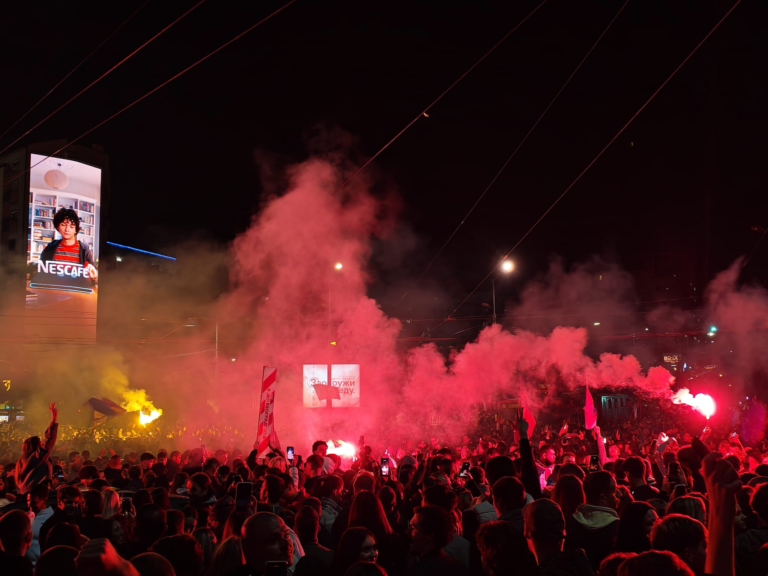
Students occupied universities and organised themselves through decentralised assemblies, or plenums. They walked, cycled and campaigned across the country, taking the movement far beyond Belgrade and the universities. At its height, a demonstration in Belgrade drew more than 325,000 people, while the movement increasingly brought together students, academics, workers and other citizens.
And then something remarkable happened: protest became political power.
Rather than accepting that an entrenched political system could not be changed, the students turned their assemblies and networks into an electoral movement. Their candidate list was deliberately broader than the student body itself, bringing together academics, professionals, artists, engineers and activists selected through the student assemblies.
In the parliamentary election of 25 October 2026, the Student List won an outright majority, ending 14 years of rule by Aleksandar Vučić’s political movement.
Serbia punctures one of the most debilitating assumptions of our time: that entrenched power is simply too entrenched to challenge.
Years of organising changed what people believed was possible. Mobilisation became organisation, and organisation became political power.
The power of people coming together
Brazil offers another reminder that political outcomes are not inevitable.
Luiz Inácio Lula da Silva lost the first round of the presidential election to Flávio Bolsonaro, the political heir to the movement his father Jair Bolsonaro built.
The younger Bolsonaro came extraordinarily close to winning, with almost 60 million Brazilians ultimately voting for him. Yet Lula won the runoff with 51.79%.
Civil-society mobilisation, particularly among young people, became highly visible in that reversal. Students took to the streets of Rio defending democracy and rejecting another Bolsonaro presidency, while young activists organised rallies, canvassed and used social networks to persuade voters.
Elections are not shaped only in voting booths. Organising, protesting and persuading can shift political momentum, even when defeat initially appears more likely than victory.
The election took place amid conflict over climate policy, gender and social issues, Indigenous rights and Brazil’s wider development model.
For many of those mobilising, the argument was bigger than keeping the Bolsonaro family out of the presidency. It concerned what kind of Brazil should emerge from a deeply unequal and polarised society, and whose rights and futures politics should protect.
A 19-year-old environmental science student marching in Rio captured that connection particularly well when she said: “We’re fighting for Brazil, not for Lula.”
That may be the most important link with the movements elsewhere: young people are not simply defending one politician or one environmental policy. They are joining up struggles over democracy, inequality, rights and the environment into a much more fundamental question about the future they are being asked to inherit.
The US midterms offer another example. Democrats made major gains, with particularly strong support among young voters. According to early estimates, 72% of voters aged 18 to 29 backed Democratic candidates for the House – potentially one of the strongest Democratic youth votes recorded in a national election.
That shift did not happen in isolation. Movements defending reproductive rights, migrants, LGBTQ+ communities, democracy and the climate had spent months organising, protesting and mobilising. For many young voters, the election became another way of pushing back against the direction in which Trump was taking the country.
Before the vote, 63% of likely young voters said their choice was driven by opposition to the President and his policies. However, the shift cut across groups, including people who had moved towards Trump only two years earlier.
Serbia, Brazil and the US are very different stories, and none of them offers a simple blueprint for political change. But these examples show that collective action can influence what happens next. They show that anger and fear can turn into participation, that movements can connect different struggles and convince people that sitting on the sidelines is no longer an option.
The transition must be a promise, not another bill
There is an important lesson here for the environmental movement, too.
People facing unequal access to education, high rents and energy costs, insecure jobs and declining public services need more than promises about a better future. They need policies that make that future possible, and an environmental transition that improves their lives.
An affordable, renovated home means lower energy bills and greater comfort. A transformed mobility system means being able to get to work or university without an expensive car. A circular European economy can create skilled, secure jobs repairing, recycling and remanufacturing products and materials.
Climate adaptation means schools where children can still learn during a heatwave, cities with trees and shade, and restored rivers and wetlands protecting communities from floods.
Industrial transformation should create decent work instead of simply shifting pollution, exploitation and resource extraction elsewhere.
And nature protection cannot be treated as a luxury to return to once the economy is fixed. Functioning ecosystems provide the water, healthy soils, cooling, flood protection and resilience on which that economy depends.
These are not separate ambitions. They are different parts of what a good life, and a fairer society, can look like.
A society asking people to accept ecological limits while allowing extreme wealth and resource consumption to remain concentrated at the top will not command lasting public support.
The limits of our planet require us to share better, not fight harder over what remains.
That is why the environmental movement has so much in common with those demanding better schools, affordable homes, decent work, equality and democratic accountability.
We may not always use the same words, or agree on every political demand. But we have every reason to build bridges between our struggles, and to make sure the future we are fighting for is one in which everyone can thrive.
Change is possible
Perhaps the most hopeful lesson from all of this is a simple one: change is possible.
Across the world, people are refusing to accept that inequality, ecological destruction and democratic decline are inevitable. They are organising, marching, striking, voting and campaigning.
They are not waiting for history to happen to them. They are making it.
Our movements use different words: democracy, decent work, justice, equality, climate, nature. But these struggles increasingly converge around a common demand for a good life for everyone within the limits of our living planet.
And our power grows when our movements converge too: students with workers, environmentalists with social movements, communities with civil society.
That solidarity does not happen automatically. It takes organising, listening to one another, finding common ground and building the alliances that can turn individual struggles into collective power.
There is plenty to be frightened about today. But there is also something worth fighting for. Let’s build the future rather than surrender it.