The European Commission wants to build seven AI gigafactories across the bloc. With “strategic” labels, mega-projects like these are increasingly rushed through checks with less scrutiny of their long-term impacts on people and nature. Right now, debates are ongoing to lower environmental safeguards for such high-impact projects, putting the interests of a few powerful companies ahead of the people and communities who will live with the consequences – Bích Dao, Caroline Heinzel and Maya Perera report.
Around Europe, public uproar is increasingly common as massive projects get granted permits despite its impact on local nature and people, such as the case of Italy’s Tavolara Bay luxury resort or Albania’s Vjosa–Narta and the Jared Kushner’s resort. These should be warning signals of what is to come on a larger scale all over the EU if big polluters get their hands on weakening the laws even more.

This autumn, the European Commission is looking to reshape the rules that determine whether potentially harmful projects can go ahead. At the same time, others across the EU institutions are seizing the opportunity to push for further weakening of nature laws, portraying environmental protection as a hurdle to development.
But what is presented as administrative reform is much more than cutting red tape. It risks shifting power away from citizens, scientists and environmental authorities, and towards industries whose projects would once have faced much greater scrutiny.
Loopholes to keep polluting
Energy-hungry data centres, AI gigafactories, fossil gas infrastructure, CO₂ transport networks, hydrogen infrastructure – these are some of the projects that would increasingly be granted privileged fast-tracked treatment under the language of “strategic necessity”, and this could be an open-ended list. Instead of ensuring that they will do minimal harm to locals and the environment, these projects are changing EU laws so that the approval process can move so fast that no one notices the fine prints.
Nowhere in writing will the laws propose dirtier rivers, polluted air or the destruction of entire landscapes and all that live there. However, behind the language of efficiency and technicality, to “simplify”, “streamline” and “reduce bureaucracy”, these projects are skipping important legal checks that ensure people and nature do not bear the burden of big polluters.
The lobbyists behind the curtains
Behind many of these changes lies years of lobbying by some of Europe’s most powerful industrial interests.
According to the report Permission to Pollute from Corporate Observatory Europe, polluting industry groups have not only demanded weaker permitting rules, they are also shaping the decision-making that is dismantling them. Fossil fuel companies, mining associations, Big Tech and heavy industry have consistently pushed for faster approvals, fewer environmental obligations and reduced opportunities for public challenge – and they are now getting what they asked for across the continent.

If everyone gets the exception, we have no rules
Environmental permitting exists because large industrial projects affect everyone. Yet, the Commission’s latest wave of legislative proposals increasingly labels projects as “strategic” or of “overriding public interest,” granting them derogations from environmental laws. This means in practice that a project that harms people and nature, such as contamination of water sources, it can still move forward due to the special status. The Commission also pushes for compressed timelines, restriction of judicial oversight and no environmental assessment at all if an existing project is changed or its lifetime extended. What once required proof that environmental damage could be avoided increasingly being replaced with the assumption that the project must go ahead.
“Is it housing or is it AI?” That is the choice presented by the Director General of Ireland’s Department of Environment and Energy last year. Communities in Ireland are facing these challenges as data centres consume huge amounts of electricity, push up energy costs and drive demand for new fossil fuel infrastructure. The EU plans to build three times as many across Europe within 5-7 years, new permitting loopholes are removing the mechanism for people to hold Big Tech accountable for the damages it will cause the local population and nature.
Extracted and paraphrased from Corporate Europe Observatory’s Permission to Pollute
But simply removing these safeguards does not remove the impacts on people and nature. It simply removes the mechanisms that can identify, prevent and reduce them, shifting the costs and risks away from those who profit and onto local communities. Fast-tracking projects without properly involving the people affected can also fuel major local conflicts, as the ongoing expansion of Cornwall’s Falmouth Docks to accommodate large cruise ships demonstrates.
Need for speed, but also with care
Europe certainly needs faster deployment of genuinely sustainable solutions, such as with renewable energy. But in the pursuit of speed, we should not be cutting corners that will cost us health and wellbeing, together with years and billions of euros to clean up industrial mess.
Speed should come from better public administration, adequate staffing, smarter planning and earlier investment, not from weakening the environmental safeguards that protect public health, nature and democratic participation. Evidence shows again and again that it is actually structural issues like expert shortages and fragmented responsibilities that is causing delays, not environmental laws.
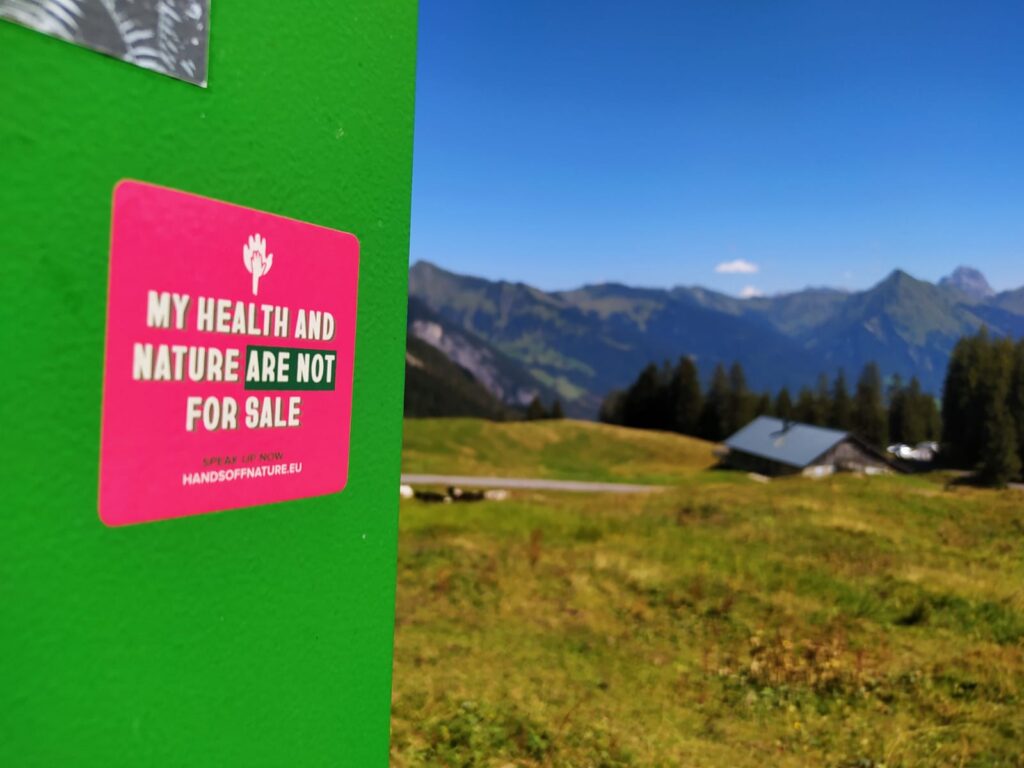
400 million people, clean water, and thriving nature should never be traded away for a few extra years of profit for the powerful few. Lawmakers must decide who they stand with. Join the 600,000 people who have already spoken up and tell polluters now: my health and nature are not up for sale.