By Patrizia Heidegger and Christian Skrivervik
Europe’s latest answer to its competitiveness problems has a curious name: the Rhine Group.
Launched this month and co-founded by Mario Draghi, the group brings together dozens of leaders from business, finance, technology and academia to push Europe to move faster on competitiveness.
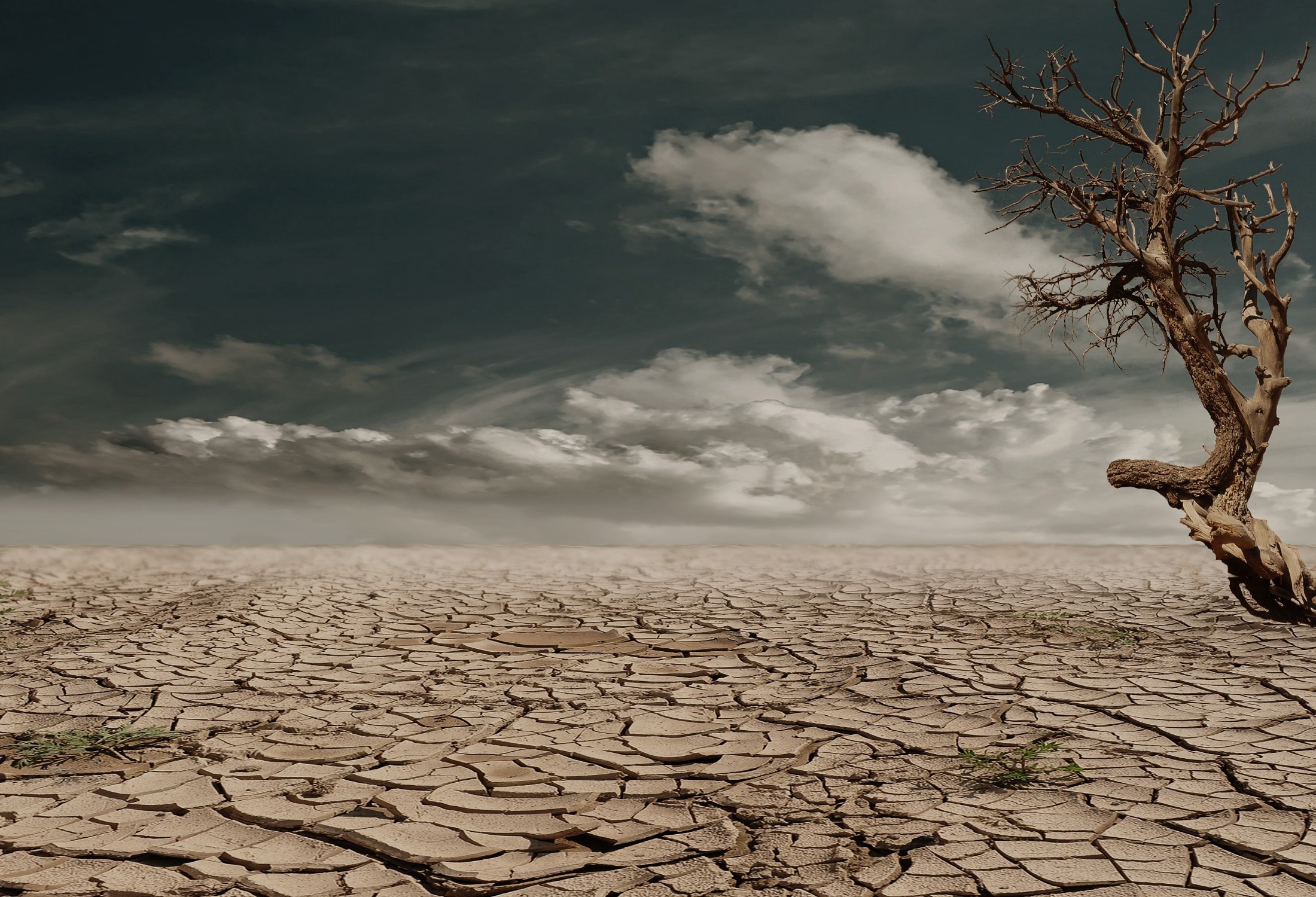
Meanwhile, the actual Rhine river has been sending Europe a rather different message. Water levels have fallen close to historic lows, disrupting shipping and industrial production along one of Europe’s most important economic arteries.
The irony is difficult to miss. In 2024, BASF, Europe’s largest chemical producer, hosted the European Industry Summit that produced the Antwerp Declaration. Signed by more than 70 industry leaders, it helped propel competitiveness, industrial policy and concerns about regulation to the top of Europe’s political agenda.
Two years later, European industry is being reminded of something more fundamental: an economy does not exist independently of the physical world.
Businesses cannot simplify their way out of a drought.
The warnings keep coming
Mario Draghi’s landmark report has profoundly shaped EU policymaking since the 2024 EU elections. Competitiveness and simplification have become defining concepts of this Commission, driving everything from industrial policy to efforts to reopen, postpone or weaken environmental rules.
Now the Rhine Group has been created to push that agenda further. Yet while considerable political and corporate firepower is being assembled around Europe’s economic challenges, the crises that ultimately determine whether our economies and societies can thrive remain without an equivalent strategic response.
This summer, parts of Europe experienced its hottest June–July on record. Successive heatwaves brought severe drought and exceptional wildfires. People lost their lives, homes were destroyed, and communities struggled to cope. At the same time, another geopolitical crisis (the US/Israeli war on Iran) exposed Europe’s continued dependence on imported fossil fuels. The second fossil fuel crisis in just four years has added more than €50 billion to Europe’s energy bill.
The familiar counter-argument is that Europe cannot act alone. Other major economies are not moving at the same speed. European action cannot by itself stop global warming.
All true. But that is also an argument for reducing Europe’s fossil dependence, not maintaining it. Europe cannot control the next conflict that shakes global energy markets. It cannot dictate American, Chinese or Indian policy. And it certainly cannot determine what happens to global oil and gas prices.
What Europe can decide is how exposed it remains to all of them. Ending fossil fuel dependence is not simply something Europe should do for the climate, or to demonstrate global leadership. Increasingly, it is something Europe needs to do for itself.
How certain do we need to be?
Earlier this year, the UK government published an extraordinary national security assessment. Its subject was not Russia, China or ongoing wars. It was the collapse of nature.
The assessment concluded that global ecosystem degradation and collapse threaten national security and prosperity. Without major intervention, degradation is highly likely to continue to 2050 and beyond, bringing growing risks of geopolitical instability, economic insecurity, conflict, migration and competition for resources.
Every critical ecosystem examined is on a pathway towards collapse.
There is no serious scientific uncertainty about the fundamental direction of travel. Human activity has unequivocally caused global warming. Continued emissions will cause further warming, with risks and damages increasing with every increment.
What we cannot know with the same certainty is precisely when particular tipping points will be crossed, which ecosystems will collapse first, or exactly how cascading impacts will play out. Security and intelligence analysts make decisions under these conditions all the time.
The UK assessment says there is a “realistic possibility” that some ecosystems could begin collapsing from 2030 – approximately 40 to 50 percent in UK intelligence terminology. Imagine a national security briefing warning of a 40 percent chance of a catastrophic threat. Would any responsible government respond: come back when you’re more certain?
Yet when it comes to climate and environmental breakdown, uncertainty about the precise consequences is still too often treated as a reason for delay.
Carl Sagan saw the double standard
More than three decades ago, Carl Sagan posed almost exactly this question. For generations fascinated by science and space, Sagan remains a hero. Through Pale Blue Dot, he asked humanity to look back at our tiny planet and consider our responsibility for our only home.
In 1990, he made a distinctly earthly argument about global warming. The United States had spent trillions preparing for the possibility of conflict with the Soviet Union, Sagan observed. Was Soviet aggression ever 100 percent certain? Of course not. And that didn’t stop governments preparing.
When the possible consequences are catastrophic, uncertainty is not a reason for inaction. It is a reason to manage the risk. So Sagan asked: why doesn’t the same logic apply to global warming?
More than 35 years later, that question is harder to answer. The evidence has become vastly stronger. The warming Sagan warned about is measurable, attributable to human activity and increasingly visible in people’s lives.
And climate action is not simply an insurance policy we hope never to need. Suppose Europe ends its dependence on fossil fuels, accelerates renewables, electrifies heating and transport, renovates buildings, expands grids, restores nature and tackles pollution – and some of the most catastrophic projections ultimately prove too pessimistic. What exactly would Europe regret?
We would be less exposed to volatile global markets, have greater energy security and keep more money in Europe to invest in infrastructure, technologies, jobs and resilience. That is not environmental idealism but practical risk management.
What are we trying to compete for?
For millions of Europeans, climate change is already lived experience: overheated homes and workplaces, sleepless nights, drought-stricken fields and empty rivers, burning forests and homes – and tens of thousands of premature deaths from extreme heat.
People adapt where they can. But adaptation has limits. Ecosystems cannot turn on the air conditioning. Neither can everyone in Europe.
Our economies face physical limits too. Industry needs energy, water and raw materials. Agriculture needs functioning soils, predictable seasons and pollinators. Cities need protection from heat and flooding. Workers need safe homes and workplaces.
Yet Europe’s competitiveness debate frequently asks what environmental protection costs industry. But frankly, we should also ask what environmental breakdown costs industry.
What does it cost when rivers become unnavigable? When drought constrains production? When extreme heat reduces productivity? When floods destroy infrastructure? When volatile fossil fuel prices leave European industry exposed to conflicts thousands of kilometres away?
Those costs are already happening and Europe is already paying them. This summer’s heatwaves alone could cost Europe’s economy hundreds of billions of euros, with France among the hardest hit.
This is also why the Draghi report, however influential, cannot provide the whole strategic framework Europe needs. It starts with the question of how Europe can become more competitive. But Europe needs to start one step earlier.
What does prosperity and security look like in a world of accelerating climate breakdown, nature loss, pollution and geopolitical fossil fuel vulnerability? What kind of economy allows people, nature and industry to thrive together? Only then can we meaningfully decide what European “competitiveness” should mean.
Europe needs another strategic diagnosis
The significance of the Draghi report was that it offered a diagnosis of Europe’s economic problems powerful enough to reshape its political agenda. The Rhine Group, now co-chaired by Draghi himself, shows just how influential that diagnosis has become. Europe needs the same level of political seriousness applied to another strategic vulnerability: its dependence on fossil fuels.
That is why more than 200 organisations and associations from civil society, industry and beyond are calling on Commission President Ursula von der Leyen to commission a comprehensive, science-based and independent report with one clear objective: make this fossil fuel crisis Europe’s last.
The point is really not another technical climate exercise. Rather, Europe needs a strategic assessment of what fossil dependence actually costs us – through imports, price shocks, geopolitical exposure, health impacts and environmental and climate damage – and a credible route out. Fast.
It should look at where Europe’s money needs to go, how workers and households can be protected, how European industries can thrive through the transition, and how nature can strengthen our resilience. And it should bring academia, civil society, social partners and businesses around the table.
Just as Draghi changed how Brussels thinks about competitiveness, such an assessment could change how Europe thinks about fossil fuels: not simply as an emissions problem, but as an economic and geopolitical vulnerability. This matters because Europe cannot control every decision made in Washington, Beijing or Moscow. Nor can it prevent every conflict that shakes global energy markets.
But surely strategic autonomy begins with reducing the things that make Europe vulnerable to decisions and crises beyond its control. Fundamentally, a liveable climate, functioning nature, clean air, social justice and European resilience are not costs to be balanced against competitiveness. They are the foundations of European prosperity and security.
The UK security assessment puts it plainly: nature is a foundation of national security. Perhaps the Rhine is now putting it more plainly still. And after the summer Europe has just experienced, the question is no longer how certain we need to be.
Instead: how many more warnings do we need?
This must be Europe’s final fossil fuel crisis.