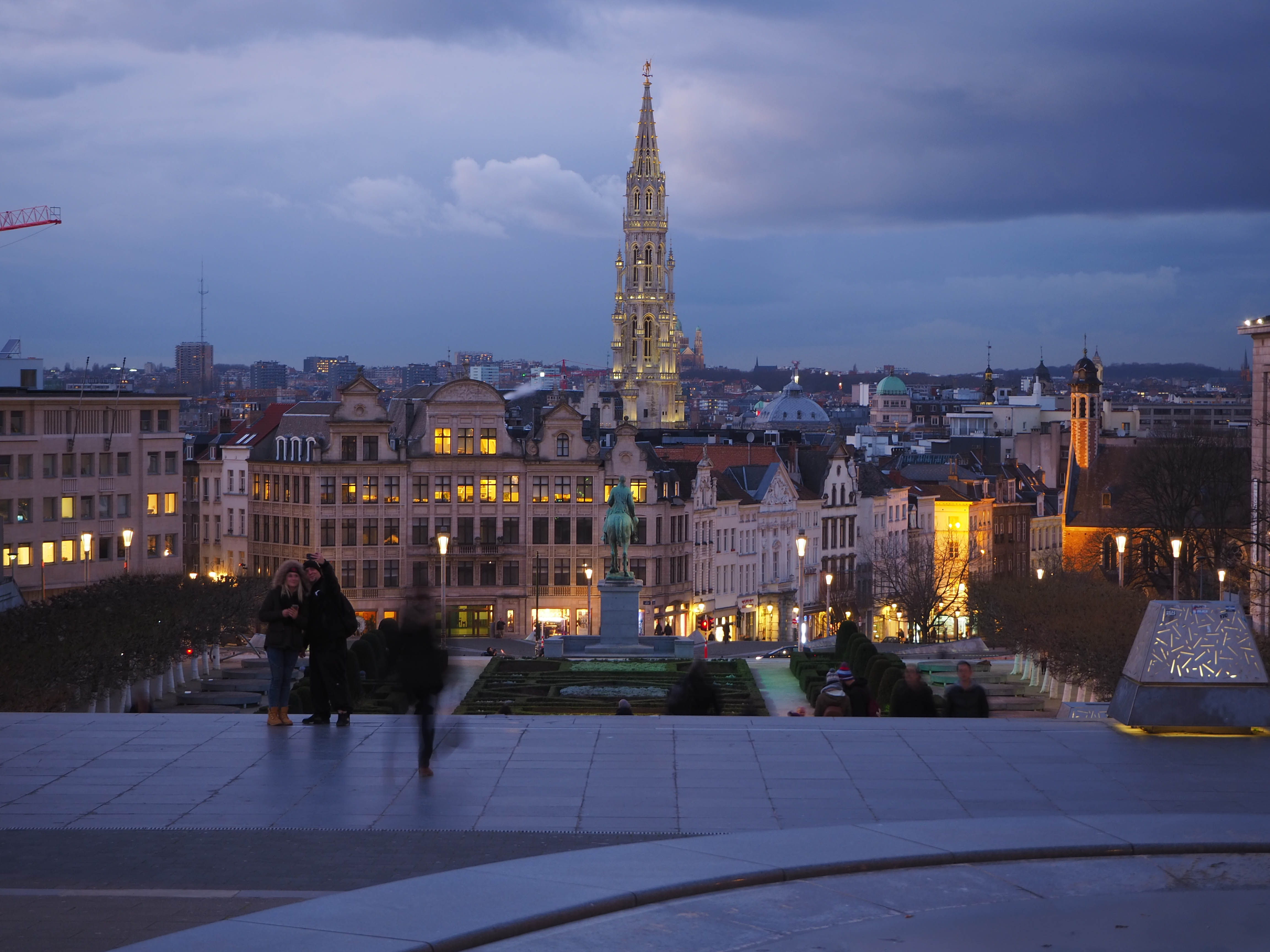
Maybe it’s the sunshine talking, but today we’re feeling young (at least in spirit) – and yes, a little hot. Spring is about to spring in Brussels, and we’re daydreaming of longer evenings, terrace season with friends, and eventually escaping to the sea.
But outside the Brussels bubble, the geopolitical reality remains anything but sunny. We stand in solidarity with all those bearing the devastating human cost of escalating violence and war. The protection of human life, respect for international law and the principles of the UN Charter must remain non-negotiable. Lasting peace and security can only be built on justice, human rights and the rule of law.
In today’s world, the reality is that fossil fuels feed instability. They finance conflict, deepen geopolitical dependencies and lock countries into relationships with authoritarian regimes, all while accelerating the climate crisis. Breaking that cycle means completing the full transition to renewable energy – not someday, but right now.
Europe has the tools, next step is political will.
In this edition, we cover: 😷 Chemicals: Victims of forever chemicals visit VDL
🐖 Food: EU Commission taken to court
⏩ Industry: The race to clean industry is on, but the horses look slow
🖐️ Justice: The SLAPP of our age – and the time for resistance
☕ Enjoy the read, and if you do, consider buying us a coffee. As ever, if there’s anything you’d like to comment on, get in touch – we’d love to hear from you!
📬 Join us on our new Substack for longer, deeper New Leaf reflections, where institutional memory meets present-day reality.

😷 CHEMICALS: VICTIMS VISIT VDL
Cut the crap – By now, you’ve probably heard of PFAS – so-called “forever chemicals” used in industrial processes and everyday consumer products and toys. They are everywhere, very likely already in your bloodstream. These substances are linked to serious environmental and health harms, disrupting biological systems and contributing to diseases such as cancer and fertility problems – while costing our societies enormous amounts.
Knock knock – This week, victims from PFAS hotspots across France, Belgium, Denmark, Germany, Italy and the Netherlands came to Brussels to make their voices heard. Yet for the third time since 2023, their request for a meeting with Commission President von der Leyen was refused. Given her recent appearance at an event in Antwerp hosted by the chemicals industry – and the level of access that industry enjoys in Brussels – it goes without saying that she should also meet the victims of that same industry. Read our full reaction.
Full House – While in Brussels, around 200 people, including victims, were in the cinema for the screening of How to Poison A Planet, organised by ClientEarth and EEB. The documentary investigates how the use of firefighting foam has contaminated communities around the world – due to decades of lies and hidden information and highlights how communities affected by PFAS pollution are fighting for justice.
Out of sight, out of mind – Some problems simply cannot be ignored. To tackle the forever pollution crisis, the EU must adopt the universal PFAS restriction already proposed by several European countries. This would position the EU as a global leader in building a modern, non-toxic economy.
At the same time, the Commission and Member States must develop fully funded plans to decontaminate affected soil and drinking water – with the costs borne by polluters, not taxpayers. Sign our petition to help turn the volume up!

🐖 THE AGRI CORNER
Herd v. Commission – This week, the Commission was taken to court over its failure to deliver on its promise to phase out cruel individual cages on farms. The case follows one of the most successful European Citizens’ Initiatives ever, End the Cage Age, which gathered 1.4 million signatures from EU citizens. The case is now before the European Court of Justice, and its judgment could become a game-changer for farm animal welfare across Europe.
Exit poll – The results are in from yet another EU-wide public consultation on cage farming – and the response was overwhelming. More than 190,000 people took part, and 99% (!!!) said they want to see an end to a harmful system that tortures animals, harms farmers, risks public health, and pollutes our air, water and soil.
“Planet-friendly”… which planet, exactly? When we say food is sustainable, it should mean it’s produced without damaging soil, water, air, animals or our health. Yet much of what’s sold as “green” still relies on synthetic inputs like pesticides – chemicals designed to kill. That’s not sustainability; it’s greenwashing – a glossy label hiding harmful practices. This week, the EEB joined a discussion on how the EU can cut through the confusion and make genuine sustainability the norm. Check out the video.
Easy by default – The EU Food Dialogue kicked off this week, exploring how the €50 billion spent annually through EU public procurement can help deliver healthy, fair and sustainable food. Today, many contracts still prioritise price over health and the planet. The upcoming revision of the EU’s Public Procurement Directives is a major opportunity to make healthy, ethical and sustainable food the easy default – supporting public health, local farming and animal welfare.
🏁 THE INDUSTRIAL RACE
Carrots for green runners –After months of delay, the new Industrial Accelerator Act has finally dropped. Think of it as the EU’s carrot to speed up the industrial race: incentives and fast lanes to boost low-carbon materials and clean tech production in Europe.
Our honest take: The direction is right, especially at a time of political backtracking on climate policy. But the carrots look modest. A 25% requirement for low-carbon materials won’t exactly transform the race overnight. And without clear definitions or timelines to ditch fossil fuels, this alone won’t deliver a breakthrough, particularly as Italy and others push to suspend the sticks.
Rules of the race still unclear – The Act was supposed to clarify what “low-carbon” and “green” actually mean for heavy materials like steel and cement. Instead, that debate is postponed again. We have already lost a year waiting. Industry needs a strong, mandatory label so public money rewards genuinely clean production, not business-as-usual dressed in green.
Fast lanes, weak guardrails – The law also creates industrial “fast lanes” to speed up projects. But it’s still unclear which decarbonisation projects qualify, and nature sites aren’t explicitly excluded. Without careful safeguards, speed could backfire, delaying projects with legal fights or harming the environment. Read our PR.
⚔️ FIGHTING THE GOOD FIGHT
You can’t sue a movement – Last week, a US judge ordered Greenpeace to pay $345 million to oil giant Energy Transfer. The organisation now faces the largest damages award in its history, simply for showing solidarity with Indigenous environmental defenders opposing an oil pipeline that has trampled over Indigenous lands and rights and could prove devastating to precious ecosystems.
Shameless – Even worse, Energy Transfer’s CEO, Kelcy Warren, admitted the goal was to “send a message” to environmental activists. This is a clear example of corporate bullying through ‘SLAPP’ lawsuits. We stand with Greenpeace and all who dare to speak truth to power. Show your support with the #TimeToResist hashtag.
If this has ticked you off, you’re not alone! But here’s a cathartic outlet: the Coalition Against SLAPPs in Europe has opened voting for its European SLAPP Contest 2026. Check out the nominees and submit your vote now to see Europe’s biggest legal bullies named and shamed on stage in Sofia, Bulgaria, next month.
The future of the Arctic is at stake, from its irreplaceable wildlife to its fragile climate – and decisions are being shaped right now. Submit your input to the EU consultation before 16 March and tell policymakers: No more new Arctic oil and gas drilling!
🧠✨ DOPAMINE HIT
As ever, here are a few happy updates to get your weekend off to a perky start:
- In the latest Lawfully Loud podcast episode, our team sits down with the UN Special Rapporteur on Environmental Defenders. Listen here.
- The river won’: how campaigners in the Brazilian Amazon stopped privatisation of waterway. Read more here.
- Malaysia announces immediate ban on e-waste imports: “We are not a dump for the world”. Read more here.
- Kazakhstan plants 37,000 seedlings to prepare for the imminent return of tigers. Read more here.
- Slovakia loses court case over controversial bear cull program. Read more here.
☕ BUY US A COFFEE
From dirty lobbies to smear campaigns, billionaire bullies to climate collapse, we face a lot. Support our work, one coffee at a time.
📢 ORGANISE
If you are not involved, get involved.Find a member organisation near you.
🚀 FOLLOW US
Don’t stay delulu, deal with the pollulu 🍃✨ Stay connected with us on LinkedIn, Bluesky, TikTok, Instagram, and YouTube. Don’t miss out!
Are you a journalist?Subscribe here to stay up to date on our latest European environmental policy updates made specifically for you!
We have opened a new mailbox for your tips and tales from the ground. Got something you think we should feature? Reach out to us at newleaf@eeb.org.
✨ SIGN UP
Stay informed. Subscribe to our Newsletter by email for the latestEU green insider updates every Friday morning and to support our work. By subscribing, you also get early access to our in-depth analysis of key EU environmental policy.
By: Roi Gomez. Special thanks to the EEB’s editorial team: Ben Snelson, Alberto Vela and Ruby Silk. Editor: Christian Skrivervik.