Dear reader,
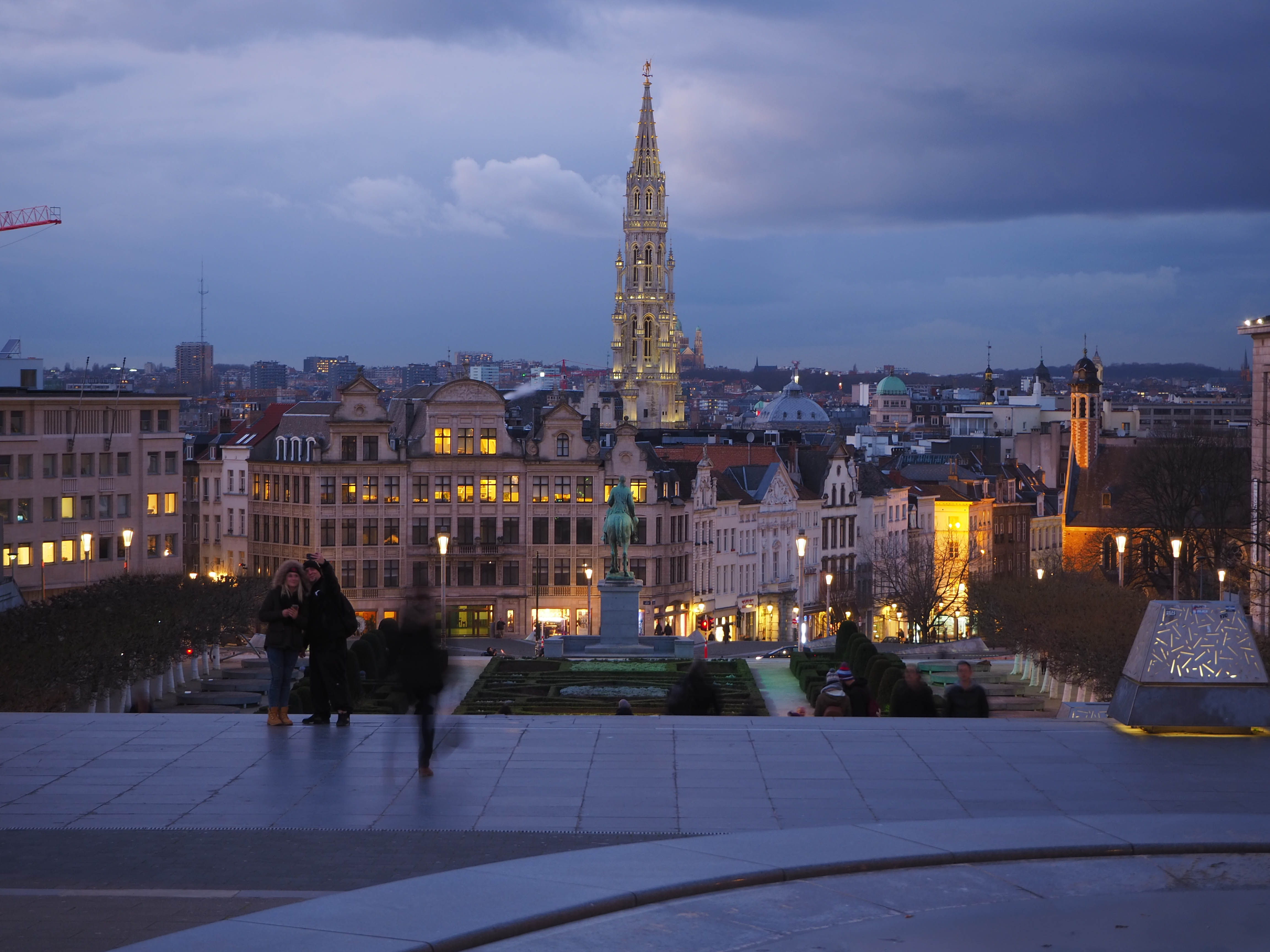
I hope you’re well and enjoying some of the dulcet tones of early spring (unlike me, currently writing this directly beneath an overexcited Brussels flight path).
This week, we’ve been in Strasbourg for the EU Parliament plenary week of voting on a number of key things that matter directly to you and me. No spoilers yet – read down (but there are some results on the voting front that we’ll certainly count as good news!)
If you’re reading this on Friday, Happy International Workers’ Day! Let’s pause to remember two things. First, those rights (8-hour workday, weekends, paid holiday, you name it) were hard-won by generations gone by. We must fight for those rights for everyone and never take them for granted. Second, all progressive movements are part of the same fight – so we need to stand together and fight together, united. That’s how we win the future we know exists!
In this week’s edition: 🗳️ EU Parliament votes: Budget Discharge, MFF, ETS2, Livestock Strategy and more!📬 Join us on our new Substack for longer, deeper New Leaf reflections on the topics you care about.
🗳️ FROM STRASBOURG: DEMOCRACY HOLDS
🎉 MEPs shut down renewed attacks on NGOs. Déjà vu. This week, after years of sustained political attacks on civil society, the same very vocal minority tried again to use the EU’s budget oversight process to restrict NGO funding and silence independent voices.
Quick context. The “budget discharge” may sound technical, but it’s one of Parliament’s key accountability tools – a yearly sign-off on how EU funds are spent, and increasingly a vehicle for political fights. Last year, MEPs already made clear that EU funding for NGOs is lawful, transparent and legitimate. This week, they said it again – rejecting attempts to roll that back.
The mask is off. The fact that we need to fight so hard for wording like this says it all. Democracy is more than elections – it also needs independent voices, public scrutiny and organisations that defend what matters in between. Despite repeated efforts to undermine it, public-interest advocacy remains recognised as essential to democratic accountability in the EU.
Taking the win. These attacks are not going away. At a time when corporate lobbying enjoys privileged access, deregulation is accelerating, and public funding for climate and environmental action is under growing pressure, attempts to weaken independent civic voices are particularly alarming. Yet a democratic majority stood firm, and that is good news.
→ Read our press release

💶 FROM STRASBOURG: LIFE IS ALIVE
🎉 MEPs back continued funding for LIFE. In another key vote this week, the EU Parliament set out its position on the next EU long-term budget – sending a clear signal in support of dedicated funding for environmental action.
Quick context. This is Parliament’s opening bid in the battle over the next Multiannual Financial Framework (MFF) – the EU’s seven-year budget. Despite a tough political climate, a majority of MEPs reaffirmed the central role of the LIFE Programme, backing continued support for its core activities and maintaining funding for nature and climate action.
Not just us. 730 local and regional authorities, businesses and civil society organisations also stepped in this week, urging EU leaders to protect and strengthen LIFE as a standalone programme – a reflection of its proven impact on the ground. Read the letter here.
But it’s not there yet. Parliament stopped short of securing a standalone LIFE programme, and overall spending targets for climate and environment remain below what’s needed to match the scale of the crises.
→ Read our press release.
⚡ FROM STRASBOURG: CLIMATE HOLDS – LIVESTOCK DOES NOT
🎉 ETS2 stays on track. The far right failed in its attempt to delay or derail ETS2 in the EU Parliament this week.
Quick context. ETS2 is the EU’s new carbon market for buildings and road transport, launching in 2028 – designed to put a real price on pollution from heating and mobility, while generating revenues to fund the transition.
Holding the line. Instead, a pro-EU majority (EPP, Renew, S&D, Greens/EFA) backed a compromise that limits plans to release extra pollution allowances – a move that would have weakened the system and cut climate revenues.
The signal. Despite recent political attacks, there is no majority to delay or dismantle ETS2. For now, EU climate policy is holding. More about the vote here.
❌ But not all signals are positive. In parallel, Parliament adopted a non-binding report on the EU’s future Livestock Strategy ahead of the Commission’s proposal in July.
Why it matters. While not legally binding, it risks shaping the debate in a direction that reflects large agribusiness interests more than the realities facing most farmers – and the environmental and public health challenges at stake.
A better path. Supporting farmers fairly, improving animal welfare, protecting public health and reducing pollution are not competing goals – they are the foundation of a sustainable food system. Read more here.
🗞️ IN OTHER NEWS
🤔 “Better Regulation” for whom? This week, the EU Commission presented plans to simplify the rulebook on how the EU makes laws. While some steps to improve enforcement and streamline procedures are welcome, the proposals risk entrenching political shortcuts rather than strengthening evidence-based and democratic lawmaking. New plans would expand the use of “urgency” to skip impact assessments and public consultations – despite recent maladministration findings on similar practices. Read more here.
❓ What’s so “simple” about simplification? The EU Commission’s push to scrap protections is creating confusion and legal uncertainty, as rules risk being weakened mid-implementation. Seven EU governments warn it could backfire, delaying key projects.
🧪 Toxic delays, toxic results. Four years after launching its chemicals plan, the EU Commission has stalled. A new study links delays to 100,000 tonnes of hazardous chemicals entering food, water, and homes, raising serious concerns for health, the environment, and industry influence.
🔄 Talking in circles? After this week’s High-Level Dialogue on the Circular Economy Act, we warned that the EU Commission is focusing on recycling and market rules while ignoring overproduction and resource use. There’s still time to course-correct, and we’ll keep pushing. Press release here.
💧 Landmark river pollution case heads to court. Avara Foods and Welsh Water face a major High Court case over pollution of the Wye, Lugg and Usk, backed by more than 4,500 people. At stake are the impacts of agricultural runoff and sewage on rivers, communities, and livelihoods – a powerful example of citizens standing up to defend nature and public health!
🧠✨ DOPAMINE HIT
As ever, here are a few happy updates to get your weekend off to a perky start:
- Sounds of hope in Kent as more nightingales join dawn chorus. Read more.
- Rainforests can bounce back much faster than thought, researchers say. Read more.
- Timmy the stranded whale is finally on his way home thanks to the rescue. Read more.
- Judge blocks Trump administration’s actions targeting wind and solar. Read more.
🧚 THE JOB FAIRY
- Policy Officer for Chemicals (EEB)
- Communications Officer (ClientEarth)
- Communications Officer (Cool Heating Coalition)
- Communications Assistant (German‑speaking, part‑time, ZOE)
- Communications Intern (Fern NGO)
☕ BUY US A COFFEE
From dirty lobbies to smear campaigns, billionaire bullies to climate collapse, we face a lot. Support our work, one coffee at a time.
📢 ORGANISE
If you are not involved, get involved. Find a member organisation near you.
🚀 FOLLOW US
Don’t stay delulu, deal with the pollulu 🍃✨ Stay connected with us on LinkedIn, Bluesky, TikTok, Instagram, and YouTube. Don’t miss out!
Are you a journalist? Subscribe here to stay up to date on our latest European environmental policy updates made specifically for you!
We have opened a new mailbox for your tips and tales from the ground. Got something you think we should feature? Reach out to us at newleaf@eeb.org.
✨ SIGN UP
Stay informed. Subscribe to our Newsletter by email for the latest EU green insider updates every Friday morning and to support our work. By subscribing, you also get early access to our in-depth analysis of key EU environmental policy.
By: Ben Snelson. Special thanks to the EEB’s editorial team: Roi Gomez, Alberto Vela and Ruby Silk. Editor: Christian Skrivervik.