Dear Reader
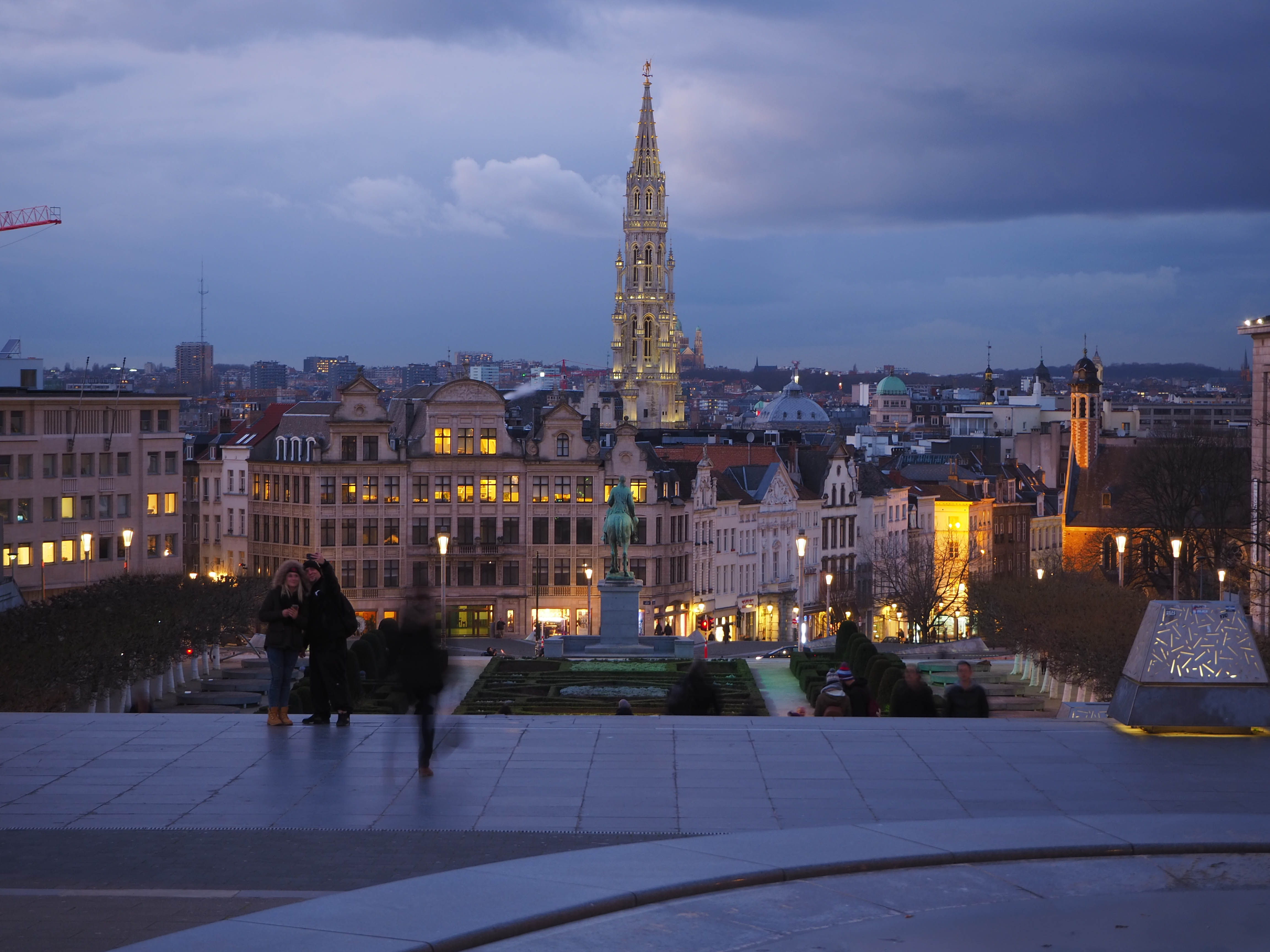
As we bed into spring, we take a look at what the past (mostly sunny) week in Brussels has brought.
It’s been a while since we shared a pop culture recommendation, and with this week marking the 40th anniversary of the Chornobyl disaster, it feels like the right moment to revisit the acclaimed Chernobyl mini-series. This brilliant drama captures the explosion, the immediate response, and the immense human cost of the clean-up effort, and the lasting impacts on health and the environment.
In this edition:
☢️ 40 years after Chornobyl
⛔ Draghi’s competitiveness report cherry-picking data
🏃Accelerate EU unveiled
🤖 The data centres influencing Europe
🌱 Pesticide-free farming is profitable!
Happy reading!
📬 Join us on our new Substack for longer, deeper New Leaf reflections on the topics you care about.

⏪ 40 YEARS AFTER CHORNOBYL
TBT. On 26 April 1986, Reactor 4 at the Chornobyl Nuclear Power Plant exploded, marking the most severe nuclear disaster in history – and one of the most expensive.
The nuclear catastrophe, taking the lives of dozens of people in the immediate aftermath, has also since affected hundreds of thousands of people across Europe. The clean-up required over half a million people and has cost an estimated €665 billion and counting. Today, a 2,600-square-kilometre exclusion zone – an area the size of Luxembourg – remains off-limits for human habitation.
Historical amnesia? Forty years later, as the energy crisis fuelled by the US/Israel war on Iran destabilises traditional, fossil-based energy systems, some voices are trying to revive the spectre of nuclear power, when we know it’s simply not a scalable solution.
The sick man of Europe. Nuclear energy is costly and slow. New reactors take decades to build, exceed budgets, and still depend on imported fuel. They are difficult to construct and carry safety risks. But most importantly, it locks in public funding that could go to cheaper, faster renewable energy.
From Chornobyl to Zaporizhzhia. To mark this important anniversary, the EEB publishes two new articles today that make convincing cases against the deployment of nuclear power.
The first, written by the EEB’s Deputy Director, Patrizia Heidegger, in collaboration with our Ukrainian members, is a stark warning about how the best-laid (nuclear) plans often go awry.
The second is a memoir in which EEB’s President, Toni Vidan, reflects on the origins of grassroots environmental campaigning in the former Yugoslavia and the lessons it holds for today’s energy transition.
The future is already here. Renewable energy is rapidly becoming mainstream – both in national policies, and also for regular Europeans ditching gas to heat and power their homes with renewables!
Look south. Spain and Portugal are reaping the benefits of heavy investment in renewable energy sources, future-proofing their economies against rising energy prices and making them safer, more independent, and more resilient. Time for other European nations to follow suit.
🧮 MARIO’S NUMBERS DON’T ADD UP
Where it all started. Over two years ago, Mario Draghi – former President of the European Central Bank and Italian Prime Minister – was asked by the EU Commission to draft a report on Europe’s competitiveness.
Its conclusions have since been repeatedly cited in press conferences and briefings to justify a tsunami of deregulation (read: protection-scrapping) measures, later consolidated into so-called omnibus packages that removed vital protections for nature and people’s health, often dismissed as pesky burdens hindering European competitiveness.
Magic Mario’s trick. This week, a new investigation by Follow the Money revealed that key data underpinning the report was inaccurate, with evidence selectively “cherry-picked” to support its conclusions while contradictory findings were excluded.
It begs the question. If SMEs did not call for deregulation, and neither did civil society, citizens, the scientific community or academia, then who on earth did? These sweeping measures have largely benefited major polluters and lagging industries, while creating legal uncertainty for those companies and industries that acted early.
In the end, the simplification we were sold looks more like deregulation of the protections that safeguard public health and the environment we all rely on. Why would anyone trust a genuine simplification effort in the future?
🗞️ IN OTHER NEWS
Europe, we have a plan. The EU just dropped its crisis package – AccelerateEU – to combat high energy prices amid the Iran conflict.
Name it! The Commission clearly points to fossil fuel dependence as the root cause of repeated energy crises. Not just “bad suppliers” or geopolitics. The root cause. And that matters – because if the problem is structural, the solution has to be too: cut fossil fuel use, for good.
Plug in, baby. The plan leans in that direction, with measures to make electricity cheaper than fossil fuels, support electrification of households, expand social support for clean technologies like heat pumps and EVs, and push energy savings.
Falling short… But the blueprint still leaves the door open for diesel and gas tax cuts in response to high prices. It doesn’t reduce fossil fuel dependence or target those who need help most, and it risks keeping prices high by propping up demand. And what about taxing windfall profits? Same story. The EU leaves the decision to national governments, despite calls from civil society and Member States for an EU-wide tax on energy profits. > Read our press release.
🌿FIGHTING THE GOOD FIGHT
⚖️SLAPPing back at Europe’s biggest bullies. Next Tuesday, the Coalition Against SLAPPs in Europe (CASE) will hold its annual European SLAPP Contest to put a spotlight on powerful actors abusing the legal system to silence their detractors. Nominees for the top prizes come from all corners of Europe, and a new prize has been introduced this year for those seeking to silence environmental defenders, ‘The Green Gag Award’. Check out the finalists here and tune in to CASE’s socials on the evening of 28 April to find out who gets crowned.
🐛They don’t want you to know this. A 10-year study in France has revealed what big agro-chemical companies don’t want you to know: pesticide-free farming is not only possible – it can be profitable! Yet across Europe, these toxic chemicals are still polluting our water, air, and food, putting our health at risk. Now the EU is moving to weaken vital rules that protect us against them – under pressure from big pesticide companies whose business model relies on polluting.
🏆The award goes to… For the first time in history, six women have been awarded the 2026 Goldman Environmental Prize. Honoured for grassroots efforts across six continents, they successfully challenged fossil fuel projects, influenced climate policy and protected ecosystems and endangered species. Read the full story here.
😌Humble brag. Over 420,000 people have already stood up to tell lawmakers that our health and nature are not for sale! As powerful polluters lobby to dismantle the laws protecting our water, air, and wildlife, your voice is more critical than ever to stop this backroom trading of our future for profit. Join the movement and sign the petition now to protect our environment and keep our vital nature laws in place.
🧠✨ DOPAMINE HIT
As ever, here are a few happy updates to get your weekend off to a perky start:
- Genoa follows the example of Florence and Bans Fossil Ads. Read more here
- The EU has cut its greenhouse gas emissions by 40% since 1990. Read more here
- Brazil’s´ blue and yellow macaws return to Rio after 200 years. Read more here
- World’s Last Wild Horse Thriving After 3 Years in Spain’s Gallop Towards Rewilding. Read more here
- Vienna Repair vouchers begin. Read more here
💼 THE JOB BOARD
- The European Food Bank Federation is hiring a Communications Manager. Check it out here
- The European Disability Forum is hiring a Communications Officer. Check it out here
- The Good Food Institute is hiring a Policy Officer. Check it out here
- Break Free From Plastic is hiring a European Coordinator. Check it out here
- Bond Beter Leefmilieu is hiring a Climate Policy Officer. Check it out here
- BUND is hiring a Project Coordinator. Check it out here
☕ BUY US A COFFEE
From dirty lobbies to smear campaigns, billionaire bullies to climate collapse, we face a lot. Support our work, one coffee at a time.
📢 ORGANISE
If you are not involved, get involved. Find a member organisation near you.
🚀 FOLLOW US
Don’t stay delulu, deal with the pollulu 🍃✨ Stay connected with us on LinkedIn, Bluesky, TikTok, Instagram, and YouTube. Don’t miss out!
Are you a journalist? Subscribe here to stay up to date on our latest European environmental policy updates made specifically for you!
We have opened a new mailbox for your tips and tales from the ground. Got something you think we should feature? Reach out to us at newleaf@eeb.org.
✨ SIGN UP
Stay informed. Subscribe to our Newsletter by email for the latest EU green insider updates every Friday morning and to support our work. By subscribing, you also get early access to our in-depth analysis of key EU environmental policy.
By: Roi Gomez. Special thanks to the EEB’s editorial team: Ben Snelson, Alberto Vela and Ruby Silk. Editor: Christian Skrivervik.