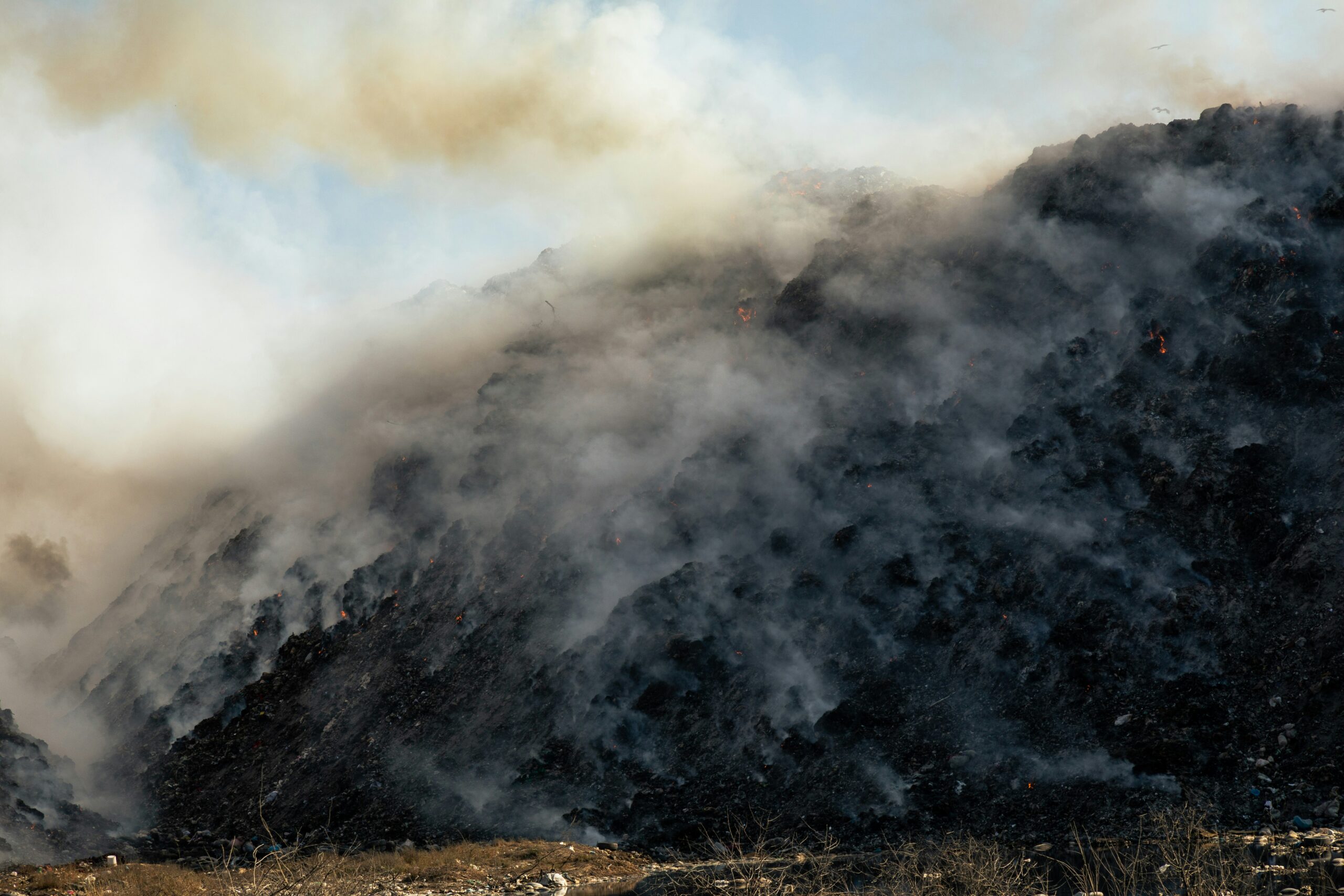
Landfilling is among the least sustainable waste-management options and one whose environmental legacy can last for centuries. A little-known EU technical process can help cut climate-wrecking emissions, tackle chemical pollution, and improve the long-term management of landfills.
Europe produces enormous quantities of waste. When construction, demolition and other major mineral wastes are included, the average EU citizen generates nearly five tonnes every year. Despite progress on recycling and other recovery operations, around 30% of EU waste is still ending up in landfills.
The situation differs considerably across Europe. Some countries landfill very little municipal waste, while others continue to rely heavily on it. But wherever landfills operate, the same fundamental question arises: how can we minimise their impact on people, the environment and the climate – not only while they are receiving waste, but for decades or even centuries afterwards?
An ongoing EU process to develop environmental standards for landfills could provide part of the answer.
The Sevilla Process: where technical details become environmental law
Behind many of Europe’s industrial pollution rules lies a process that rarely makes headlines: the development of Best Available Techniques Reference Documents, better known as BREFs.
In a nutshell, BREFs identify the most effective techniques available to prevent or reduce the environmental impacts of industrial activities. They are developed through an exchange of information between the European Commission, Member States, industry and environmental organisations, including the European Environmental Bureau (EEB). This is known as the “Sevilla process”, named after the city where the European Bureau for Research on Industrial Transformation and Emissions (EU-BRITE) coordinates the work.
The process may sound highly technical – and it is: experts discuss everything from emission monitoring and treatment technologies to operating practices and environmental performance levels. Yet its consequences are very concrete: the resulting Best Available Techniques (BAT) conclusions provide the basis for setting environmental permit conditions for thousands of industrial installations covered by the Industrial Emissions Directive.
Since 2025, the EEB and Zero Waste Europe have contributed to the development of the first dedicated BREF for landfills (the LAN BREF), to ensure that the resulting standards reflect the urgency of Europe’s climate, pollution and circular-economy objectives.
Landfills do not stop polluting when their gates close
A landfill is not simply a place where waste is dumped. It is a large and complex installation in which chemical and biological processes can continue long after the last load of waste has been deposited.
Landfills can release polluted leachate into soil, groundwater and surface water. They consume energy, water and construction materials. They also generate odours, air pollutants and greenhouse gas emissions. These risks do not necessarily end when a landfill stops operating, making effective closure and aftercare essential.
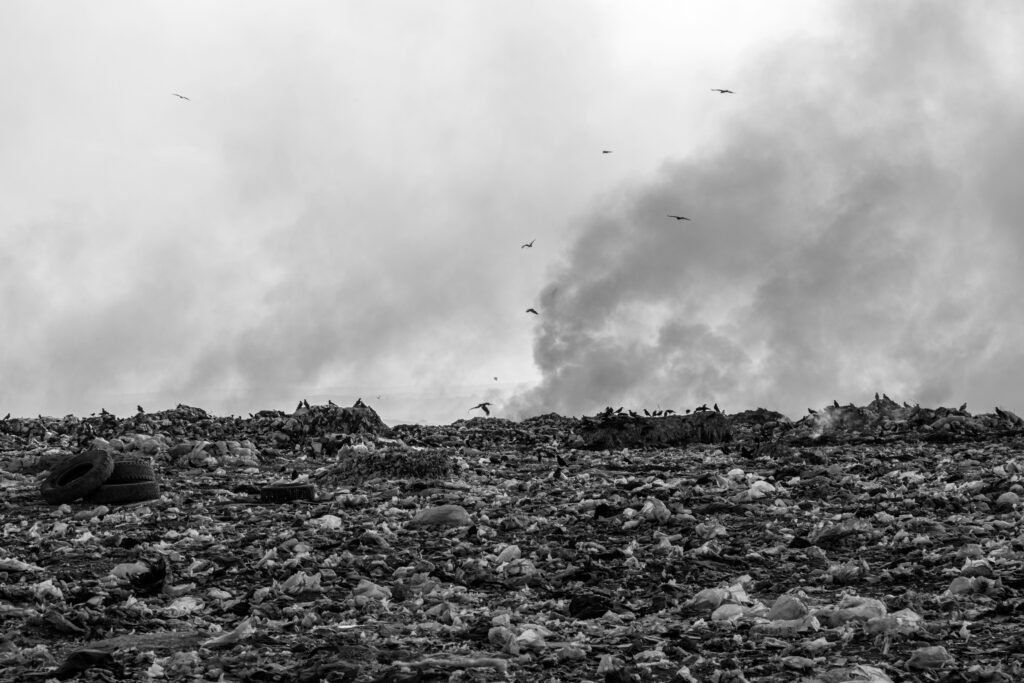
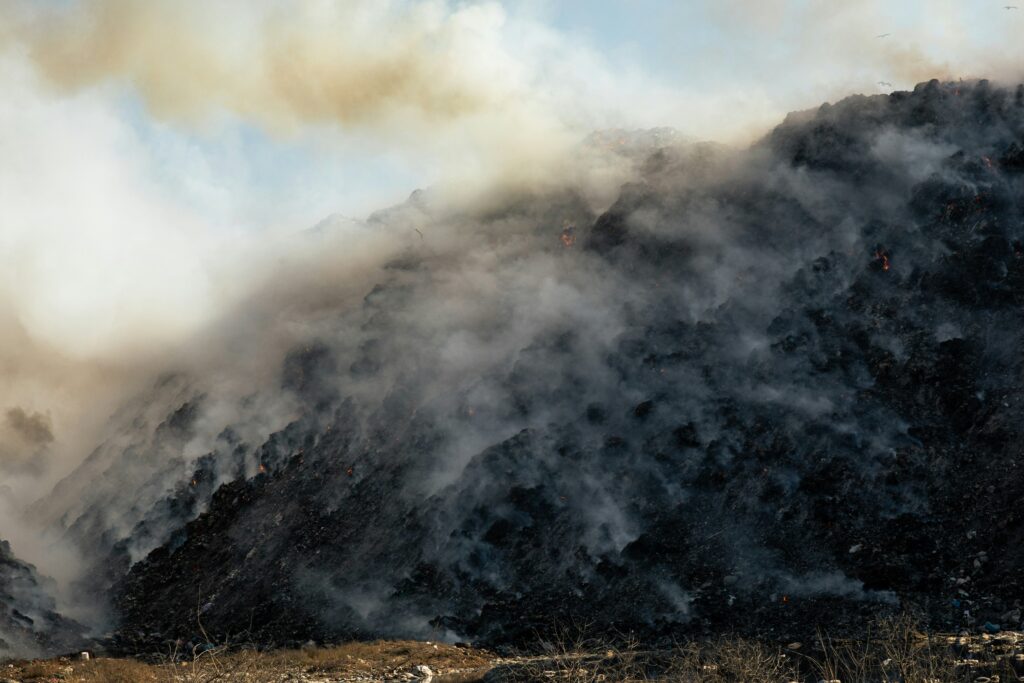
Methane is one of the most urgent concerns. When biodegradable waste decomposes without oxygen, it generates this highly potent greenhouse gas and dangerous air pollutant. While the waste sector accounts for nearly 20% of global human-caused methane emissions, landfills alone contribute approximately 10%.
The timing of these emissions matters. A substantial proportion of landfill methane can be generated soon after biodegradable waste is deposited – often before a permanent gas collection system has been installed. Even once gas recovery begins, not all methane is captured. Leaks, uncovered tipping areas, inadequate gas wells and systems designed primarily around the needs of energy generation from landfill gas can all allow significant quantities to escape.
The LAN BREF must therefore address methane emissions throughout the entire lifetime of a landfill: from waste acceptance and initial disposal to closure and long-term aftercare.
Capturing methane earlier and more effectively
To tackle this, the EEB has proposed the inclusion of a series of practical techniques and procedures among the Best Available Techniques.
The first priority is straightforward: biodegradable waste that is not landfilled cannot generate landfill methane. Therefore, strengthening waste acceptance procedures and ensuring that waste containing biodegradable material is properly sorted and stabilised before disposal is key to cut emissions.
But waste that meets stability criteria may still generate some methane. Landfill operators should therefore be required to assess expected gas generation and prepare regularly updated gas control plans.
Another technique is the so-called ‘overextraction’. In conventional systems, operators may extract just enough landfill gas – and at a sufficiently high methane concentration – to supply a gas engine. Overextraction, instead, prioritises capturing as much gas as possible, even if the resulting gas mixture is too diluted for energy generation and must be treated. This reflects a basic climate calculation: preventing methane from reaching the atmosphere is generally far more important than the relatively small climate benefit gained by using it to produce electricity.
Microbial methane-oxidation systems can also provide a final line of defence: specially designed permeable covers, filters or “windows” allow microorganisms to convert low concentrations of methane into carbon dioxide and water, helping to reduce emissions during the later stages of a landfill’s life, including aftercare.
The “forever chemicals” problem
Methane is not the only reason to strengthen landfill standards. Landfilled waste can contain per- and polyfluoroalkyl substances, better known as PFAS or ‘forever chemicals’ because of their extreme persistence.
These highly toxic chemicals, linked to serious health problems, including cancer, infertility, birth defects and immune system disorders, can leave landfills through leachate and landfill gas, and contaminate groundwater, surface water and the atmosphere, both throughout landfill operation and long afterwards.
The LAN BREF must therefore assess landfill-gas and leachate management from a broader pollution-prevention perspective, and ensure PFAS and other persistent pollutants are properly monitored and destroyed.
Who pays after the landfill closes?
Closure is not the end of a landfill’s environmental story. Leachate may remain contaminated, gas may continue to be generated, and protective covers may eventually deteriorate.
Yet, in the EU, financial provisions for aftercare are commonly calculated for only 30 years – even though the landfill operator may remain responsible for as long as the site poses a threat, according to the European Landfill Directive. However, research suggests that aftercare may need to continue for more than 200 years, particularly where an impermeable cover slows the processes through which the waste would otherwise reach a more stable condition.
This creates an obvious risk: the money may run out long before the pollution does.
This is why the EEB is calling for transparent, site-specific criteria for determining when aftercare can safely end: financial provisions must reflect the actual expected duration and costs of environmental protection – otherwise, the cost risks being passed on from landfill operators and waste producers to future generations and society at large.
Landfills cannot be addressed in isolation
While better operating standards are essential, Europe cannot solve its waste problem solely by improving the way landfills are managed: it must also drastically reduce waste generation at source.
The forthcoming Circular Economy Act is a major opportunity to address the problem further upstream, by prioritising waste prevention, reuse and high-quality recycling. Mixed residual waste should be sorted before it is landfilled or incinerated, allowing the recovery of recyclable materials and the stabilisation of biodegradable residues.
Crucially, policy should not simply shift waste from landfills to incinerators, as both destroy resources that could otherwise remain in use, while generating polluting and climate-wrecking emissions. The target should rather be to reduce residual waste – the material left after prevention, reuse, diligent source separation and recycling – regardless of whether it is ultimately buried or burned.
Getting the technical details right
The LAN BREF will not, on its own, end Europe’s reliance on landfilling. However, it can ensure that the remaining landfills follow much stronger environmental standards, and that their impacts are managed for as long as necessary.
This is why civil society participation in the Sevilla process matters. Decisions about gas wells, temporary covers, waste acceptance, flare temperatures, PFAS monitoring and aftercare provisions may appear highly technical. Together, however, they determine how much methane and pollution reach the environment, who bears the costs, and whether future generations inherit properly managed sites or unresolved environmental liabilities.
At the same time, the LAN BREF must be properly complemented by other policy measures and processes – such as a Circular Economy Act that takes on residual waste generation. Together, these processes must ensure that Europe reduces the amount of waste requiring disposal, while managing the remaining waste to the highest possible environmental standards.
If you enjoyed this article, please consider buying the author a coffee.