Dear Reader,
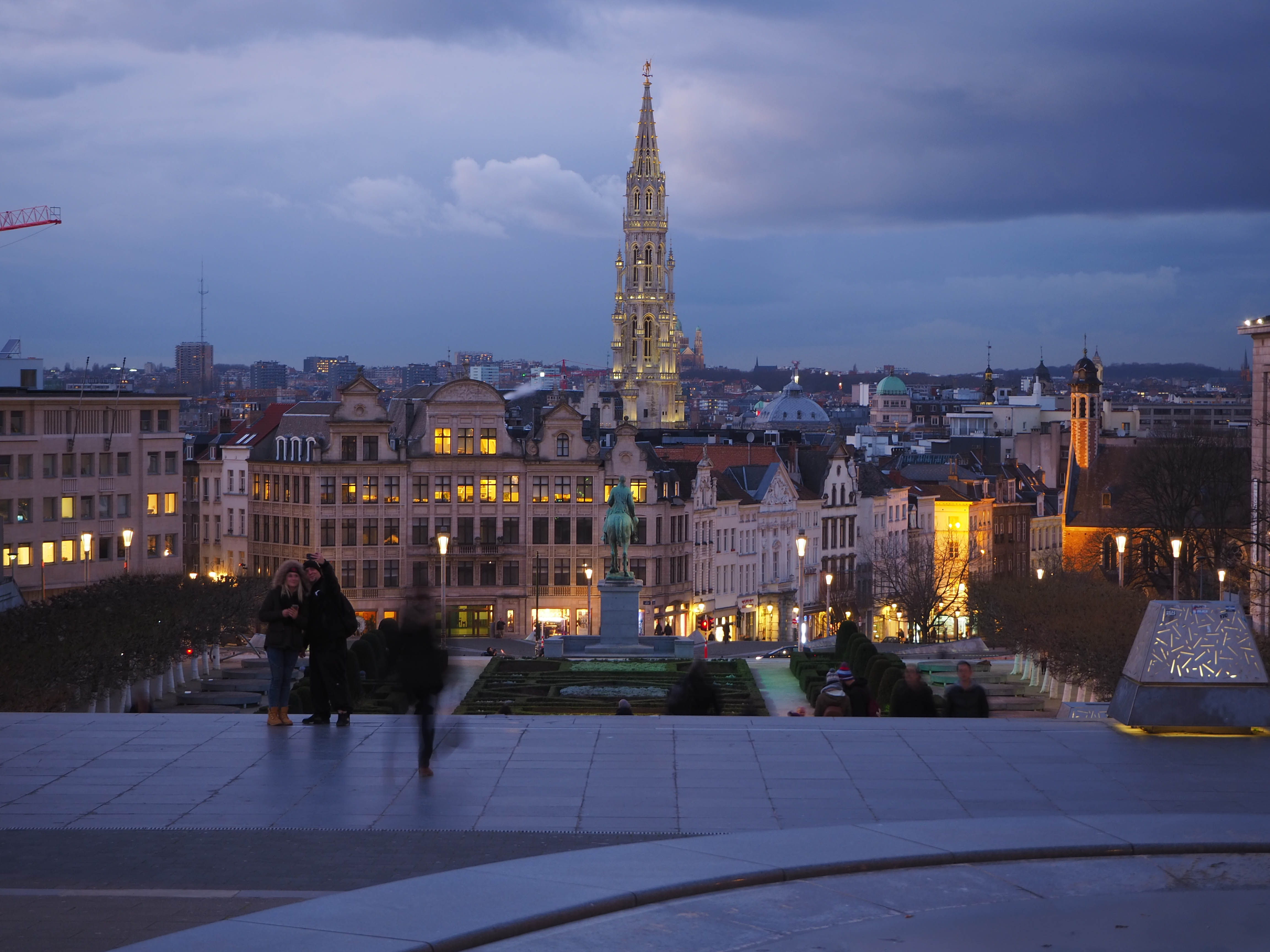
It’s Ben holding the pen this week, and let’s start with this. Last weekend, Belgium celebrated its coolest day in the annual calendar: Car Free Sunday. No motorised traffic across over 70 cities and municipalities – including the whole of Brussels! One day of the year when cars are suddenly no longer the priority. People are.
You suddenly see just how much space is reserved for cars in many of Europe’s cities and towns today. It presents a fleeting glimpse into what our cities might look like, were they designed for people – and not for cars. The benefits are immediate: children riding around freely, community food markets and thrift pop-ups, street music, people dancing, cross-the-road neighbours usually separated by the constant flow of traffic finally able to connect.
Imagine if this were the norm. Streets where you don’t have to worry about getting hit by a fast-moving two-tonne block of metal. Where the air is cleaner, and you can breathe a little easier. And it’s not just about making our cities more enjoyable. Road crashes kill around 20,000 people every year in the EU, while air pollution is responsible for hundreds of thousands of premature deaths across Europe.
For other EU countries paying attention, Car Free Sunday is a good place to start (and Belgium, if you’re listening, let’s add a few more days to the calendar!).
This week, the global authority on planetary boundaries delivered a damning indictment of the state of our planet’s natural systems – the safety net that supports human life. The facts could hardly be clearer.
But momentum is building. This week, we’re also looking at how demands from Big Polluter interests in Europe are facing resistance.
☕ So, grab a hot drink and enjoy the read. If you do, consider buying us a coffee!
🌍🚨 EARTH’S ANNUAL CHECK-UP: VITAL SIGNS FLASH RED
A toxic relationship. Like with a healthy relationship or approach to our work, setting – and sticking to – healthy boundaries matters. It also applies to the planet we all call home – and how we treat it. Turns out our relationship with our host planet has become toxic.
Setting boundaries. This week, the Potsdam Institute for Climate Impact Research published its Planetary Health Check 2026. It shows deeply worrying trends continue: we have breached seven of the nine ‘Planetary Boundaries’ – the limits that define Earth’s safe operating space for humanity. And pressure on all seven is increasing.
Yet more proof. The data comes hot on the heels of an equally sobering report by the World Meteorological Organisation (WMO) on the state of our waters, which found that 2025 was one of the driest years for the world’s rivers in 35 years.
Europe in the crosshairs. As Von der Leyen herself reminded us last week, the European Environment Agency has warned that Europe is the world’s fastest-warming continent and is not prepared for rapidly growing climate risks.
The scientific consensus. We are trashing the ecosystems and natural cycles that keep our climate stable and our planet habitable. Our planet’s vital signs are flashing red.
What happens next is a political choice. EU and world leaders must put the protection of our planet’s life-support systems at the heart of their decisions – from climate and nature to pollution and the economy. And for Europeans, that means making the environment a priority when scrutinising candidates and their commitments at the ballot box. Our future depends on the choices we make today.

🛢️🙅 MOMENTUM BUILDING AGAINST FOSSIL FUELS
The Arctic drilling moratorium stays! This week, the EU held firm in its opposition to new oil and gas drilling in the Arctic, despite pressure from Norway and fossil fuel interests. The EU cannot tell Norway where to drill, but it can decide what it buys. Its Arctic policy commits it to working towards a ban on new Arctic oil and gas development – and on purchasing fossil fuels from those new fields.
A major win for Arctic protection, and a reminder that public pressure matters! Thousands of people have spoken out and written to their representatives, helping keep Arctic protection and climate action firmly on the agenda.
The pressure to Make Polluters Pay is growing. Calls for EU-level action to tax fossil fuel companies’ windfall profits are gaining momentum. This week, Germany’s Finance Minister Lars Klingbeil backed a tax on excess profits as European households face soaring energy bills. Germany is not alone: other EU Member States are also calling for action at European level.
Laughing all the way to the bank, eight of the world’s largest oil companies pocketed almost $93 billion in just three months this year. People have had enough. It’s time for a European windfall tax – and let’s put that public money towards making our planet truly liveable. Make your voice heard.

🧪🗣️ RESISTANCE STRENGTHENS AGAINST TOXIC PESTICIDES
Toxic plans face big questions. EU countries have failed to agree on a common position on the Food and Feed Omnibus. This week, the Irish Presidency postponed a decision after Member States failed to reach an agreement, with several governments asking for more time to examine the proposal. A welcome sign that plans to weaken pesticide protections may face resistance nationally.
500+ scientists say: “Wake up!” This follows a letter sent to EU lawmakers last week, signed by more than 500 scientists, warning of the risks posed by proposals that could allow harmful pesticides to remain approved indefinitely. They are calling for an independent assessment of the potential health and environmental impacts before the legislation moves forward. Meanwhile, agrochemical interests continue to spend millions lobbying Brussels to weaken the rules that protect us.
Our health is on the line. As mounting evidence links pesticide exposure to an increased risk of Parkinson’s disease – now recognised as an occupational disease in France, Italy and Germany – policymakers must put the health of people and ecosystems first. That means protecting farmers and rural communities, who are particularly exposed, rather than weakening the safeguards designed to protect them.
🦉💪 EU NATURE LAWS WORK – AND HAVE WIDESPREAD SUPPORT
EU bird protection laws pass the test. As the Commission puts the EU’s long-standing Birds and Habitats Directives under the microscope once again, the message from environmental organisations is clear: Europe’s flagship nature laws are fit for purpose and need anything but a rewrite. It’s time to properly implement them.
So how do we do that? This week, the EEB met with the Commission alongside other stakeholders, stressing that protecting the birds we love and the habitats that all life depends on requires better funding, stronger capacity, improved planning and greater political commitment – not reopening laws that are already delivering for nature.No surprises there. Among those pushing for changes were representatives of Big Mining and Big Agri interests.
A not-so-gentle reminder: 84% of Europeans think EU environmental legislation is necessary to protect the environment in their country. 👉 Haven’t yet made your voice heard on this? Sign the #HandsOffNature petition and let’s reach 1 million! 👈

📡 ON OUR RADAR
91% of business leaders say the EU green transition strengthens long-term competitiveness. A WWF and GlobeScan survey of 350 business leaders across Europe found strong backing for the green transition, with businesses citing greater resilience, energy security and long-term competitiveness. And 55% say the EU’s recent simplification efforts have had negative or mixed effects on their businesses. Clearly, businesses need policy certainty and effective implementation, not weaker environmental laws.
It stinks. The EU will continue exporting hundreds of thousands of tonnes of plastic waste to Turkey each year, despite a Commission assessment finding evidence of environmental damage that could breach EU rules. Rather than suspending exports, the Commission has opted to engage with Turkish authorities over the concerns. Read more here.
The new merchants of doubt. Our member Changing Markets Foundation has just published The New Merchants of Doubt, exposing how Big Meat and Dairy use greenwashing, voluntary pledges and corporate lobbying to delay climate action and protect their profits. Building on its 2024 investigation, the book reveals the corporate playbook for keeping climate solutions off the table. More to come.
By: Ben Snelson. With support from the EEB’s editorial team: Roi Gomez and Christian Skrivervik. Editor: Christian Skrivervik
🧠✨ DOPAMINE HIT
As ever, here are a few happy updates to get your weekend off to a perky start:
- India’s power system just passed a historic tipping point. Read more here.
- Latin America reaches 10,000 electric buses in operation. Read more here
- A new species of wild cat has been officially confirmed for the first time in over a century. Read more here
- Nepal’s Gen Z is taking on the world’s polluter over climate disasters. Read more here
🧚 THE JOB FAIRY
- We are hiring! The European Environmental Bureau is hiring a part-time Office Coordinator and a full-time Policy Assistant.
- International Federation for Human Rights is looking for a Researcher on Civic Space and the Rule of Law in Italy
- Climate Action Network Europe is looking for a Coordinator, Civil Society Observatory on Methane
- Eurogroup for Animals is looking for a Consultant Political Officer – Aquatics
📢 ORGANISE
If you are not involved, get involved. Find a member organisation near you.
🚀 FOLLOW US
Don’t stay delulu, deal with the pollulu 🍃✨ Stay connected with us on LinkedIn, Bluesky, TikTok, Instagram, and YouTube. Don’t miss out!
Are you a journalist? Subscribe here to stay up to date on our latest European environmental policy updates made specifically for you!
We have opened a new mailbox for your tips and tales from the ground. Got something you think we should feature? Reach out to us at newleaf@eeb.org.
✨SIGN UP
Stay informed. Subscribe to our Newsletter by email for the latest EU green insider updates every Friday morning and to support our work. By subscribing, you also get early access to our in-depth analysis of key EU environmental policy.