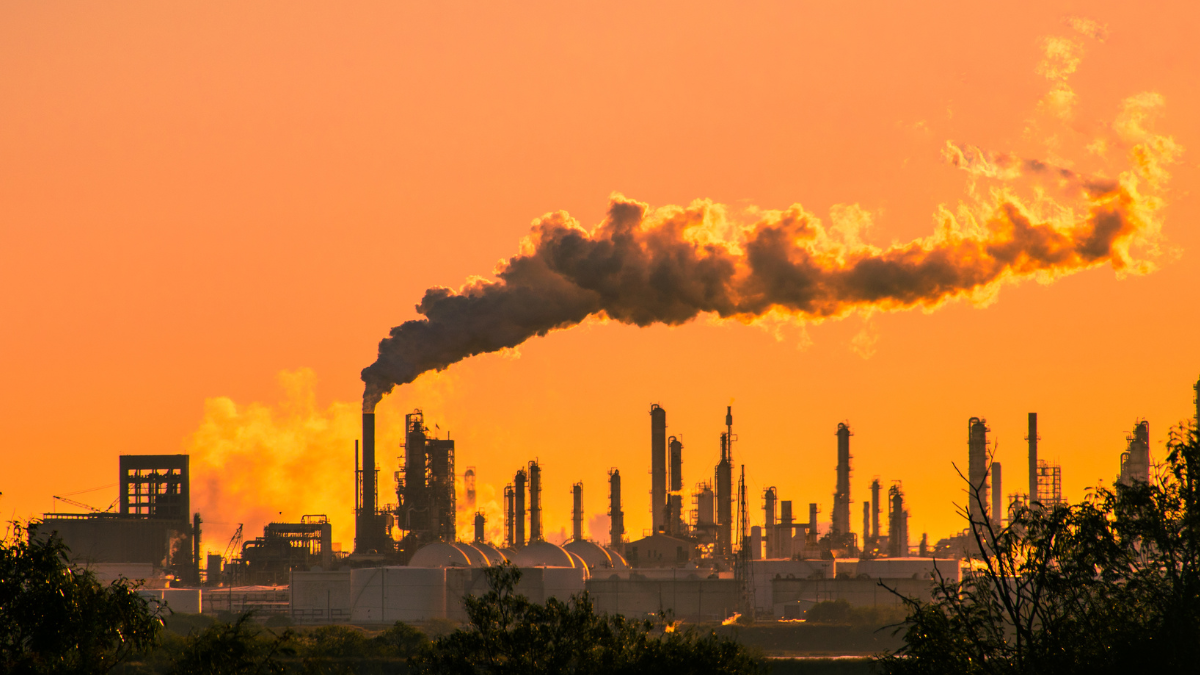
Heatwave’s unprecedented damage… again
Western Europe has just lived through its hottest June on record with dreadful consequences for people and nature.
Europe is warming faster than any other continent, gaining around 2 degrees in the 50 years since the 1976 heatwave, according to the World Meteorological Organization (WM). While the death toll from the recent heatwave is still being counted, the preliminary count indicates at least 12,000 excess deaths in Europe due to the heatwave, with Belgium experiencing highest excess mortality in Europe at the end of June.
Nature was not spared either. The area burned across the World Health Organization (WHO) European Region has risen 57% in 4 years, reaching 2.2 million hectares in 2025, with Portugal and Spain each recording more than twice as many fires as in the same period a year earlier. In France, the 22 July fire started in Gironde burned 42,000 hectares (an area four times the size of Paris) within 5 days, forcing out 220,000 people and destroying 240 homes. Meanwhile, in Spain, the fire in Ávila has consumed more than 50,000 hectares, called the largest in the country’s history by the Ecological Transition Minister Sara Aagesen, with Spain declaring a national emergency and 90,000 people being evacuated or confined across Madrid, Toledo and Ávila.
FRAMING THE PROBLEM CORRECTLY: CLIMATE-CHEMICALS NEXUS BEHIND THE HEATWAVES
While most of the problem’s coverage frames the problem in exclusively climate-related terms, it hides a deeper problem and closes off an opening, because the triple planetary crises exacerbate each other and should therefore be tackled together, provided that the framing is right. The linkage between climate change and chemicals pollution is particularly strong.
The chemical industry is the largest industrial energy consumer, with chemicals and petrochemicals taking 21.5% of EU industrial energy consumption in 2023. It is also the third largest industrial source of direct CO2 emissions, responsible for around 5% of EU’s total net greenhouse gas emissions in 2021. Around 99% of all synthetic chemicals and 99% of all plastics are derived from oil and gas, which makes the sector structurally dependent on fossil fuels.
While the chemicals industry is ‘helping’ to produce heat, the products and activities driving this heat also contribute to both the climate and chemicals pollution crises, while rising temperatures themselves make the hazards posed by chemicals even more dangerous. In 2022 scientists confirmed that humanity has already overshot the planetary boundary for “novel entities” – PFAS, plastics, pesticides and other harmful chemicals now ubiquitous in air, water, soils and bodies. Climate breakdown amplifies chemicals risks from these outputs – droughts, floods, rising seas and storm surges mobilise and spread contamination, while changing temperatures and hydrological shifts affect how long chemicals persist and how toxic they become. Climate disruption destabilises and spreads existing contamination, and widens the pathways by which people are exposed to it. On the other hand, some of these chemical outputs accentuate climate change – the breakdown of plastic in the ocean1 interferes with its capacity to absorb CO2 and weakens one of the planet’s most important carbon sinks. F-gases are another such case, and they are particularly central to a commonly proposed adaptation measure to climate change that, in reality, presents hidden dangers: the use of refrigeration to preserve food, air conditioning and heat pumps to cool down our dwellings, many of which rely on F-gases with very high global warming potential.
THE PROBLEMATIC RESPONSES THAT PERPETUATE THE PROBLEM
One of most widespread climate-adaptation responses to the heatwave has been to generalise the buying of cooling. Around a fifth of European homes have cooling today, and the growth curve of air conditioning (AC) units is steep. Europe is on course to install tens of millions more this decade2, and it should, because in the week of a heatwave this form of cooling may be the only intervention that works on such a short timescale, preventing many from suffering or dying. However, what is at stake is who is cooled first, what is inside the machine, and what is done to the built environment around them. Mass deployment should therefore come with conditions: vulnerable people and the buildings that shelter them first (such as hospitals, care homes, social housing and schools), since they suffer most from heat and can least afford a unit; energy-efficient and pollutant-free equipment only; and passive measures such as green areas and heat shelters built in parallel rather than postponed. A cooling relief that is socially selective and chemically dirty would only deepen the problems that produced the heat, and that is what the IPCC calls maladaptation.
Air conditioning does not remove heat, it merely moves heat out of a building and into the street, along with the electricity used to run it. It is why the European Environment Agency (EEA) argues that heavy use of active cooling is inefficient, increases energy use and is socially inequitable. While the first two critiques have to do with standards, social inequity is the question of affordability. Those least able to afford an AC and the electricity to run it – the elderly, the ill, people in poorly ventilated flats – are the same people most likely to die in a heatwave. And these people did die by the thousands across the EU this summer3. Heat kills, and it does so in a socially selective way. Cooling therefore has to arrive as public provision, reaching hospitals, care homes, social housing, schools and houses of vulnerable people before it reaches anywhere else, while the slower work on buildings and neighbourhoods proceeds alongside it.
On the chemicals side, a big problem lies in the F-gas refrigerants used in AC systems. These gases are among the most potent greenhouse gases in industrial use, and they are the fastest growing class of greenhouse gas emissions worldwide. R-410A, the refrigerant in most of the air conditioners installed across Europe, warms the atmosphere around 2,000 times more than the same mass of CO2. Emerging alternatives to F-gases, such as hydrofluoroolefins, may drastically reduce the global warming potential, but they break down in the atmosphere into trifluoroacetic acid, or TFA, a short-chain PFAS that cannot be removed. The consequences of such climate friendly but toxic solutions have recently been shown in the case of car air conditioning. The booming installation of heat pumps and AC, the default presence of AC in our cars are the two major concerns in view of the massive PFAS pollution the EU is facing. And to make things worse, this is just the tip of the iceberg because the problem is even bigger elsewhere in warmer climates.
The same pattern runs through EU policy on climate mitigation. Carbon capture and chemical recycling are marketed as silver bullets or as circular technologies, and both largely reinforce fossil-fuel dependence while creating new environmental and health risks. Carbon Capture and Storage is often used by corporate actors as a bargaining chip to justify continued extraction and production, locking-in existing systems rather than driving transformation, while relying on toxic solvents that pose occupational health risks. Some forms of chemical recycling can emit up to four times more greenhouse gases than landfilling plastic, while only 1% to 14% of the plastic entering these facilities is retained as plastic for new products. These processes are also highly energy-intensive, requiring substantial amounts of energy to break down the plastic and subsequently purify and process the resulting products. In other words, vast amounts of energy and resources can be used to recover only a small fraction of the material, while generating additional emissions and potentially hazardous by-products. Rather than addressing the root of the plastics and climate crises, chemical recycling risks locking us into continued plastic production and a resource- and energy-intensive system.
The Clean Industrial Deal, meanwhile, equates “clean” with “decarbonised”, ignoring the toxic-free side dimension of a truly clean transition – and the feedback loops through which chemical pollution can itself exacerbate the climate crisis), making it a rather dirty deal.
THE SUSTAINABLE RESPONSES TO THE CLIMATE AND CHEMICAL CRISES
As we will continue to face the inevitable impacts of current climate crisis while tackling its causes, adequate adaptation measures are a crucial part of the solution. Where cooling is needed to adapt to a warming world, it should at the very least be sustainable and socially just — minimising its climate, environmental and health impacts rather than creating new ones: when AC is needed, this should come with refrigerants that are harmless, and at the same time energy efficient4. However, AC is not the only measure, and prevention (as well as sufficiency) should be the rule in adaptation, in the mid and long-term. The EEA identifies insulation, shading of glazed facades, night ventilation and radiative cooling as the most effective ways to cut cooling demand, alongside green and blue public space at neighbourhood level – unlike an air conditioner, a green and blue neighbourhood cools everyone on it5. These arrangements cost little because they repurpose buildings that already exist, and they reach the people least likely to own a unit. Where active cooling is genuinely needed, it does not necessarily have to be fluorinated at all. Natural alternatives to F-gas refrigerants (e g. carbon dioxide or propane) make heat pumps at global warming potentials below 5 possible. When installed, they should be used at their best, thus applied for both heating and cooling in order to cut also fossil gas or oil use in winter.
While adaptation limits the short-term damages, climate mitigation focuses on removing the causes in the long term which requires a much deeper transformation.. In terms of harmful substances, PFAS-free alternatives already exist, including in demanding sectors such as semiconductors – only about 8% of fluoropolymer production serves genuinely essential uses, so PFAS can be replaced in roughly 92% of cases6. However, adapting and swapping harmful substances is not sufficient on its own – a genuine solution requires a coherent and systemic approach that combines regulatory reform, conditional public finance and industrial strategy. Its examples include the need for public support tied to binding environmental and social conditions; for a 2050 roadmap setting interim targets for decarbonisation, detoxification and circularity together; for phasing out the most hazardous substances and for scaling genuinely safe innovation. Beyond that lies a larger transformation of the industry’s economic model – reducing production and material intensity, while shifting toward sustainable feedstocks and high-value specialty chemistry, all wrapped in a just transition for workers and communities. The upcoming Cooling & heating Action Plan of the EU should be keeping these priorities, and suggest that cooling must be PFAS-free, economically accessible for vulnerable households an installed in an adaptation path that include passive solutions, in order to mitigate the heat islands’ problem.
Heatwaves, and the fires, deaths and destruction that follow them, have grown more extreme with each passing decade. Yet the responses on offer still mostly preserve the arrangement that produced the problem. Putting our full weight behind the solutions that actually work will be hard, but maintaining the status quo with myopic solutions can only be worse.
- Whose weight is projected to largely exceed that of all fish by 2050, if production realise the expected doubling by 2040 ↩︎
- According to the European Commission, the EU had fewer than 7 million room air conditioning units in 1990 and roughly 57 million by 2020, and is on course to pass 100 million before 2030. ↩︎
- For example. In Italy alone, deaths of these vulnerable citizens increased by 8% compared to last summer. ↩︎
- the largest AC producers in the world, are already selling these products by the millions in Asia, but the European market is lagging behind due to over regulation on safety ↩︎
- For example, Barcelona opened Europe’s first formal network of climate shelters in 2019 and now runs 409 of them (e.g. libraries, museums, markets, pools, parks, schoolyards) with at least 95% of residents within a 10-minute walk of one. A comparable network of “îlots de fraîcheur” can be found in Paris. ↩︎
- Their continued use is largely driven by artificially low prices that externalise health costs and environmental remediation costs. ↩︎